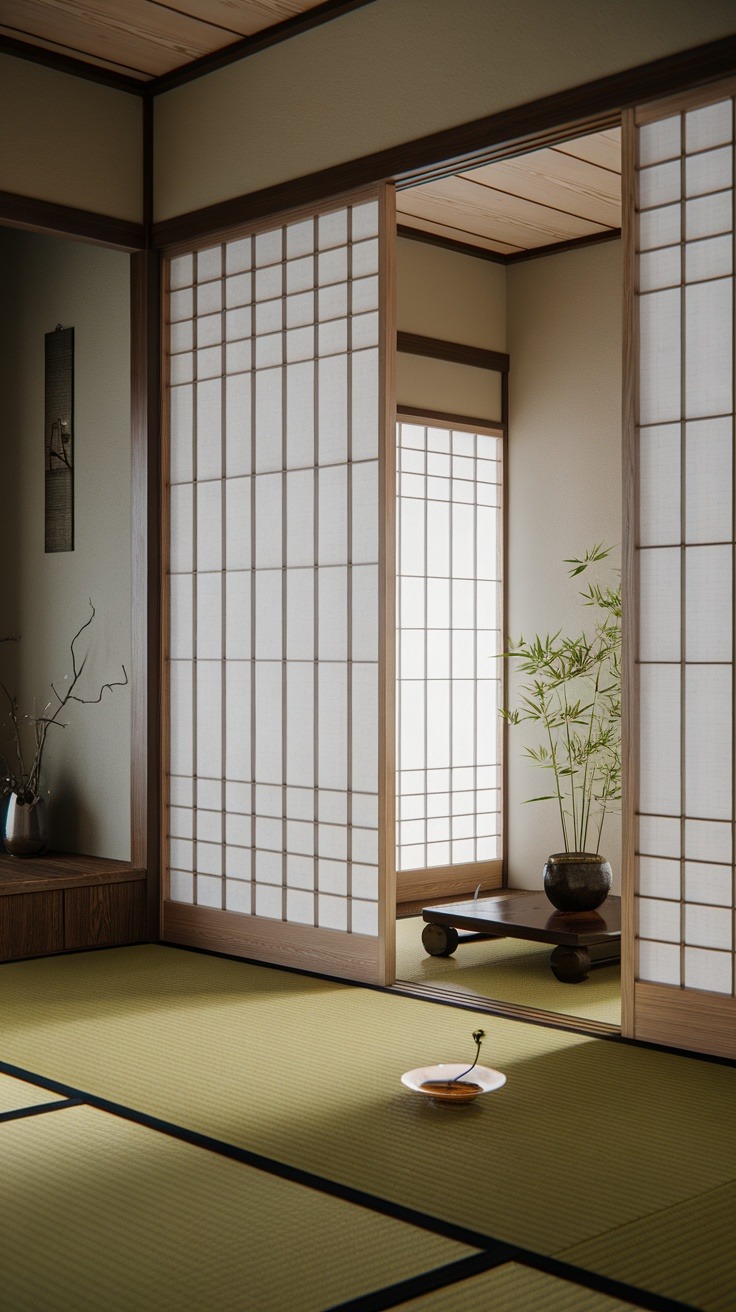
Step into a Japanese-inspired minimalist home and you’ll notice something immediately: the quiet.
Not an empty silence, but a gentle calm.
The space feels balanced. Every object is chosen with care. Light filters softly. The air itself feels lighter.
Japanese minimalism is more than a design style—it’s a philosophy. Rooted in Zen principles and traditions like wabi-sabi (finding beauty in imperfection), it blends simplicity with nature, creating interiors that feel elegant, timeless, and deeply grounding.
If you’ve ever wanted a home that feels like a sanctuary, Japanese minimalism offers both inspiration and practical guidance.
Here are nine ways to bring Japanese interior elegance into your own space.
🌿 Embrace Natural Materials
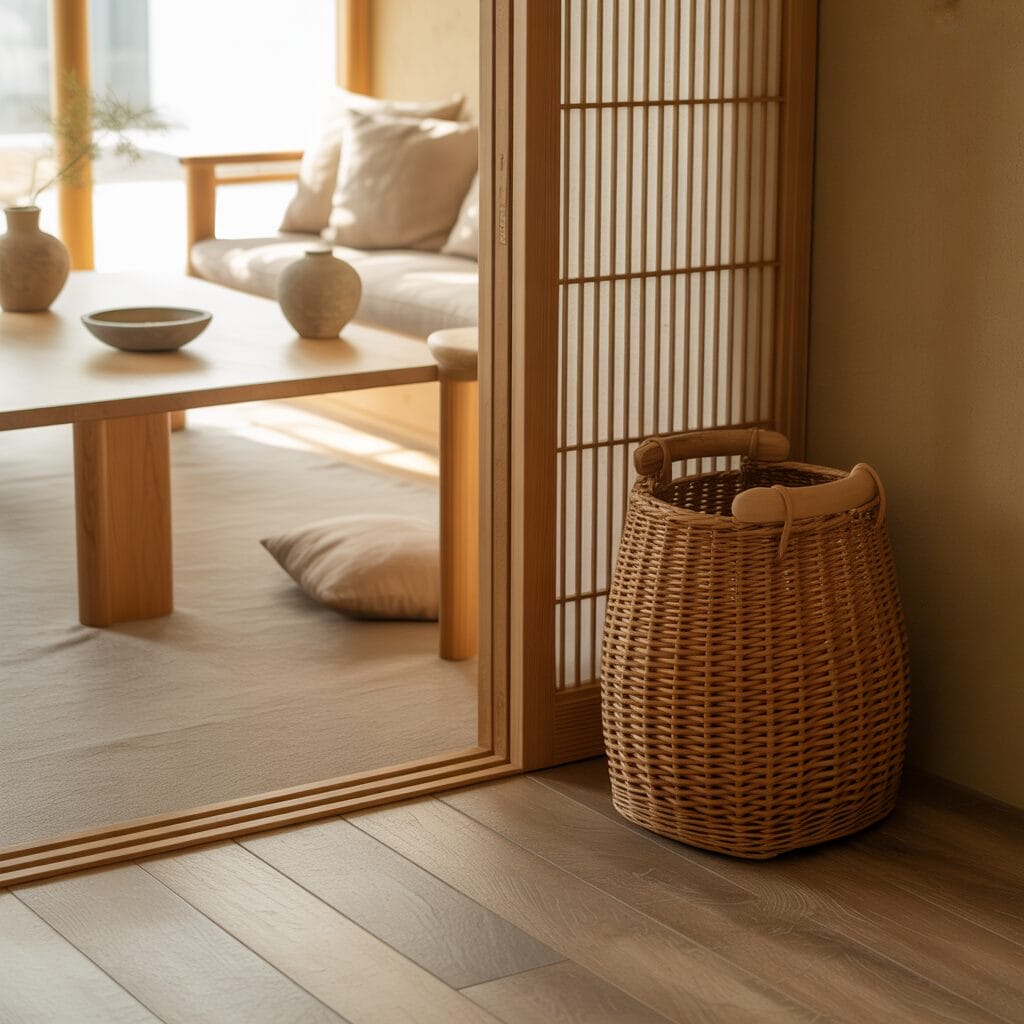
Japanese interiors lean heavily on natural elements that connect the home to the earth.
Wood, bamboo, stone, paper, and linen are often used to create warmth and authenticity. Each material adds texture and depth without overwhelming the calm aesthetic.
- Wooden flooring or furniture in light tones
- Shoji screens made with translucent paper
- Stone vases or ceramic bowls
- Linen cushions or curtains
👉 Example: Swap out a plastic laundry basket for a woven bamboo one—it’s practical and instantly softens the space.
🍵 Simplify with Clean Lines
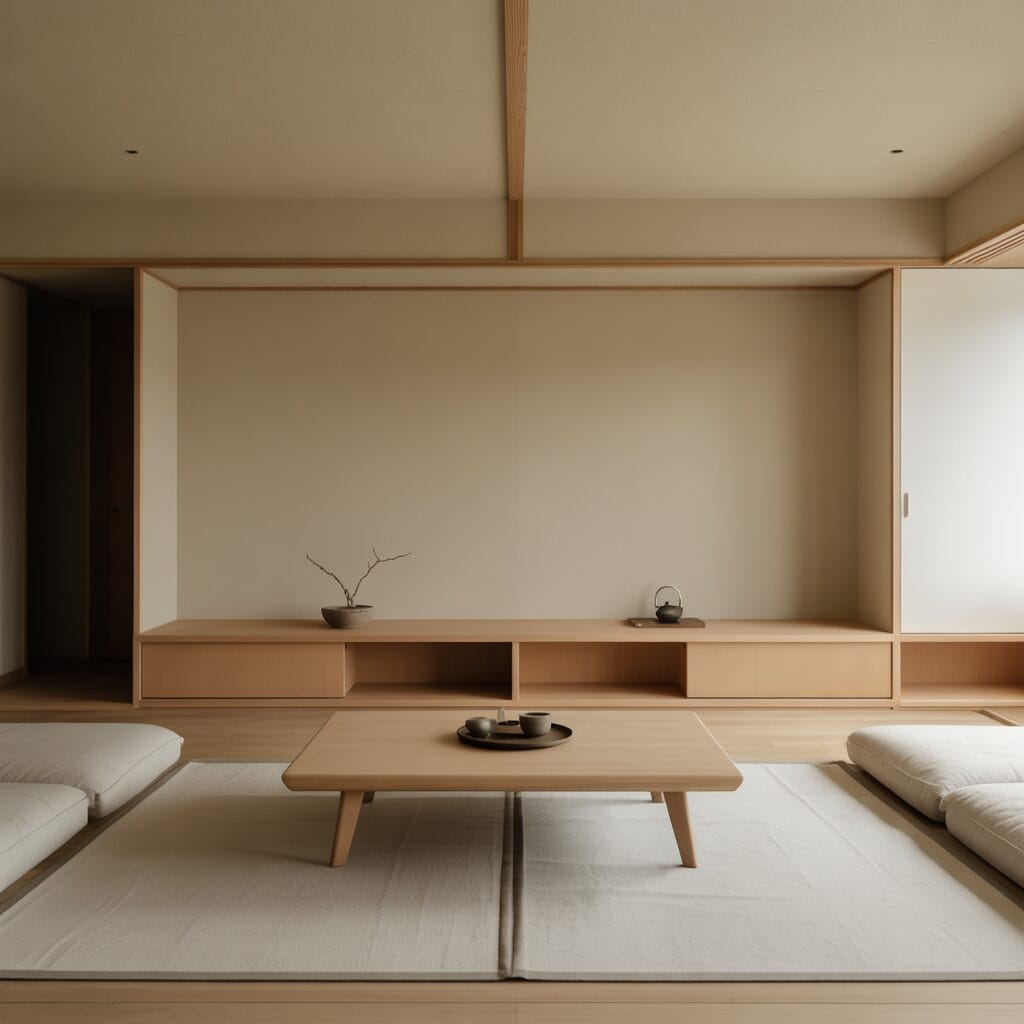
Japanese design thrives on clarity. Furniture is low, streamlined, and free of ornamentation.
Tables, beds, and cabinets often sit closer to the floor, emphasizing stability and grounding. Clean lines guide the eye gently across the room without distraction.
👉 Practical tip: Instead of a heavy couch with bulky arms, choose a low-profile sofa with slim legs. The room will feel more open and balanced.
✨ Let Light Flo
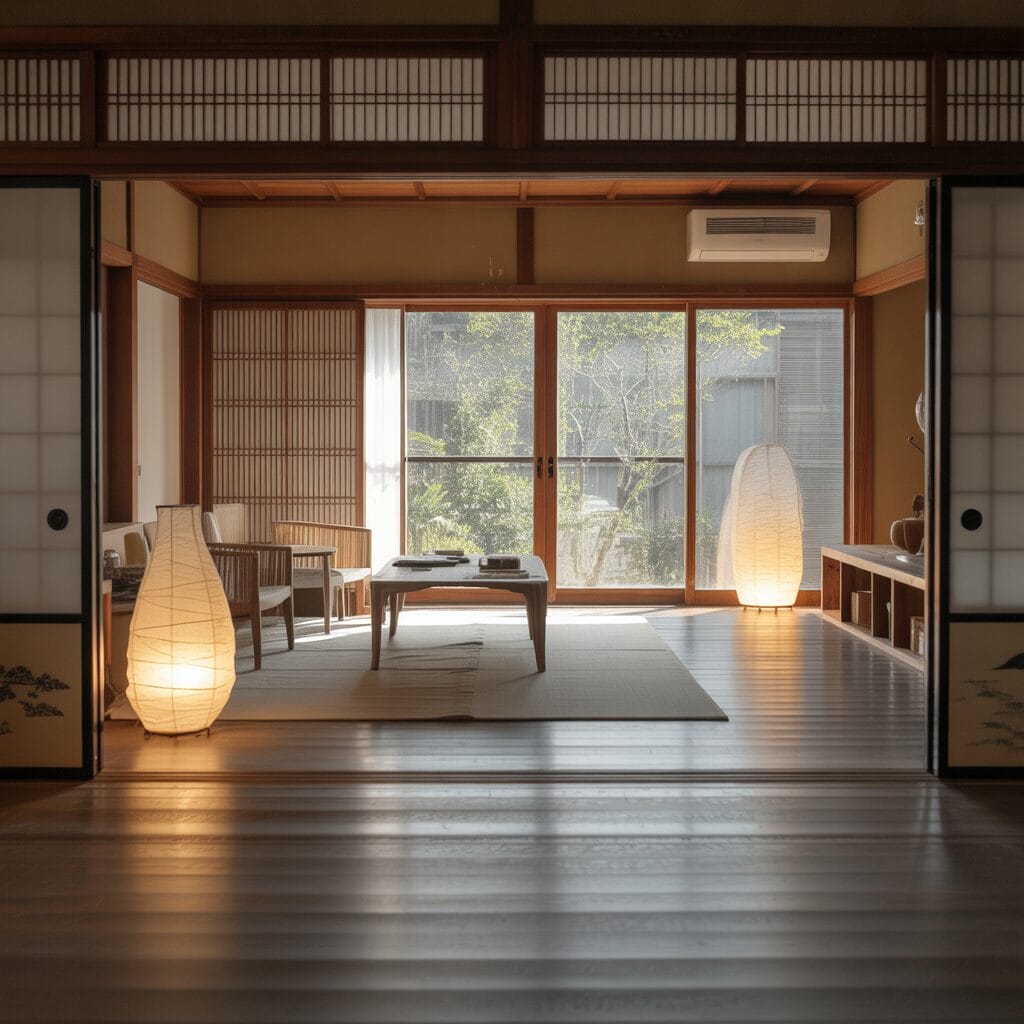
Light in Japanese minimalism is treated like water—it should flow naturally, filling the space with softness.
Large windows, sliding doors, and translucent screens are used to invite daylight. Even artificial lighting leans toward warmth and subtlety, often using rice-paper lamps or hidden fixtures.
👉 Example: Replace harsh ceiling lights with floor or table lamps made of natural materials. The glow feels more calming and intimate.
🌸 Prioritize Empty Space (Ma)
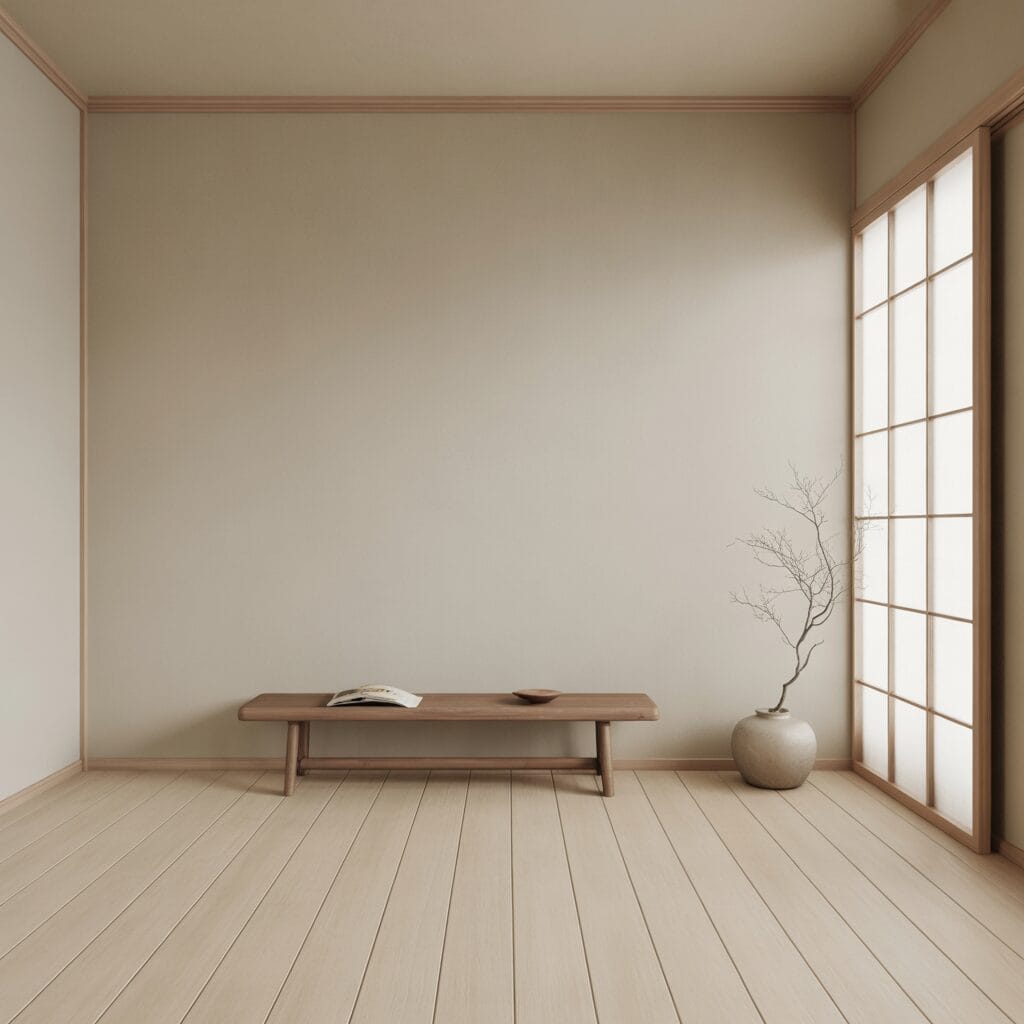
One of the most distinctive elements of Japanese interiors is ma—the beauty of empty space.
Instead of filling every corner, Japanese design allows areas of openness to create breathing room. These “pauses” are just as important as the furniture itself.
👉 Practical step: Try leaving one wall or corner completely bare. Notice how the absence creates balance and highlights the simplicity of the rest of the room.
📍 Bring Nature Indoors
Nature is woven seamlessly into Japanese interiors, blurring the line between inside and outside.
Plants, stones, and even small water features can be used to ground the space.
- A bonsai tree on a shelf
- A single branch in a tall vase
- Smooth river stones arranged in a tray
- Tatami mats made of woven straw
👉 Example: Place a single potted plant in an uncluttered space. Its presence becomes striking, symbolizing life and growth.
🕯️ Choose a Neutral Palette
Colors in Japanese minimalism reflect nature. Think soft creams, warm beiges, muted grays, and earthy browns.
Occasionally, darker accents—like black or deep indigo—are used sparingly to create depth. The result is a palette that feels both calming and timeless.
👉 Practical step: If your room feels too busy, repaint one wall in a soft neutral tone. This instantly resets the atmosphere and creates harmony.
🍂 Celebrate Wabi-Sabi
Wabi-sabi is the Japanese art of finding beauty in imperfection and impermanence.
This principle invites you to let go of perfection and embrace authenticity. Cracked ceramics, weathered wood, or handwoven textiles all carry a story that enriches the space.
👉 Example: Instead of hiding a slightly chipped ceramic bowl, display it proudly. It carries warmth, history, and a reminder that beauty lives in imperfection.
🌼 Function Meets Elegance
Japanese interiors are designed for practical living. Storage is clever and hidden, keeping surfaces clean and open.
Sliding doors, modular furniture, and multi-use spaces reflect a lifestyle where functionality blends seamlessly with elegance.
👉 Practical step: Try baskets or wooden boxes to store items neatly inside cabinets. The exterior remains uncluttered, but functionality isn’t lost.
🍃 Create a Zen Corner
Even if you can’t redesign your whole home, one dedicated “Zen corner” can bring the peace of Japanese minimalism into your daily life.
This could be:
- A floor cushion near a window for tea or meditation
- A low table with a single flower vase
- A tatami mat with a small altar or candle
A single corner of serenity can influence the whole atmosphere of your home.
Final Thought
Minimalism in Japanese design is not about stripping away life—it’s about revealing what truly matters.
With natural materials, intentional emptiness, and soft connections to nature, your home becomes more than a place to live. It becomes a sanctuary.
When you embrace Japanese interior elegance, you’re not just transforming your space—you’re also inviting a slower, more mindful rhythm into your everyday life.
And that calm simplicity is where true elegance lives. 🌿