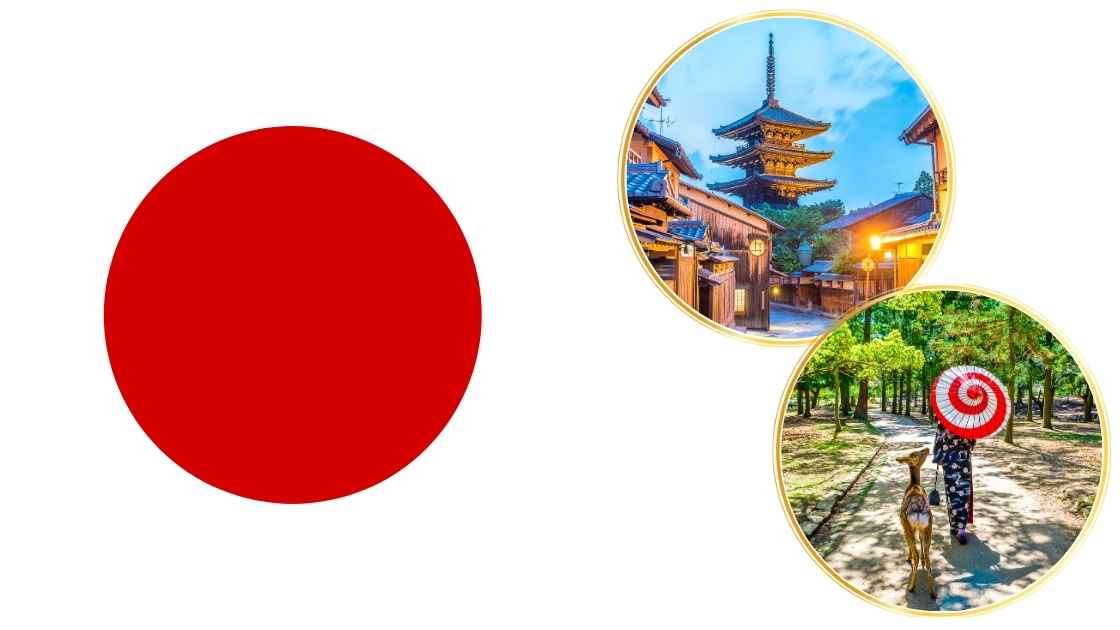
Tucked into a cradle of misty mountains and whispering forests, Kyoto feels like a place where time slows down.
Where ancient wooden gates creak open to moss-covered temples.
Where monks chant before dawn.
Where nature and ritual blend into everyday life.
But why is Kyoto considered sacred? Let’s wander gently through the heart of this city and explore the reasons behind its deep spiritual significance.
🏯 1. Home of Over 1,600 Temples and Shrines
Kyoto holds one of the densest concentrations of sacred sites in the world.
From the golden glow of Kinkaku-ji to the red torii tunnels of Fushimi Inari, each temple tells its own story of devotion.
Many of these places were founded over a thousand years ago, becoming quiet sanctuaries for meditation, prayer, and reflection.
Takeaway: Whether you’re Buddhist, Shinto, or simply curious, there’s a sense of something deeper in these spaces—timeless, grounding, and still.
🧘 2. A City Built on Feng Shui Principles
Kyoto was designed in the 8th century following the rules of geomancy—an ancient system meant to harmonize humans with the natural and spiritual world.
Mountains to the north, water to the south, and temples placed with intention to balance cosmic energies.
Mindset shift: Spiritual energy isn’t always loud. Sometimes it’s in the way a city breathes and flows.
🌸 3. Nature and Spirit Are Intertwined
In Kyoto, nature is sacred.
Cherry blossoms in spring.
Cicadas in summer.
Crimson leaves in autumn.
Snow resting softly on bamboo in winter.
Many temples have gardens designed not just for beauty, but for contemplation—encouraging visitors to sit, observe, and feel connected.
Practice: Try sitting quietly in a temple garden. Let yourself be fully present. That stillness is part of the sacred.
🔥 4. Living Traditions and Seasonal Rituals
Kyoto isn’t just preserving the past—it’s living it.
From fire festivals like Gozan Okuribi to tea ceremonies passed down for generations, the city hums with quiet reverence for tradition.
Many of these rituals are deeply spiritual, meant to honor ancestors, purify the spirit, or realign with nature.
Example: Witnessing monks walk barefoot in snow during a winter pilgrimage reminds us of the human commitment to something greater than ourselves.
⛩️ 5. Fushimi Inari’s Torii Gates: A Passage Between Worlds
The thousands of red gates leading up Mount Inari are more than just a photo spot.
They symbolize transition—from the physical to the spiritual world. Each gate is a prayer, a hope, a thank-you.
Walking this path can feel like a gentle shedding of everyday worries.
Suggestion: Visit early, before the crowds. Let your steps become meditative, your breath match the rustling of leaves.
🧎 6. Kyoto as a Pilgrimage Destination
For centuries, people have traveled to Kyoto seeking clarity, healing, and answers.
It’s part of ancient pilgrimage routes that include the Saigoku Kannon circuit and other spiritual trails. Even walking from one temple to another can feel like a quiet ritual.
Mindset shift: You don’t have to be religious to walk with intention. Every journey here is an invitation inward.
📿 7. Sacred Simplicity in Everyday Life
Beyond the temples and ceremonies, Kyoto’s sacredness is felt in the small, everyday gestures:
A perfectly placed rock in a Zen garden.
A shopkeeper bowing with sincerity.
A hand-drawn omamori (charm) gifted with care.
Reminder: The sacred isn’t always grand. It’s often found in moments of slowness, intention, and quiet respect.
🌙 Let Kyoto Whisper to You
Kyoto doesn’t shout its sacredness—it whispers it.
In the stillness of a mossy path.
In the scent of incense drifting through wooden halls.
In the hush that falls as snow kisses temple rooftops.
If you let it, Kyoto will open a quiet doorway—not just to the past, but to something timeless within you.