Okay, you asked for tips on Japanese kitchen cleaning, and I’m way too excited to pretend otherwise. I love how Japanese kitchens feel efficient, calm, and actually livable — even if mine looks like a ramen shop after karaoke night. Who hasn’t spilled soy sauce at 2 a.m., right?
I cook a lot and I clean what I cook, which means I learned some useful habits the hard way. I’ll share what works for me: routines, tools, tiny rituals, and a couple of weird-but-effective tricks. FYI, I swear by this system. 🙂
Design & mindset: Why Japanese kitchen cleaning feels different
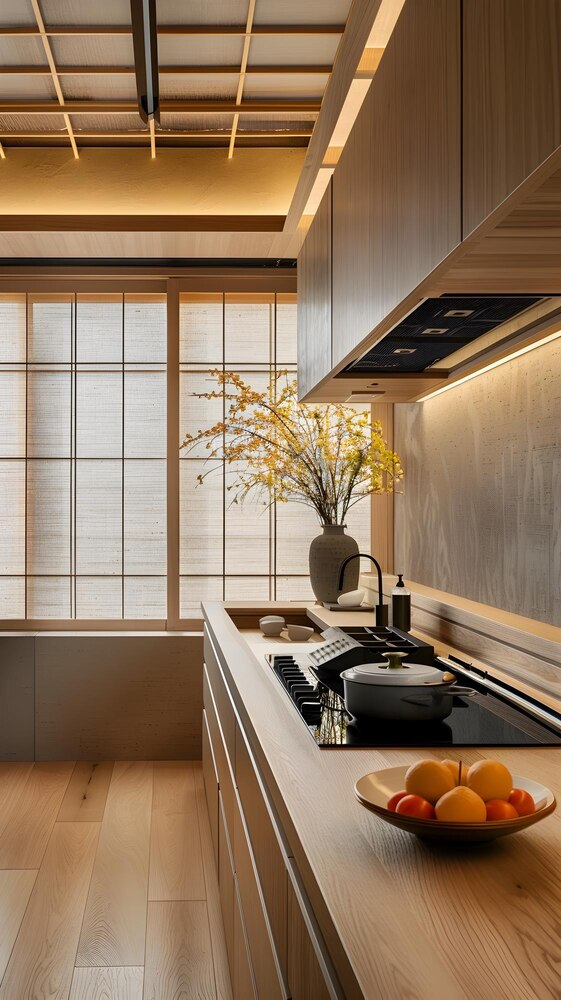
Have you noticed how Japanese kitchens prioritize space and simplicity? I love that. The layout encourages fast cleanups because everything has a place. That design informs my cleaning mindset: I aim for daily reset rather than marathon cleaning weekends.
Let’s be honest — when you respect your tools and surfaces, cleaning feels less like punishment and more like maintenance. I make quick choices: put away, wipe, rinse. Small actions. Big payoff.
Daily routine I actually follow (no judgment)
I keep this routine short so I don’t skip it. I clean as I go and I stick to two 10-minute windows: one after breakfast, one after dinner. It works because it’s tiny, consistent, and human-friendly.
- Clear counters: put dishes in dishwasher or wash immediately.
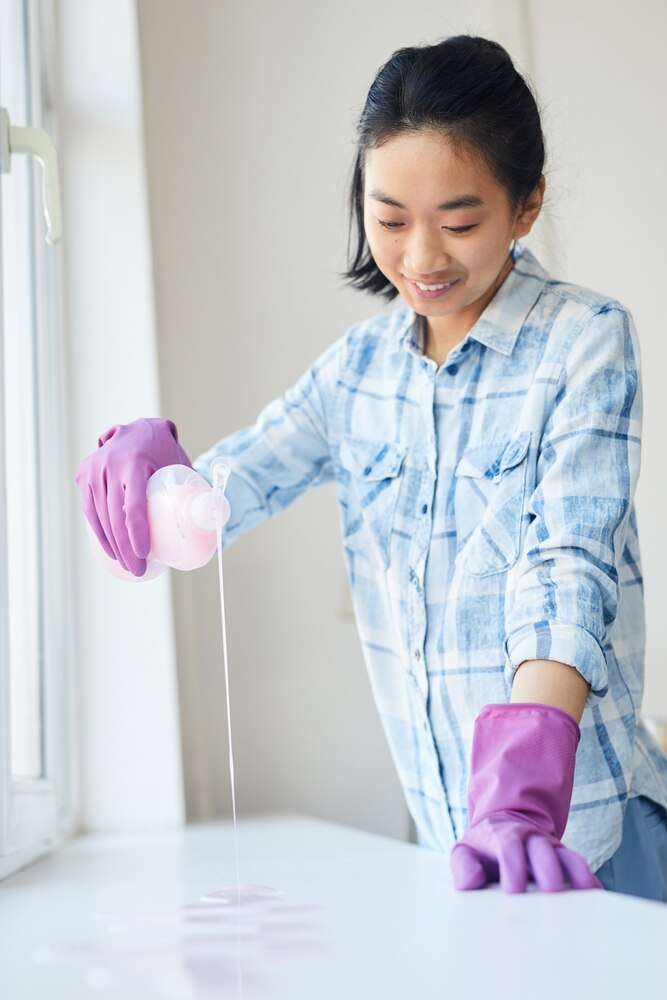
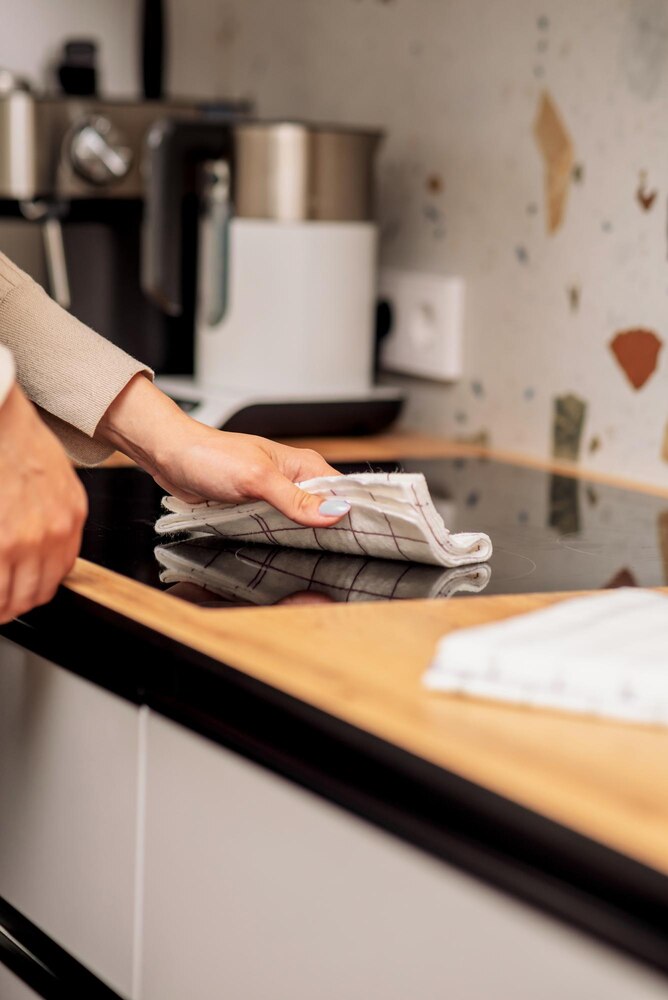
- Wipe surfaces: microfiber cloth + warm water (or diluted dish soap).
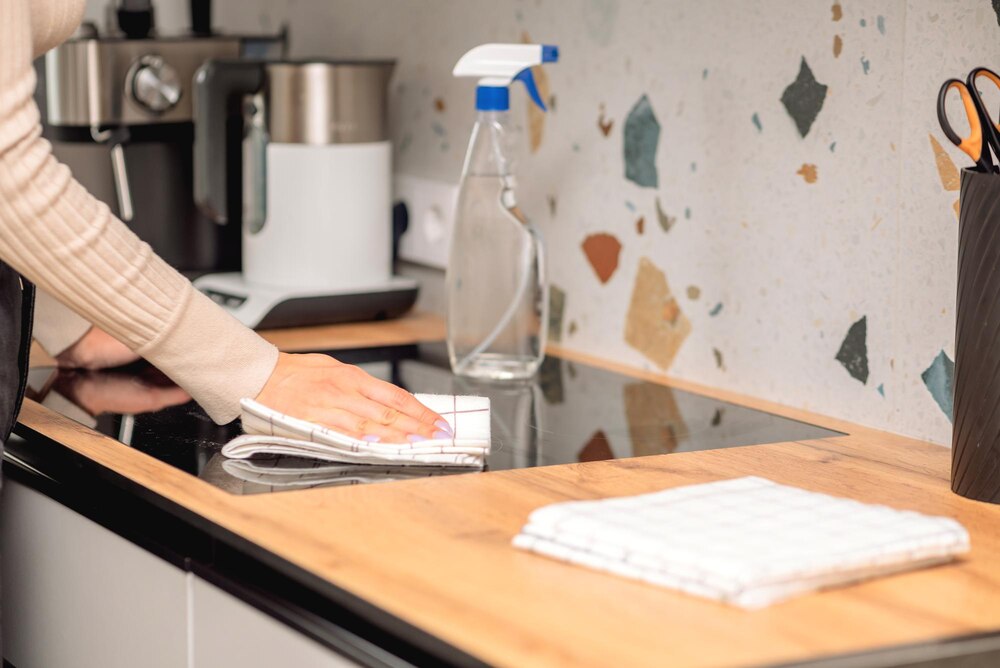
- Quick stove wipe: I use a damp cloth right after cooling — prevents baked-on grimy monsters.
- Sink care: rinse, remove food bits, dry with a towel.
Short. Repetitive. Kind to my future self.
Weekly deep-clean checklist that doesn’t kill the weekend
I block one hour on Saturday morning. Yes, I could binge-watch a show, but who am I to judge? I choose cleaning because my kitchen rewards me with calm for the week.
- Degrease filters and hood: soak in hot water + dish detergent.
- Fridge wipe: pull out expired things, wipe shelves with mild detergent.
- Floor mop: use slightly warm water; I add a splash of rice vinegar for shine.
I rotate deeper tasks monthly — like descaling tea kettles or washing curtains — to keep chores manageable.
Tools & products I can’t live without
Yes, I have a shelf that looks like a cleaning shrine. No shame. These tools do the heavy lifting when I need them to.
My top picks
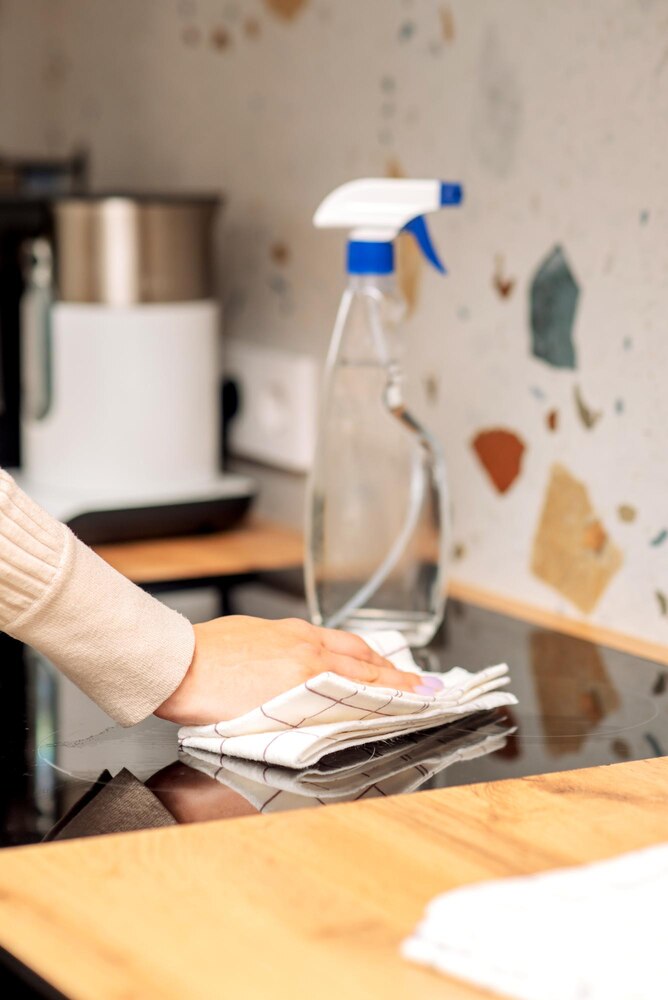
- Microfiber cloths: for counters and stainless steel.
- Konjac sponge or soft scrub brush: for delicate surfaces and jars.
- White vinegar & baking soda: multipurpose, cheap, and weirdly satisfying.
- Neutral pH dish soap: gentle on wood and effective on grease.
IMO, buy quality where it counts—cloths that survive the wash save you money later.
Cleaning specific Japanese items (rice cooker, donabe, knives)
I treat special items with rituals. They deserve it. You treat them well, they return the favor with better meals and fewer odors.
Rice cooker
I unplug, let it cool, then remove and wash the inner pot with warm soapy water. I wipe the lid and steam vent with a damp cloth. If something stuck, I soak the pot for 10 minutes — works like a charm.
Donabe & wooden boards
I rinse donabe gently and air-dry it. For wooden boards, I scrub, rinse, dry upright, and oil monthly with food-safe oil. Keeps them from cracking and smelling like a campfire.
Knives
I handwash knives immediately, dry them, and store in a block or magnetic strip. I sharpen regularly; dull knives make everything harder—and scarier.
Small-space hacks: make a tiny kitchen behave
My first apartment could’ve been used as a storage closet. I learned to trick a small kitchen into feeling roomy. You can too.
- Vertical storage: hang pots and utensils to free counter space.
- Stackable containers: keep pantry neat and visible.
- Foldable drying rack: use it when needed, stash it when not.
I also use a small caddy for daily cleaning supplies and stash it under the sink. When I tidy, I grab the caddy and move like a cleaning ninja.
Eco-friendly Japanese cleaning practices I actually use
I care about the planet and my lungs, so I prefer simple, natural methods. Vinegar and baking soda feel old-school but they perform. I dilute vinegar for glass and countertops, and I use baking soda for scrubbing tough spots.
I also follow one small rule: never mix vinegar with bleach. Don’t do that. Ever. I learned that the safe way — through a frantic internet search after smelling the science experiment.
Small swaps add up: refillable cleaners, cloths over paper towels, and energy-conscious appliance use. My wallet thanks me too.
So that’s my take on Japanese kitchen cleaning: practical, broken into tiny habits, and occasionally ritualistic. If you try one new thing this week, make it the two 10-minute resets — you’ll thank me. Want my favorite cleaning playlist next? I have opinions. 🙂