There’s a quiet kind of comfort that lives in a Japanese home.
It’s not loud or filled with things.
It’s warm, spacious in feeling, and deeply intentional.
If you’ve ever felt soothed by the soft crunch of tatami under your feet or the steam rising from a cup of matcha in a small teacup, you’ve felt it too.
Some call it the Japanese version of hygge—but it’s really its own kind of cozy.
Here’s how to invite this gentle calm into your own space:
🍵 1. Embrace the Ritual of Tea
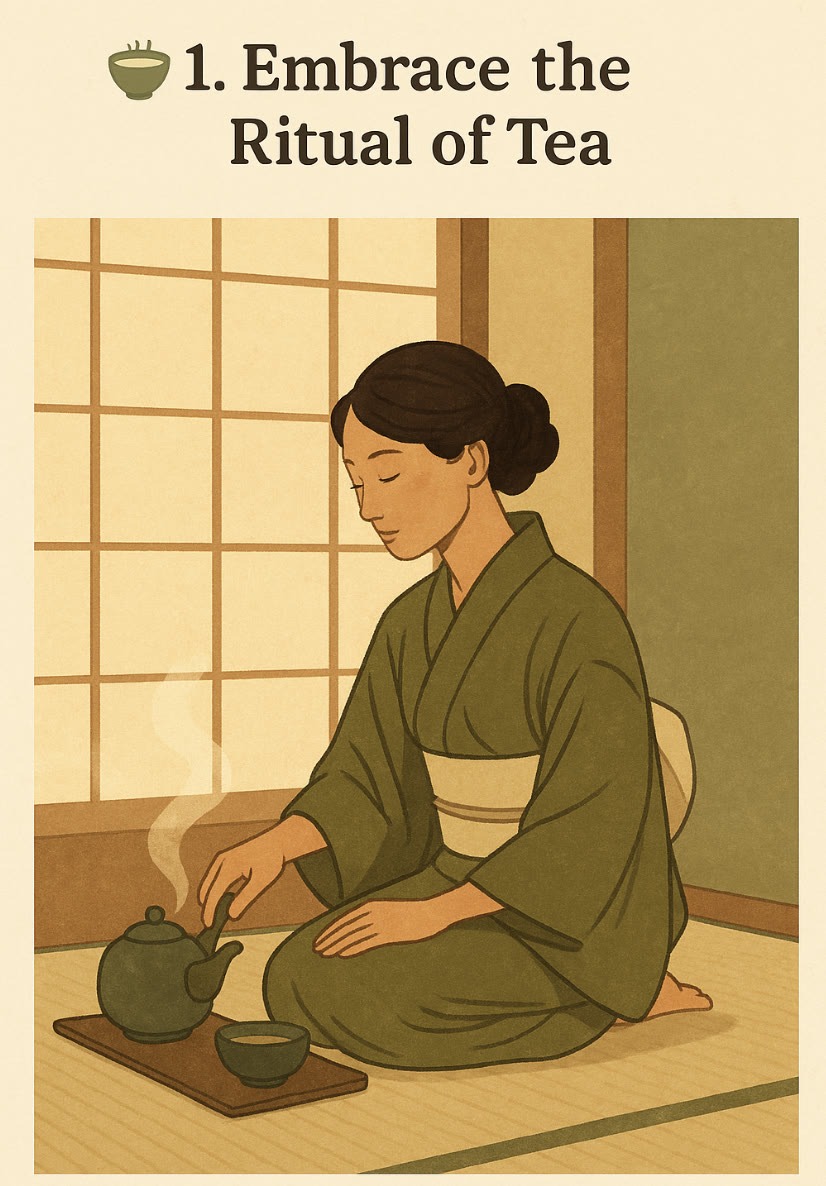
In Japan, tea isn’t just a drink—it’s a moment.
A pause in the day.
A way of tending to yourself and others.
You don’t need a formal tea ceremony.
Just a simple tray, a teapot, and a quiet spot to sit.
Try this: Boil water slowly. Choose your cup with care. Pour gently. Drink without doing anything else.
🌿 2. Create Space, Not Just Decor
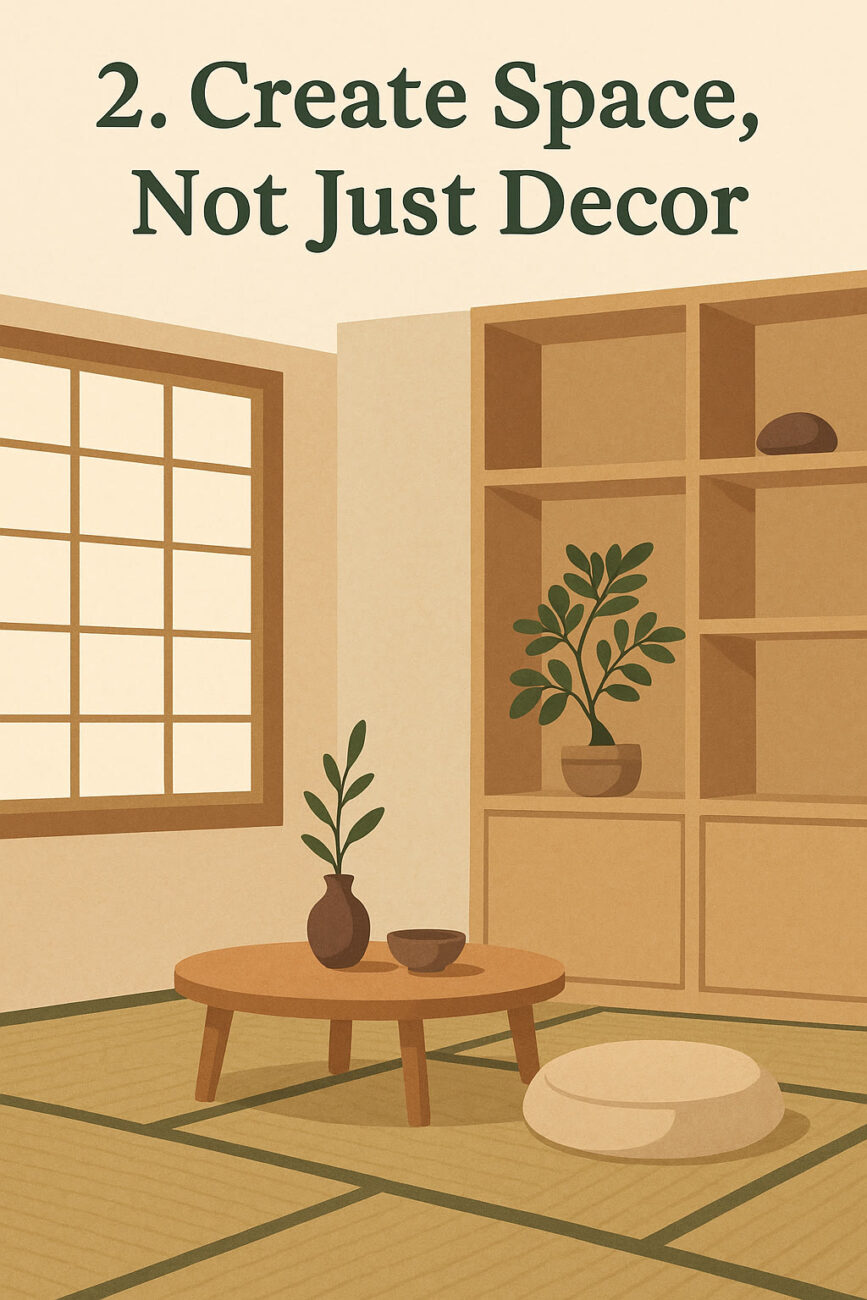
Japanese interiors often feel spacious—even when they’re small.
The secret? They remove more than they add.
Tatami mats, sliding doors, and low furniture all invite flow and airiness.
Try this: Clear one corner. Leave it mostly empty, maybe with just a single plant or candle. Let it breathe.
🕯️ 3. Let Natural Light and Texture In

Cozy in Japanese design doesn’t come from heavy blankets—it comes from soft light, gentle shadows, and organic texture.
Washi paper, bamboo blinds, linen cushions. These materials don’t shout. They whisper.
Try this: Swap one synthetic item (like a plastic lamp) for something made of wood, paper, or cotton. Let sunlight do most of the work.
📚 4. Curate for Comfort
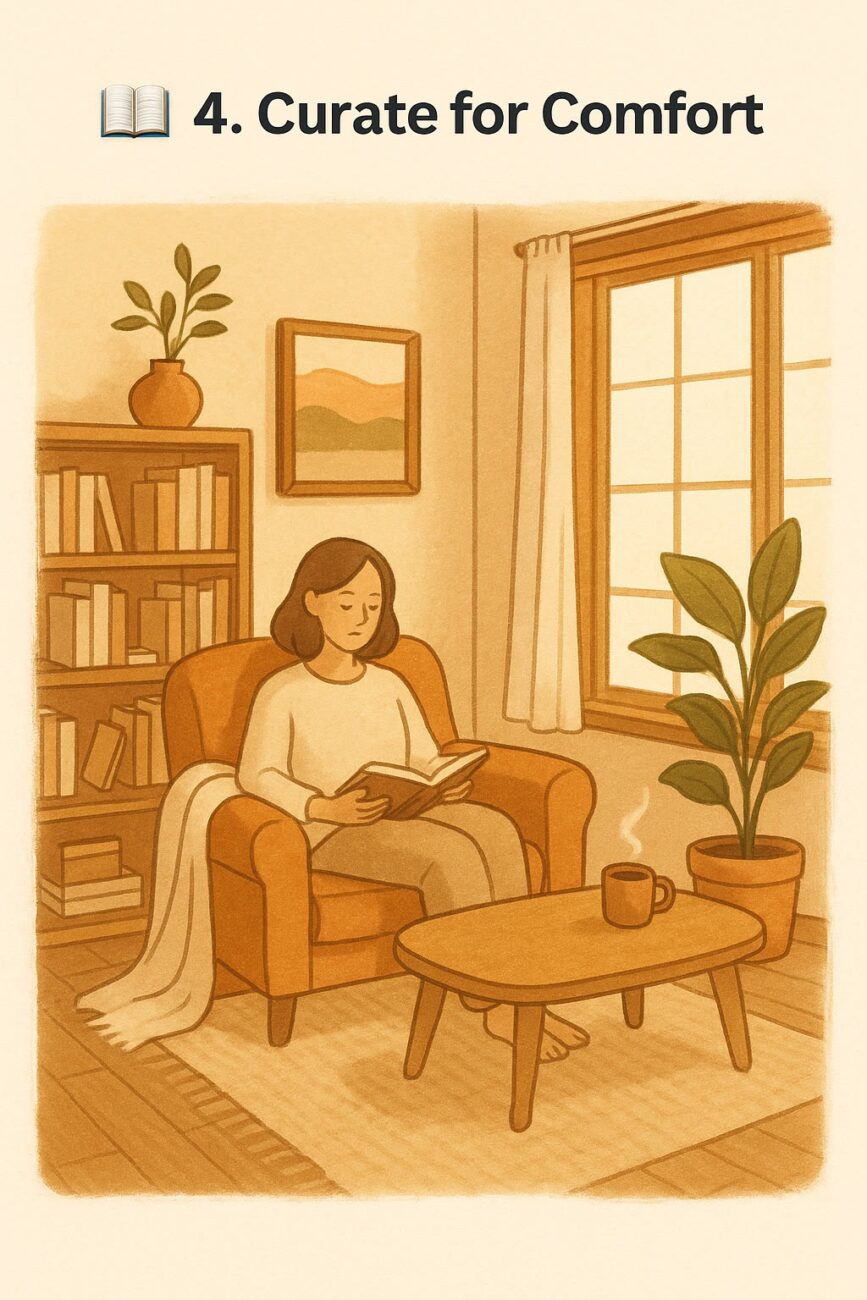
Instead of filling shelves with everything you own, select a few meaningful pieces.
A hand-thrown bowl. A favorite book. A stone from the river.
Japanese coziness is all about quiet beauty in small things.
Try this: Clear one shelf and place 3–5 objects you truly love. Let them stand alone without crowding.
🧘 5. Sit Low and Still
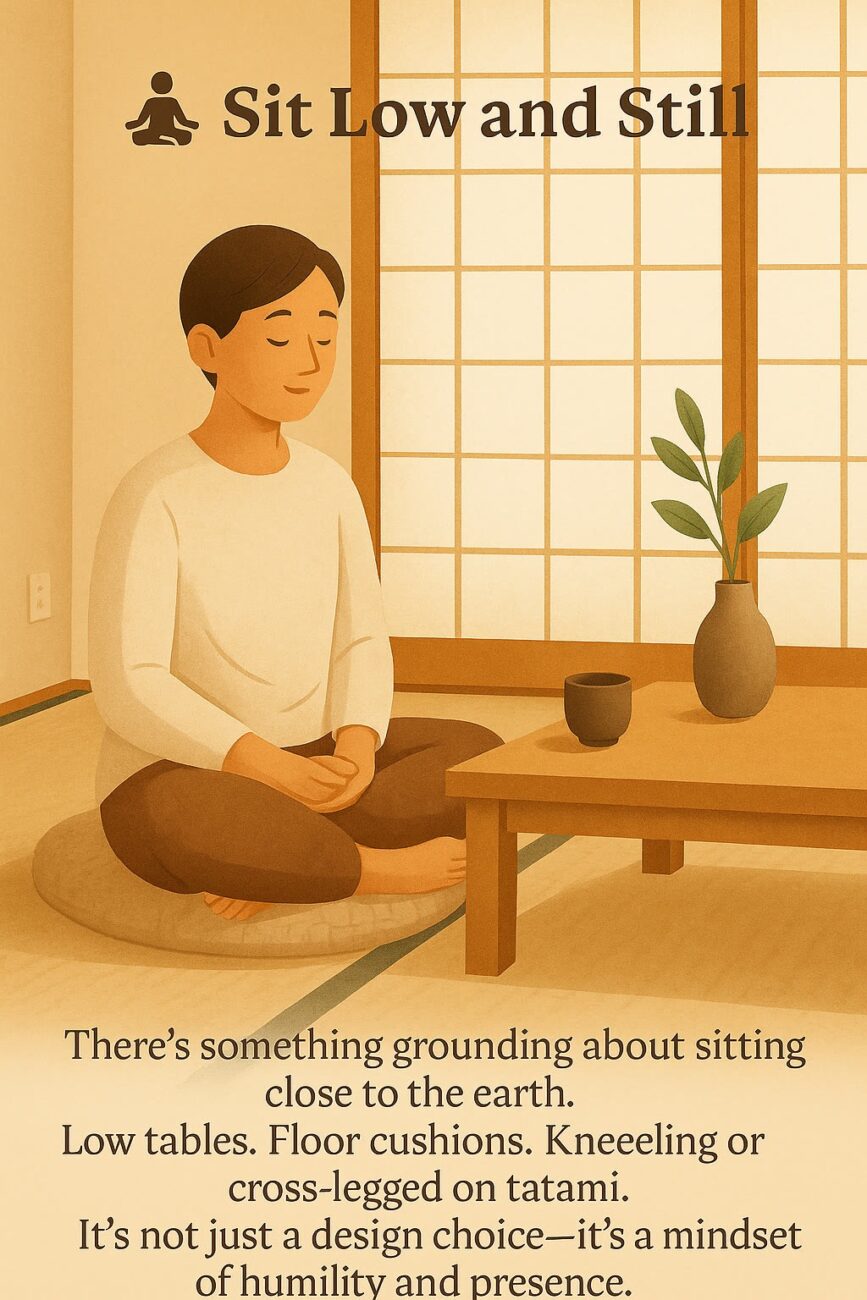
There’s something grounding about sitting close to the earth.
Low tables. Floor cushions. Kneeling or cross-legged on tatami.
It’s not just a design choice—it’s a mindset of humility and presence.
Try this: Add a cushion or zabuton to your space. Use it for tea, journaling, or simply sitting with your thoughts.
🌸 6. Welcome the Seasons
In Japanese culture, seasons are celebrated in daily life.
From the flowers on the table to the color of a noren curtain, everything shifts gently with nature.
Try this: Add a small seasonal element—a branch, a leaf, a flower. Let it remind you of time moving gently.
🔕 7. Cozy Isn’t Cluttered
Warmth doesn’t mean more stuff. It means more intention.
Cozy in Japan feels open, because it’s mindful.
There’s a quiet joy in placing things with care—and leaving room for nothingness.
Try this: Tidy slowly, like a ritual. Choose calm music or silence. Let cleaning be part of your comfort.
You don’t need to live in Kyoto or own tatami mats to feel this way.
Just a small shift in how you care for your space.
Let your home feel like a soft breath.
Quiet. Kind. Present.