Meaning of Inaka
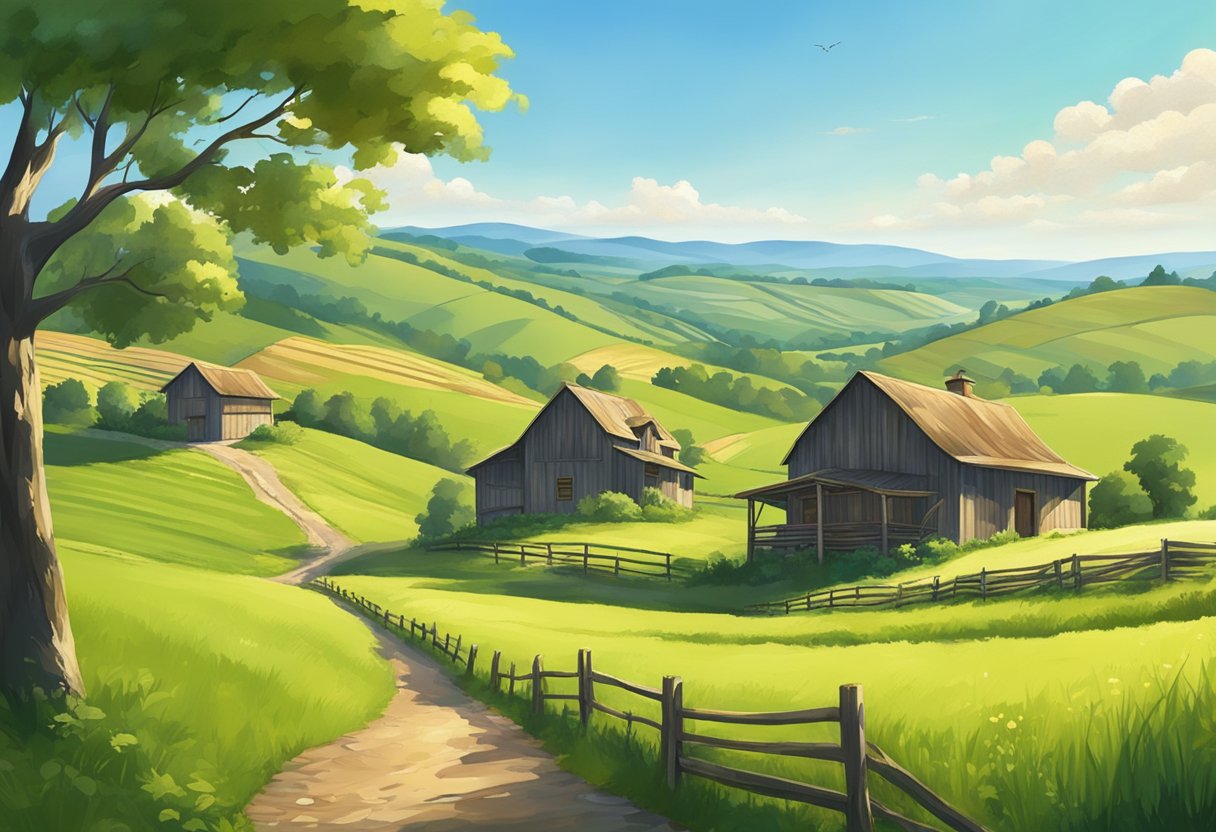
In Japan, the term 田舎 (inaka) is often used to indicate the countryside, as opposed to the bustling urban centers.
The kanji characters 田 (ta) and 舎 (sha) translate literally to “rice fields” and “huts” respectively, conveying an image rooted in agriculture and simplicity.
| Kanji | Hiragana | English Meaning |
| 田舎 | いなか | countryside/rural area |
When I mention inaka, it encompasses more than just the geographical aspect; it’s also about a way of life.
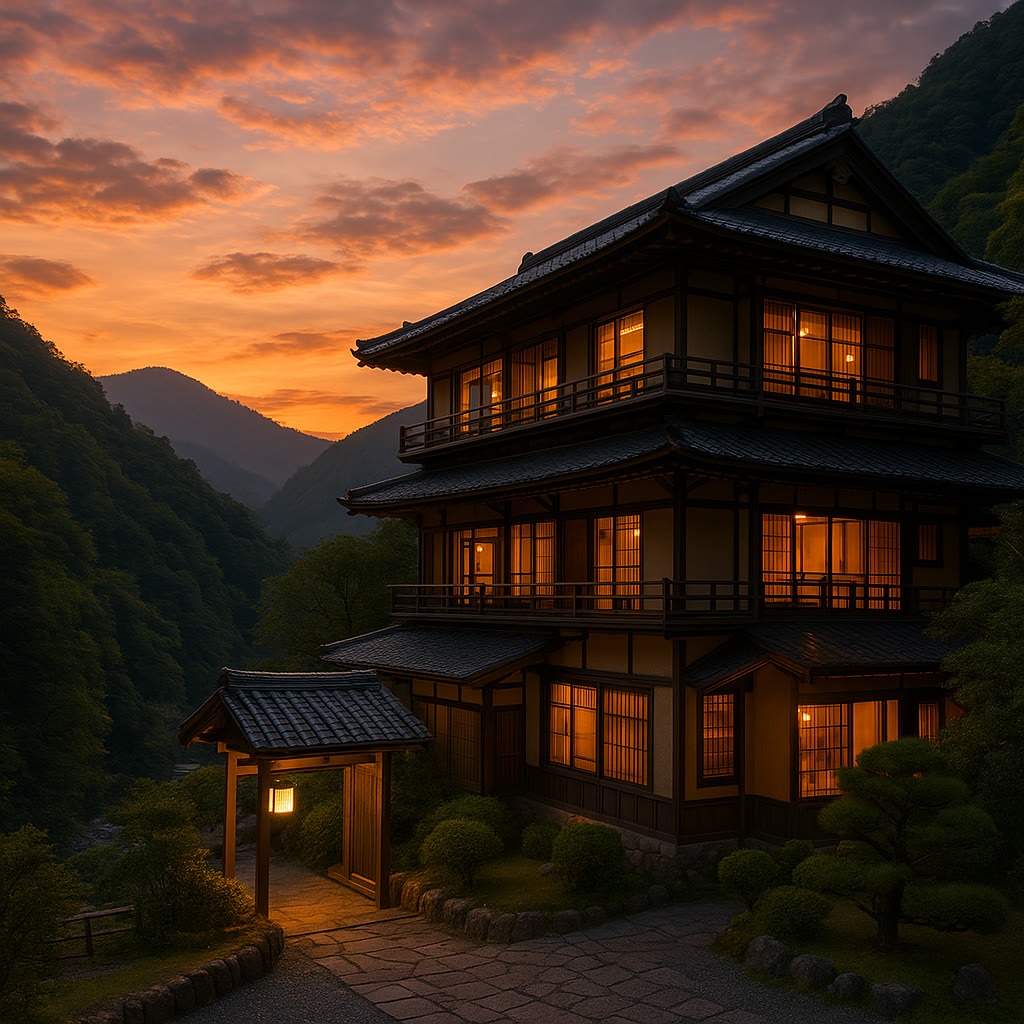
It is perceived as being more laid-back and community-oriented, with closer ties to nature and traditional Japanese culture. It’s common for the word “inaka” to conjure images of vast, open fields, small towns, and a slower-paced lifestyle.
This contrasts starkly with life in cities like Tokyo or Osaka, where the rhythm is faster and the environment is highly urbanized.
In day-to-day conversations and various contexts, I might use “inaka” as a noun to describe my hometown if it’s in an agrarian area, or even as an adjective, such as in the sentence “inaka lifestyle,” to denote something related to or resembling countrified living.
Cultural Significance

The concept of inaka holds a unique position in Japan. It represents traditional values and a connection to the natural world.
Rural Lifestyle in Japanese Culture
Countrified life is an important part of Nippon culture. It reflects a languid life, closer ties to nature, and a strong adherence to traditions.
Villages and small towns, representing inaka, are usually associated with agriculture and play a key role in preserving the customs and practices integral to the Nipponese way of life.
For example, these pastoral areas often symbolize home, where a sense of community and tradition come together.
Inaka in Literature and Media
In literature and media, inaka often emerges as a setting that provides a stark contrast to metropolitan life. It’s frequently portrayed as a bastion of authenticity, where the essence of Nipponese identity and community bonds can be found.
This point of contrast is a common theme, where inaka is a backdrop for storytelling and exploring societal issues within Japan.
Linguistic Aspects

In this section, I’ll explore the roots and current usage of the word “inaka” within the Japanese language.
Etymology
“Inaka” (田舎) originates from Nihon characters that signify countrified landscapes. The first character, 田, means “rice field,” and the second character, 舎, means “dwelling” or “house.”
These characters together paint a picture of countryside living, heavily associated with agricultural practices.
Usage in Modern Japanese
In modern Japanese, “inaka” refers to areas outside of bustling metropolis centers. It describes places with traits such as:
- Smaller population
- Fewer amenities
- Slower-paced lifestyle
While the term is factual, its connotation can vary. To metropolis dwellers, “inaka” might hint at a lack of metropolitan sophistication.
However, others may see it as synonymous with tranquility and unspoiled nature. The usage, therefore, is contextual, reflecting the speaker’s perspective on pastoral life.
Comparison with Urban Living

In my research, I’ve found that “inaka” represents the tranquil, natural environment of the countryside. Living in the inaka contrasts significantly with metropolitan life, primarily due to the differing pace and lifestyle.
Tranquility: The inaka is noted for its quietness, a stark contrast to metropolitan areas. Where cities are a hubbub of noise—traffic, construction, crowds—the inaka offers peace.
Cost of Living: The cost of living is generally lower in countrified areas. Essentials such as housing, food, and transport are more affordable than in the metro.
- Housing Expenses: Significantly lower in the inaka.
- Daily Essentials: Groceries and other necessities tend to be cheaper.
Population Density: Cities are often densely populated. The inaka, however, is characterized by smaller communities and open spaces.
- Urban Areas: Congested living; high population density.
- Inaka: Spread out living spaces; low population density.
Lifestyle Pace: One of the most pronounced differences is the pace of life. Metropolitan environments are fast-paced, while in the inaka, life tends to move more slowly.
- City Life: Fast-paced, deadline-driven.
- Rural Life: Slower-paced, often agriculture-oriented.
Amenities and Accessibility: Metropolitan living provides extensive amenities—shops, restaurants, entertainment—but these amenities might be fewer and farther between in the intake.
- Urban Accessibility: Services are numerous and conveniently accessible.
Inaka Accessibility: Fewer services, which may require travel to reach.
Inaka in Popular Culture
In popular culture, the term “inaka” is often perceived with a sense of nostalgia and romanticism. I’ve noticed that in anime and manga, inaka settings serve as the backdrop for stories that emphasize simplicity and the serenity of agrarian life.
Characters are frequently seen engaging with the environment, participating in traditional festivals, and experiencing a close-knit community life.
Films and Television:
- Summer Wars: The inaka becomes a central character as a space where family bonds are highlighted.
- My Neighbor Totoro: Showcases countrified Nihon filled with mysticism and connection to the outdoors.
Music:
Nipponese songs occasionally pay homage to the inaka, depicting it as an idyllic place away from the hustle of metropolis life.
Literature:
- Authors like Shusaku Endo have penned novels set in pastoral Nihon, exploring the depths of human experience against the peaceful backdrop of the inaka.
By understanding inaka in popular culture, I’ve come to appreciate its role in shaping perceptions of the countryside in Nihon.
It often represents an escape from the stress and hustle and bustle of metropolitan living, a place where the pace of life slows down and the bonds between people and the environment grow stronger.
Economic Implications

The term “inaka” carries significant economic connotations for Japan, impacting local economies and influencing migration trends.
Impact on Local Economies
My analysis shows that “rural areas” or the “inaka” often face economic challenges due to limited job opportunities.
Historically, these regions relied heavily on agriculture, with many farmers dedicated to growing crops on their farms, which now support fewer people due to mechanization and market shifts. The scarcity of diverse employment options can result in reduced economic growth compared to metropolitan areas.
Work Options:
- Agriculture: Dominant sector but less labor-intensive than before.
- Remote Work: Increasing trend, yet not feasible for all professions.
- Local Enterprises: Often small scale, with limited expansion capacity.
Metropolitan to Rural Migration Trends
Recently, there’s been a subtle shift in migration patterns. While the trend previously saw individuals migrating from regions outside of major cities to metropolises for better job prospects, I’ve noticed a change.
Migration Data:
- Young Population: Younger generations are moving to megacities for education and employment.
- Aging Population: Older people like grandparents choose to retire in the inaka for a quieter life.
- Return Migration: This is a minor but notable trend in which some professionals return to or choose the inaka, seeking work-life balance enabled by remote working technologies.
Frequently Asked Questions

In these frequently asked questions, I’ll cover essential insights about the term ‘inaka’ related to Japanese culture and lifestyle.
What is the English translation of ‘inaka’?
‘Inaka’ translates to ‘countryside’ or ‘rural area’ in English. It denotes areas outside of Japan’s metropolitan neighborhoods.
How is ‘inaka’ characterized in Japanese culture?
In Japanese culture, ‘inaka’ represents regions with fewer amenities than the metropolis. It is often associated with agriculture and a connection to the wilderness. People living in inaka might be seen raising chickens or fishing, and the term can sometimes carry the stereotype of a “country bumpkin,” highlighting the provincial and traditional aspects of life.
What aspects differentiate ‘inaka’ from metropolitan areas in Japan?
‘Inaka’ areas are easily distinguished from their metropolitan counterparts. They have a smaller population density and limited job opportunities. Another tell-tale sign is the prevalence of a slower-paced lifestyle.
In what contexts is ‘inaka’ typically used?
The term ‘inaka’ is used to depict one’s hometown if it’s rural. It could also refer to discussing life and experiences in rural settings instead of Japan’s bustling cities.
What is the significance of ‘inaka’ in the context of the Japanese lifestyle?
‘Inaka’ is significant as a counterbalance to metropolitan life. It is often idealized for its tranquility and closeness to nature in the Japanese lifestyle.
How do people in Japan perceive ‘inaka’ areas?
Perceptions of ‘inaka’ vary. Some view it fondly for their peace and community spirit. Others might see them as lacking in conveniences and opportunities.