There’s something magical about stepping into a kitchen that feels light, airy, and calm.
No clutter on the counters.
No heavy colors or busy patterns pulling your eyes in every direction.
Just pure simplicity—where everything has a place and the space itself feels like a deep, refreshing breath.
Minimalist kitchens are not about “less for the sake of less.” They’re about creating a room that works beautifully, feels peaceful, and supports the rhythm of your everyday life.
If you’ve ever longed for a kitchen that inspires focus, clarity, and a sense of balance, minimalism might be the design path for you.
Here are eight thoughtful ways to bring stunning minimalist style into your kitchen—without losing warmth or personality.
🌿 Choose a Soft, Neutral Palette
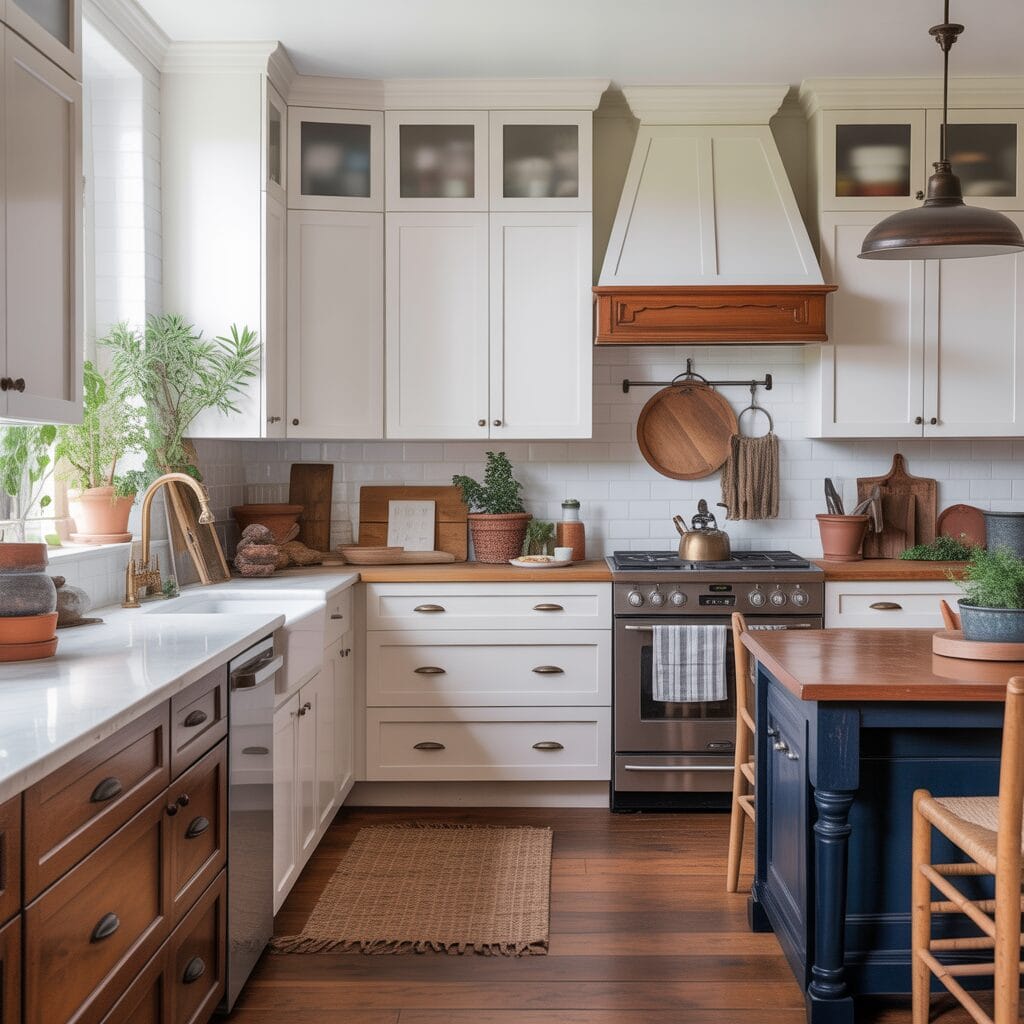
Color is the first impression your kitchen makes. In minimalist design, soft neutral shades set the tone for calmness and spaciousness.
Think:
- Crisp white walls that reflect light
- Warm beige cabinetry that feels natural and grounding
- Soft gray counters that blend seamlessly into the background
A monochrome base instantly simplifies the visual field. But minimal doesn’t mean flat—play with tones and textures within your palette. For example, pair matte white cabinets with a warm oak wood island, or soft cream walls with pale stone counters.
This combination creates harmony while still adding depth.
👉 Practical tip: If your kitchen already has darker cabinets, try painting just the upper cabinets white to open up the space while keeping balance with natural wood below.
✨ Streamline Surfaces
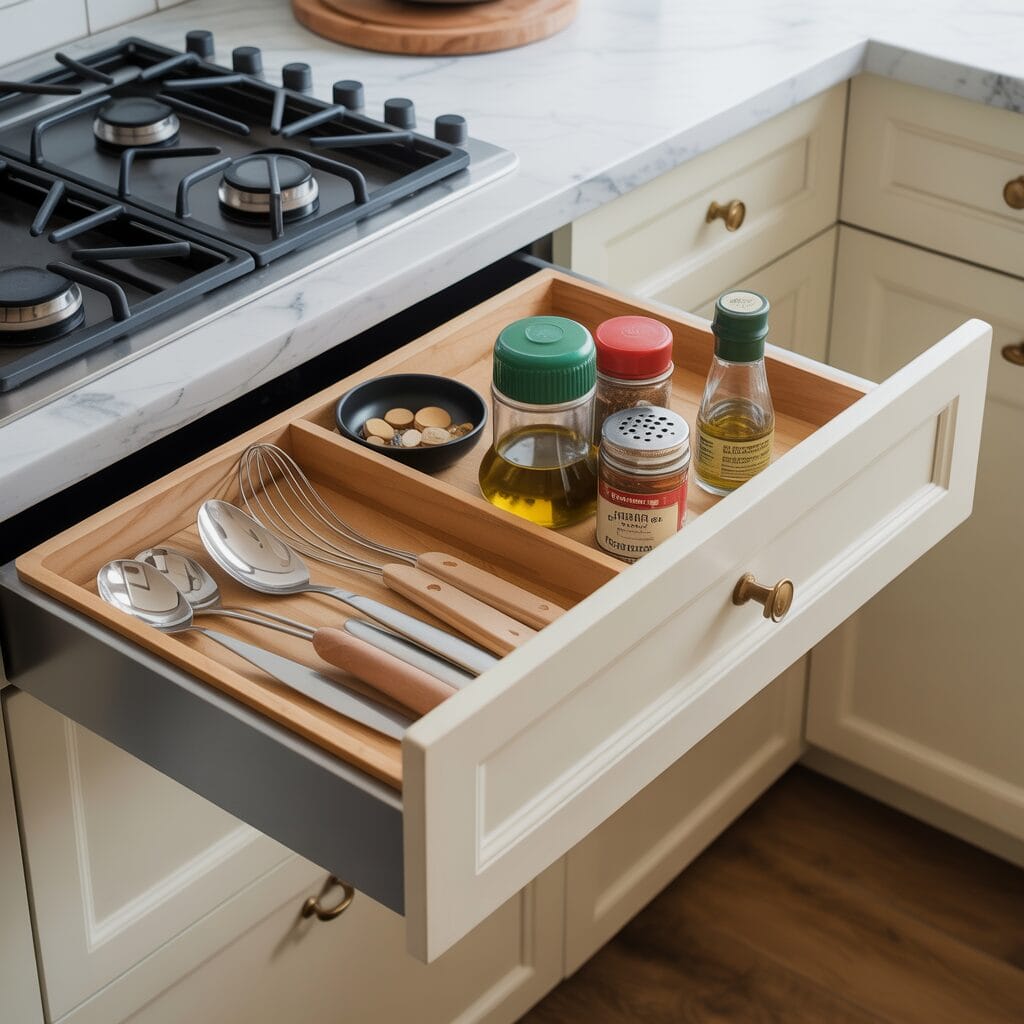
Counters are the heart of any kitchen—and in minimalism, they’re meant to breathe.
Clutter-free surfaces make cooking easier, cleaning faster, and the whole room calmer. Imagine walking in and seeing only a bowl of fresh lemons or a small vase of eucalyptus on the counter. The simplicity feels soothing.
Keep only what you truly use daily:
- A wooden cutting board
- A coffee maker (if it’s part of your morning ritual)
- A fruit bowl
Everything else can be tucked neatly inside drawers or cabinets.
👉 Practical tip: Store everyday items like utensils, oils, or spices in a shallow drawer right near where you cook. That way they’re accessible—but hidden from sight.
🍵 Embrace Natural Materials
Minimalism often gets mistaken for being cold or sterile. But with the right materials, it can feel deeply warm and welcoming.
Bring nature into your kitchen through materials that add texture and soul:
- Wooden shelves that showcase a few ceramic mugs
- Stone or quartz countertops with subtle veining
- Linen curtains that let in natural light
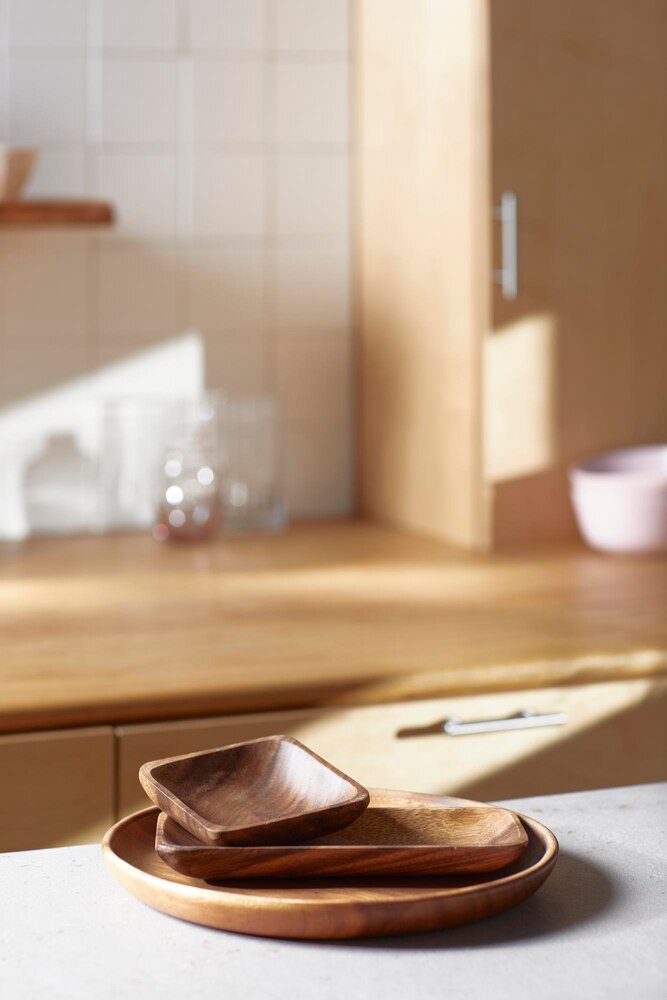
- Handmade clay bowls or ceramic dishes
These elements soften the clean lines and balance the simplicity with warmth. They also make your kitchen feel timeless instead of trendy.
👉 Example: Instead of a shiny chrome fruit basket, choose a woven rattan bowl—it’s functional but also adds a natural, calming touch.
🕯️ Play with Light
Lighting is one of the most transformative elements of minimalist design.
Daytime light should feel open and expansive. Keep window treatments light—sheer curtains or none at all—so natural light can flood the room.
For evenings, focus on soft, layered lighting:
- Pendant lamps with clean, simple shapes
- Under-cabinet lighting that keeps counters bright and uncluttered
- Warm-toned bulbs that give a cozy glow
Light in a minimalist kitchen is like brushstrokes in a painting—it highlights what matters while leaving space around it.
👉 Practical tip: Instead of one harsh ceiling light, layer smaller light sources throughout the space to create an even, peaceful ambiance.
📍 Prioritize Functionality
Minimalism is not just about how your kitchen looks—it’s about how it works.
Every item should have a purpose, and every detail should make your life easier. Think about:
- Drawers with dividers for utensils
- Built-in storage to keep appliances hidden
- Deep pull-out drawers for pots and pans
- A designated “drop zone” for mail or keys so clutter doesn’t pile on counters
When your kitchen is designed for function, daily tasks feel smoother and lighter. You’ll spend less time searching and more time enjoying.
👉 Example: If your counter is always cluttered with chargers and mail, add a small wall-mounted organizer by the entry. That one shift keeps your kitchen clean without effort.
🌸 Add One Statement Piece
Minimalist kitchens thrive on simplicity—but that doesn’t mean they lack personality.
The trick is choosing one statement piece that stands out against the calm backdrop. This creates a focal point that elevates the whole space.
It could be:
- A striking pendant light above the island
- A backsplash with a subtle but textured tile
- A single sculptural vase on the counter
By keeping the rest of the space quiet, your chosen detail has room to shine without overwhelming.
👉 Example: A black matte faucet can become the star of an all-white kitchen—simple, bold, and unforgettable.
🍃 Keep Nature Close
Plants breathe life into minimal spaces. They add color, freshness, and a sense of calm.
Choose greenery that suits your space and lifestyle:
- A potted herb like basil or rosemary for the windowsill
- A trailing pothos or ivy for open shelving
- A small olive tree in a terracotta pot for a touch of Mediterranean charm
The beauty of plants in a minimalist kitchen is that they double as décor and function. Herbs are not only pretty but also useful for cooking.
👉 Practical tip: Stick to just one or two plants in view—too many can clutter the calm aesthetic.
🧘 Create Breathing Space
One of the most overlooked but powerful aspects of minimalism is empty space.
We often feel the urge to fill every wall, every corner, every surface. But leaving areas open is what creates balance.
- Empty walls let the room feel spacious
- Clear floors make the space easy to move through
- Blank countertops give your eyes a place to rest
Think of your kitchen like a meditation space—calm, intentional, and uncluttered.
👉 Example: Instead of hanging three pieces of art on one wall, choose one simple framed print. Let it breathe.
🍂 Mindset Shift: Less but Better
At the heart of minimalism is a mindset shift: it’s not about deprivation—it’s about refinement.
When you choose fewer things, you can choose better things.
A smaller collection of mugs, but each one you love.
Fewer gadgets, but each one well-made and used often.
This way, your kitchen isn’t just functional—it reflects your values.
Minimalism invites you to slow down, simplify, and enjoy the everyday rituals of cooking and gathering.
Final Thought
A minimalist kitchen is more than a design choice—it’s a lifestyle shift.
It’s about creating a space that feels peaceful, intentional, and deeply yours. A place where every surface feels calm, every detail has purpose, and the beauty comes from simplicity.
When you step into your kitchen and feel that breath of calm, you’ll know minimalism has done its quiet magic.