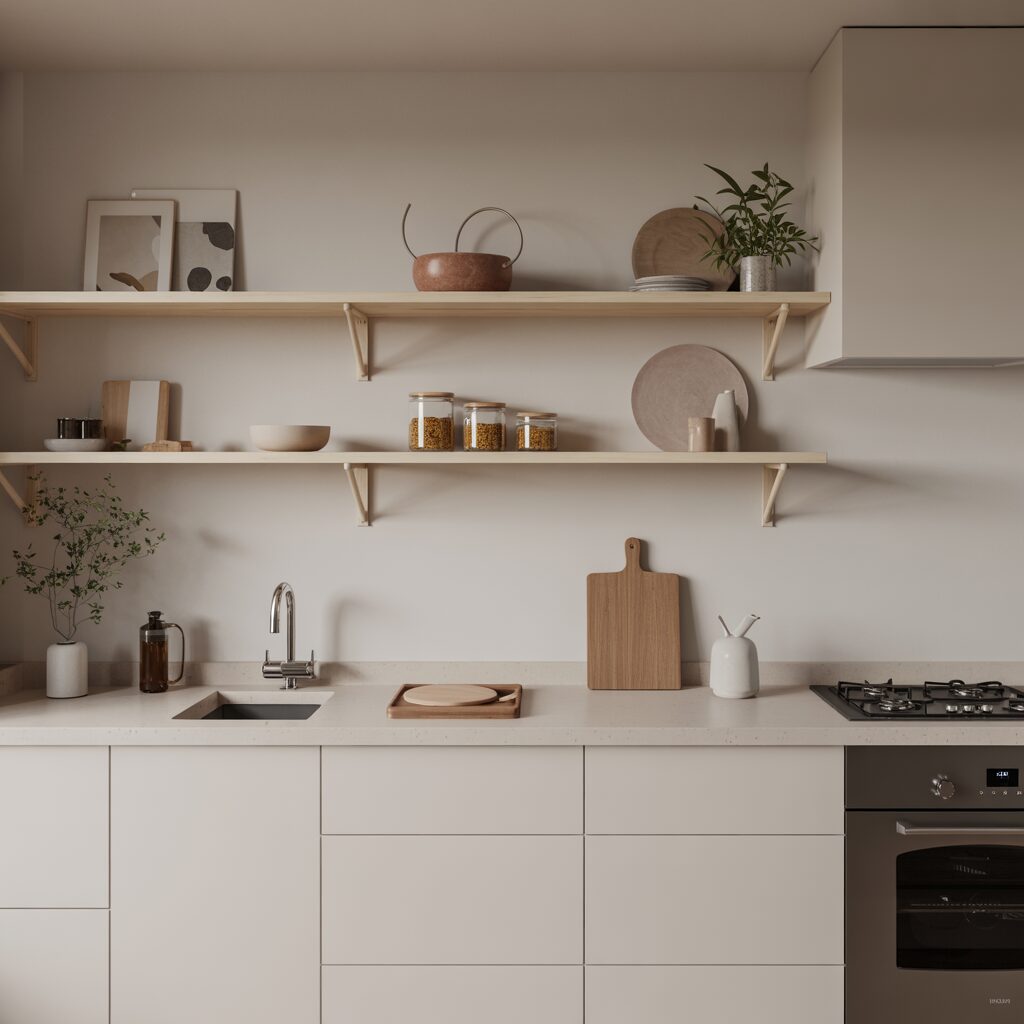
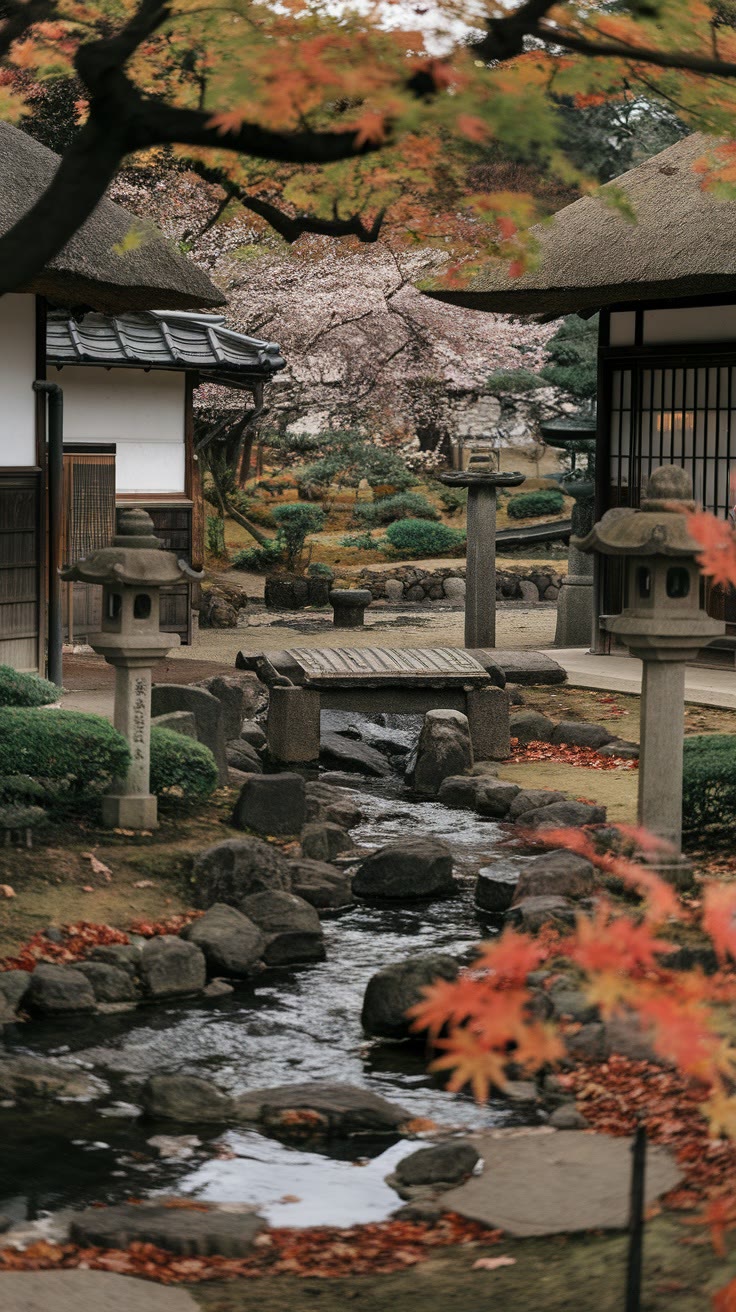
Creating a Japanese-inspired outdoor kitchen is like inviting serenity into your backyard — it’s all about blending nature, simplicity, and functionality.
Whether you’re dreaming of quiet tea moments or lively yakitori nights under the stars, here are some beautiful and calming ideas to inspire your space.
🍃 Embrace Natural Materials
Think stone, wood, and bamboo.
A Japanese outdoor kitchen should feel rooted in the earth.
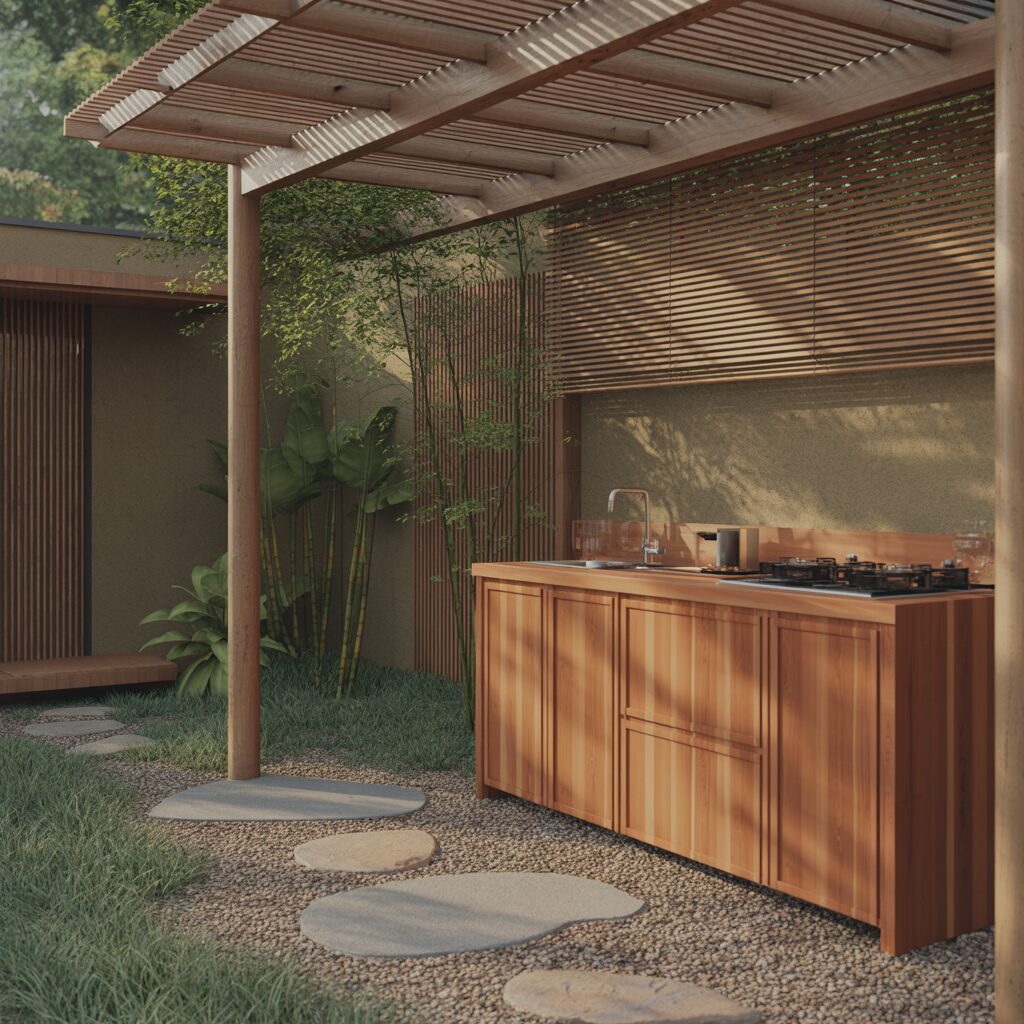
Use cedar or teak for cabinetry and pergolas. Go for river stones or gravel flooring, and incorporate bamboo screens for privacy or soft wind movement. These materials age beautifully and make the space feel peaceful year-round.
🔥 Add a Traditional Grill or Kamado
Cooking is central to the experience.
A ceramic kamado grill (like the Big Green Egg) is perfect for slow-cooked meats and rice dishes.
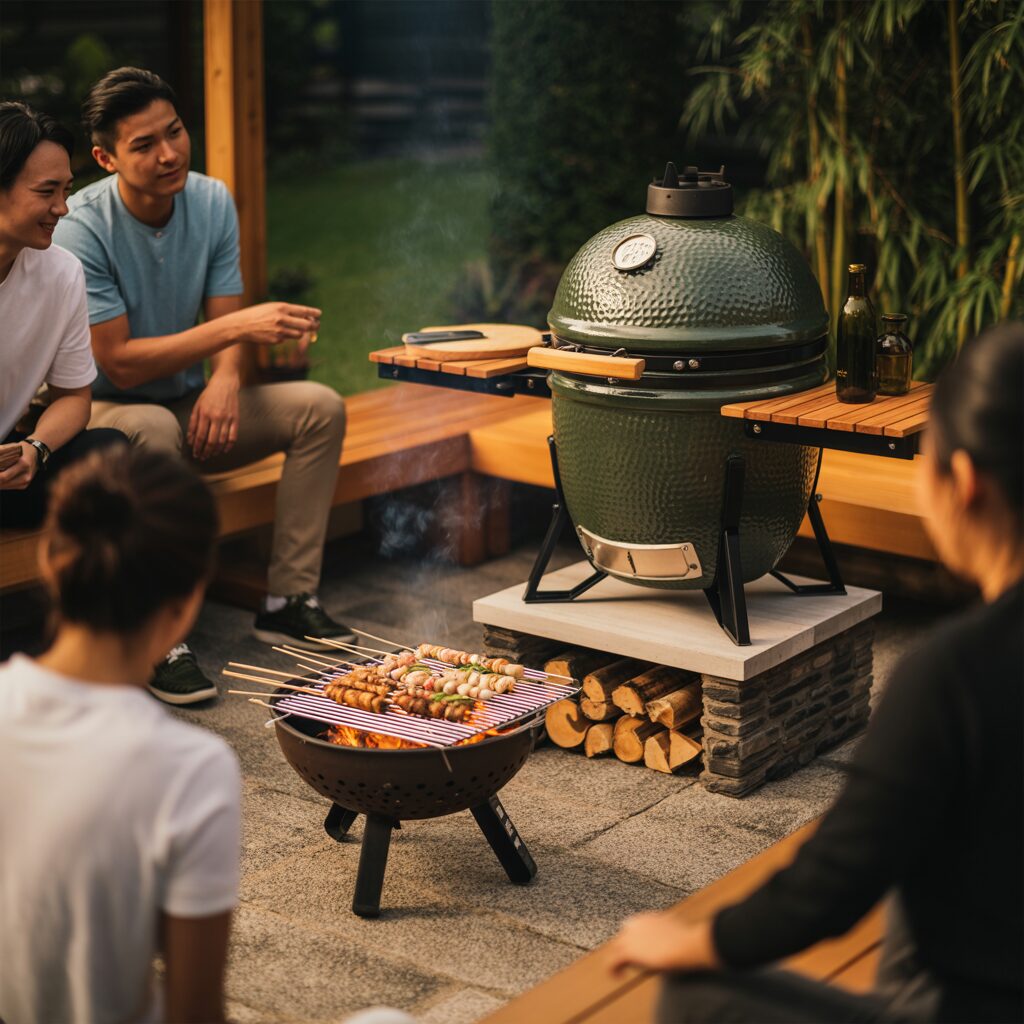
For something more authentic, consider a shichirin — a compact charcoal grill ideal for yakitori or grilled vegetables. It’s small, beautiful, and social — perfect for gathering around.
🧱 Build a Low Counter Layout
Japanese design values humility and grounding.
Instead of tall Western-style counters, use lower surfaces that feel more connected to nature and sitting-level socializing.
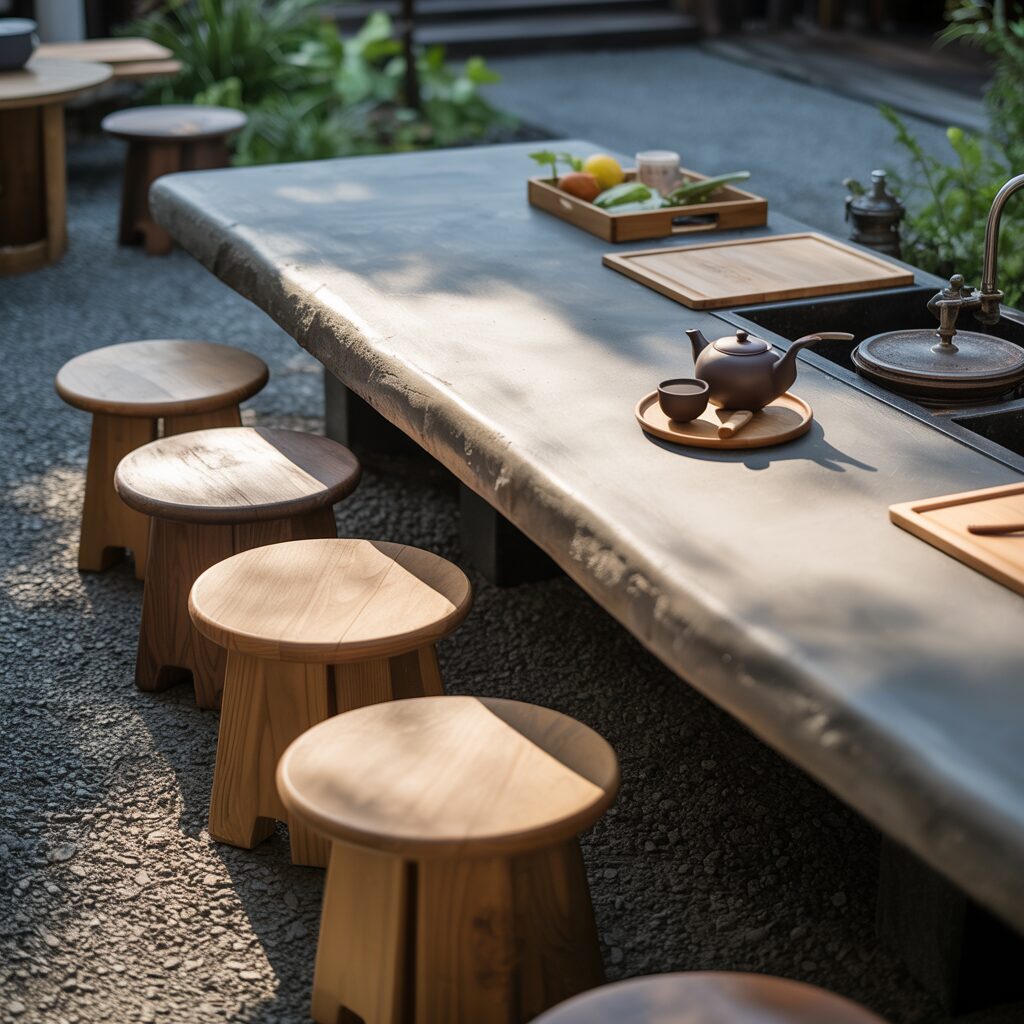
A wide, waist-height stone or concrete prep space can double as a serving area or quiet tea corner.
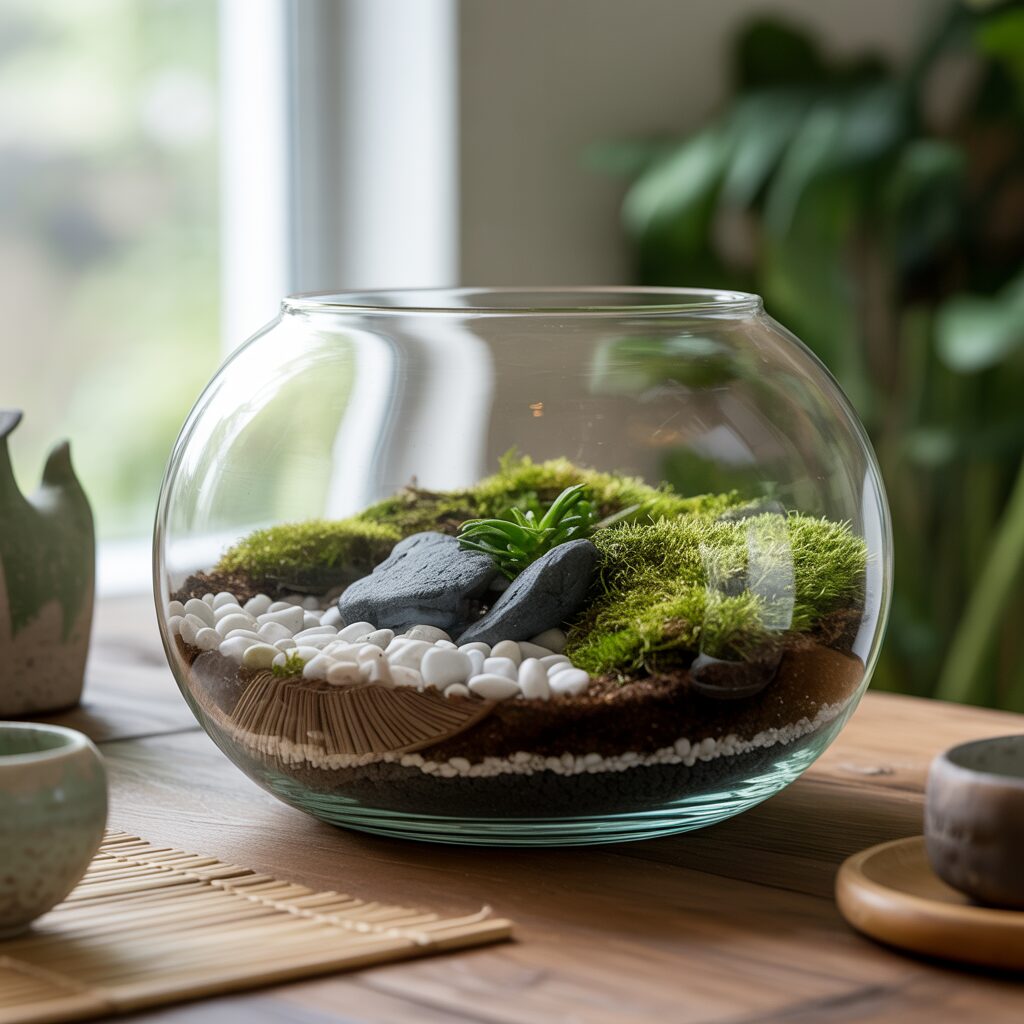
🌿 Incorporate a Zen Garden Element
The best outdoor kitchens in Japan often blur the line between cooking and contemplation.
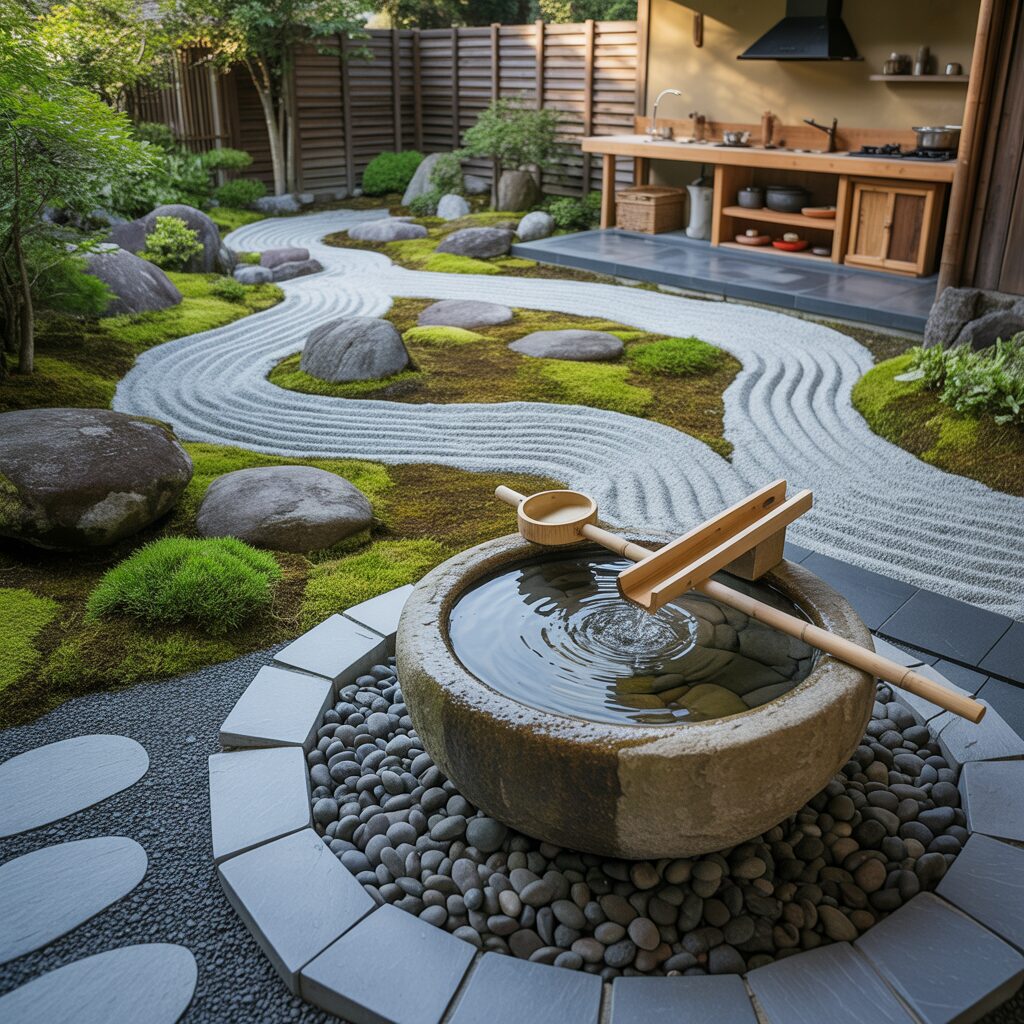
Add a mini rock garden, mossy ground cover, or raked gravel nearby. A small basin (tsukubai) with running water creates a soft soundscape and invites ritual — like hand-washing before cooking or eating.
🌸 Create a Covered Pergola or Roofed Nook
Shelter adds both function and coziness.
A wooden pergola with slatted panels offers shade without closing off the space. If you want a more weatherproof option, use traditional-style clay tiles or a minimalist steel roof.
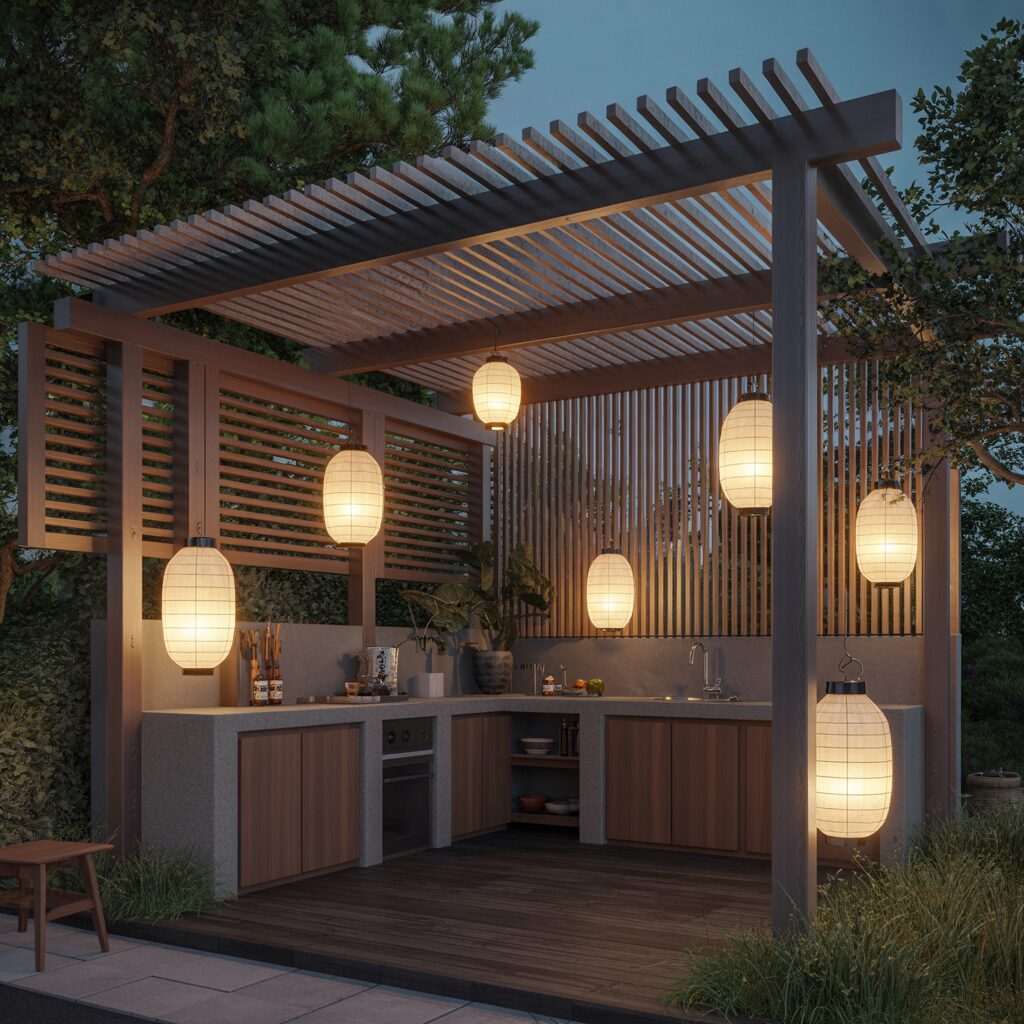
Hang washi paper lanterns or shoji-inspired lights to soften the atmosphere at dusk.
🍵 Design a Tea or Sake Station
Set aside a small area for a calming ritual.
A tea corner with a stone counter, cast iron teapot, and built-in bench becomes the perfect mid-afternoon retreat.
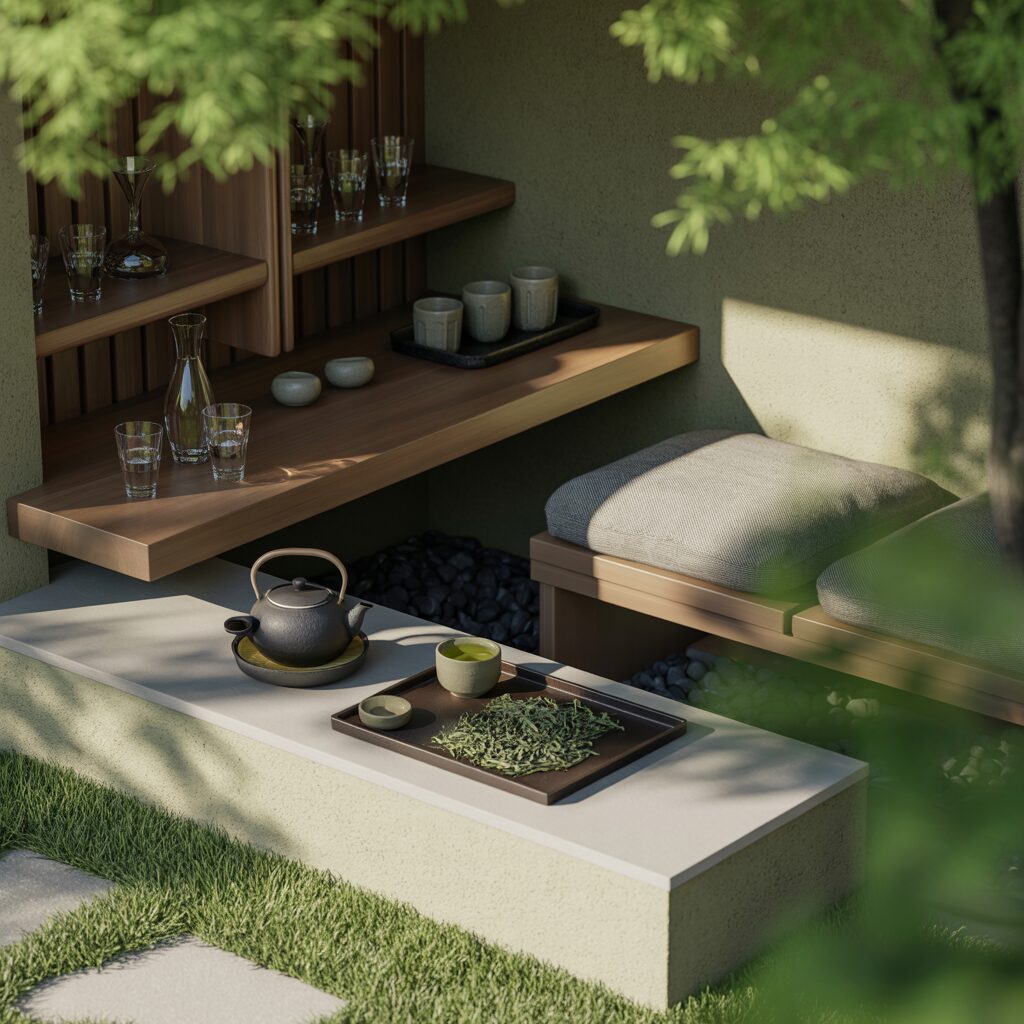
Or add a sake shelf with chilled cups and elegant carafes for evening wind-downs.
🪵 Include Movable Seating and Tatami Vibes
Japanese dining often includes flexibility and intimacy.
Use low stools, foldable benches, or even outdoor tatami-style mats that can be stored and moved easily.
This helps you shift between quiet solo time and social cooking nights with ease.
🕯️ Light It Softly and Naturally
Choose warm, indirect lighting.
Think bamboo lanterns, ground-level path lights, or softly glowing LED strips under counters.
Avoid harsh spotlights — instead, aim for a glow that feels like fireflies or candlelight under the stars.
Your Japanese-inspired outdoor kitchen doesn’t need to be large or complex — just thoughtful.
Let it be a place where cooking becomes a meditation
and meals are shared in harmony with the breeze.