In Japan, floor culture is a beautiful reflection of respect, simplicity, and mindfulness. It’s more than just furniture choices — it’s a way of living that invites calm and intentionality into daily life.
Here’s a gentle walkthrough of the essentials of Japanese floor culture 🧘♀️🍵
🧦 No Shoes Inside — Ever
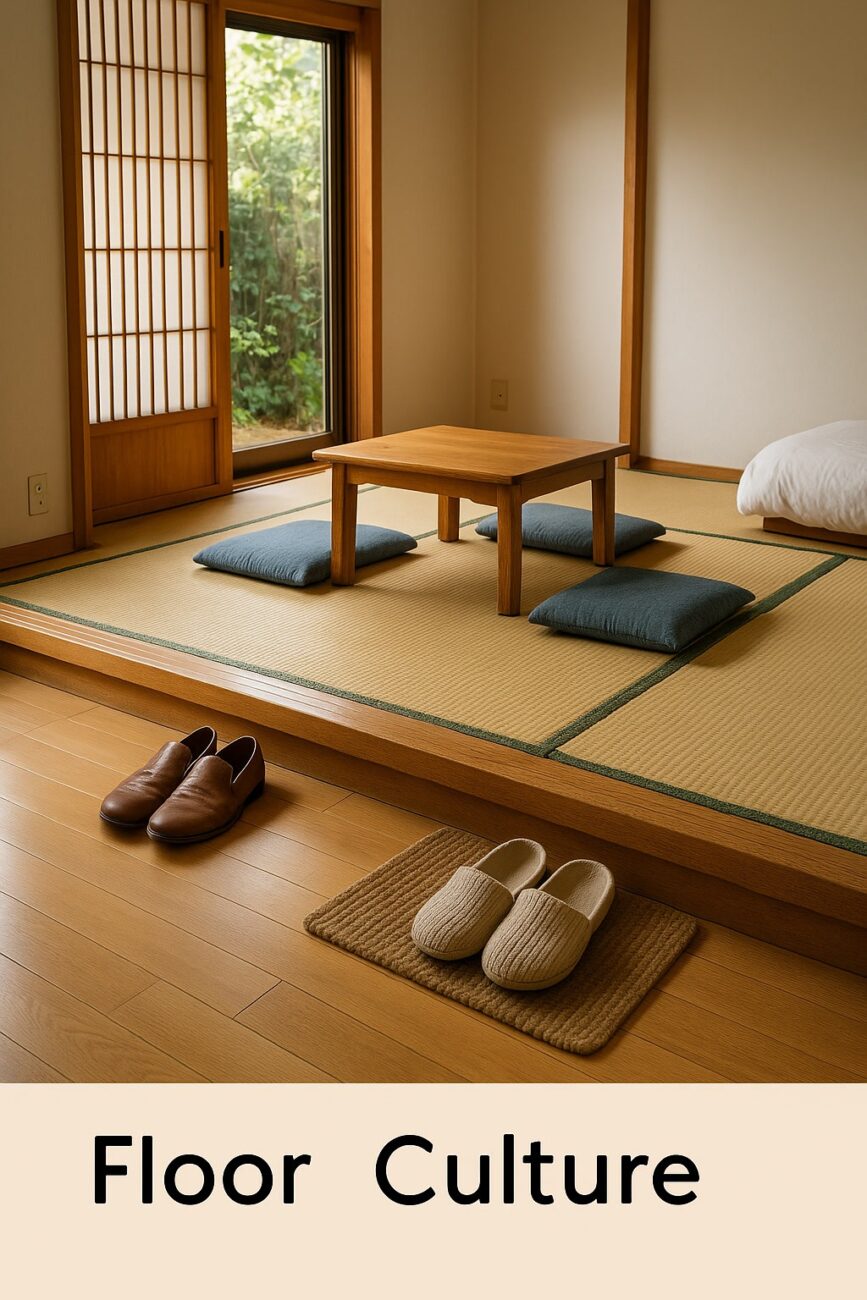
In Japanese homes, shoes are always removed at the entrance (the genkan).
Instead, people switch to indoor slippers or walk barefoot/socks only.
This keeps the floors clean and honors the home as a sacred space.
Try this at home: Create a little shoe area with a mat or basket. It signals that you’re stepping into a peaceful zone.
🪑 Floor Seating is Normal
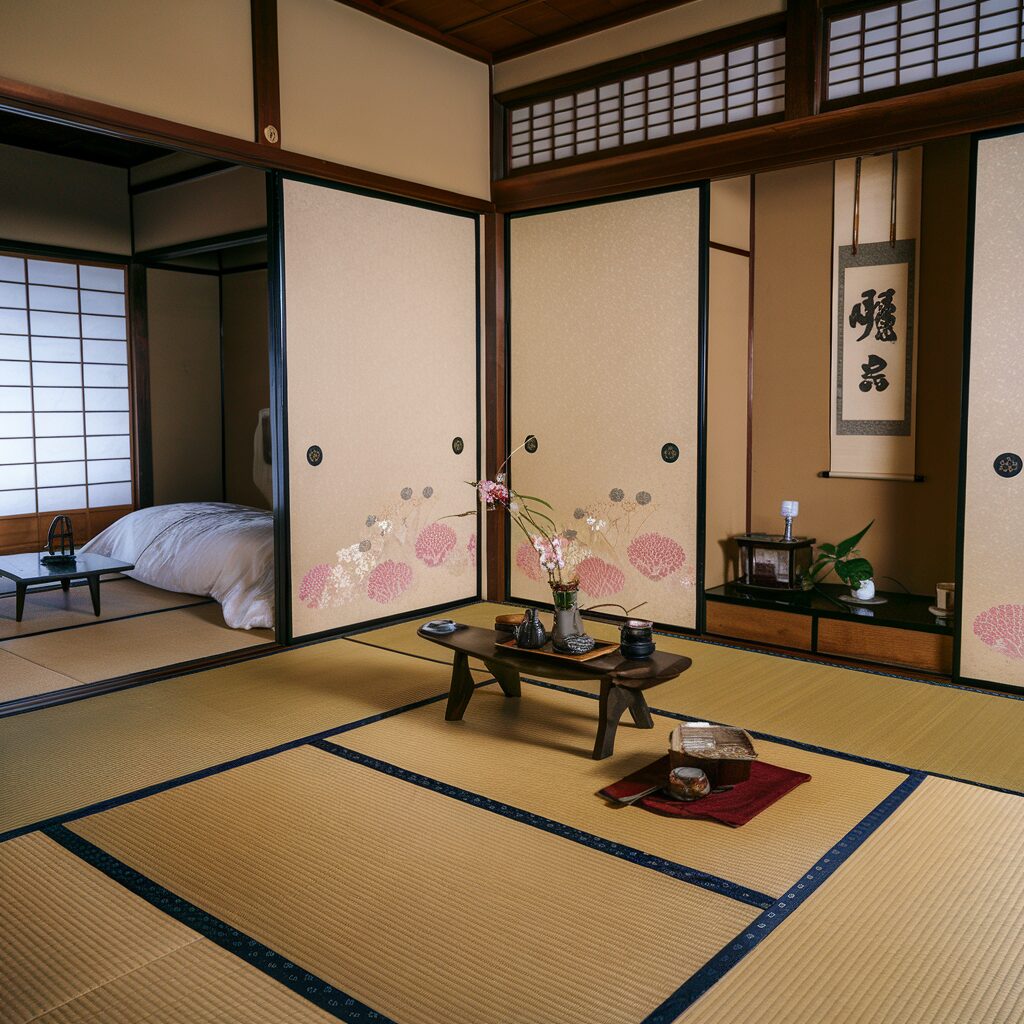
Low furniture — or no furniture — is common. People often sit on the floor using cushions (zabuton) or flat legless chairs (zaisu).
Meals are often shared around a short table called a chabudai.
What it brings: A grounded, humble vibe. It invites you to slow down and be present.
🏠 Tatami Mats: The Heart of the Home
Tatami are traditional mats made from woven rush grass. Soft underfoot, they’re cool in summer and warm in winter.
Rooms with tatami are quiet, cozy, and carry a distinct earthy smell that many find nostalgic.
Tatami etiquette: No shoes or slippers. Only bare feet or socks.
🛏️ Sleeping Close to the Earth
Instead of Western-style beds, many Japanese people sleep on futons — thick mattresses laid directly on the tatami floor.
Each morning, the futon is folded and stored away, freeing up the room for other uses.
This fosters: Minimalism, flexibility, and connection with your space.
🍲 Meals on the Floor
Dining while seated on the floor fosters togetherness. Everyone gathers around a low table, and posture matters — kneeling (seiza) or cross-legged sitting are both common.
Mindful eating: The simplicity of the setting often invites deeper appreciation of the food and moment.
🧹 Cleanliness as a Practice
Since floors are used for sitting, sleeping, and eating, keeping them pristine is key. Daily sweeping, gentle mopping, and shoes-off culture all support this.
A peaceful habit: Cleaning becomes a form of self-care and respect for the home.
🌿 A Deeper Philosophy
Japanese floor culture reflects a broader way of life: one that values harmony, transience, and being in tune with nature.
Whether it’s the smell of tatami, the ritual of removing shoes, or the warmth of a shared meal on the floor — every detail whispers, slow down, be here.
Inspiration to carry with you:
You don’t need tatami mats or a chabudai to bring a little Japanese calm into your life. Just start by sitting on the floor, removing your shoes, or making your space feel more intentional.
Small shifts. Big peace. 🌾