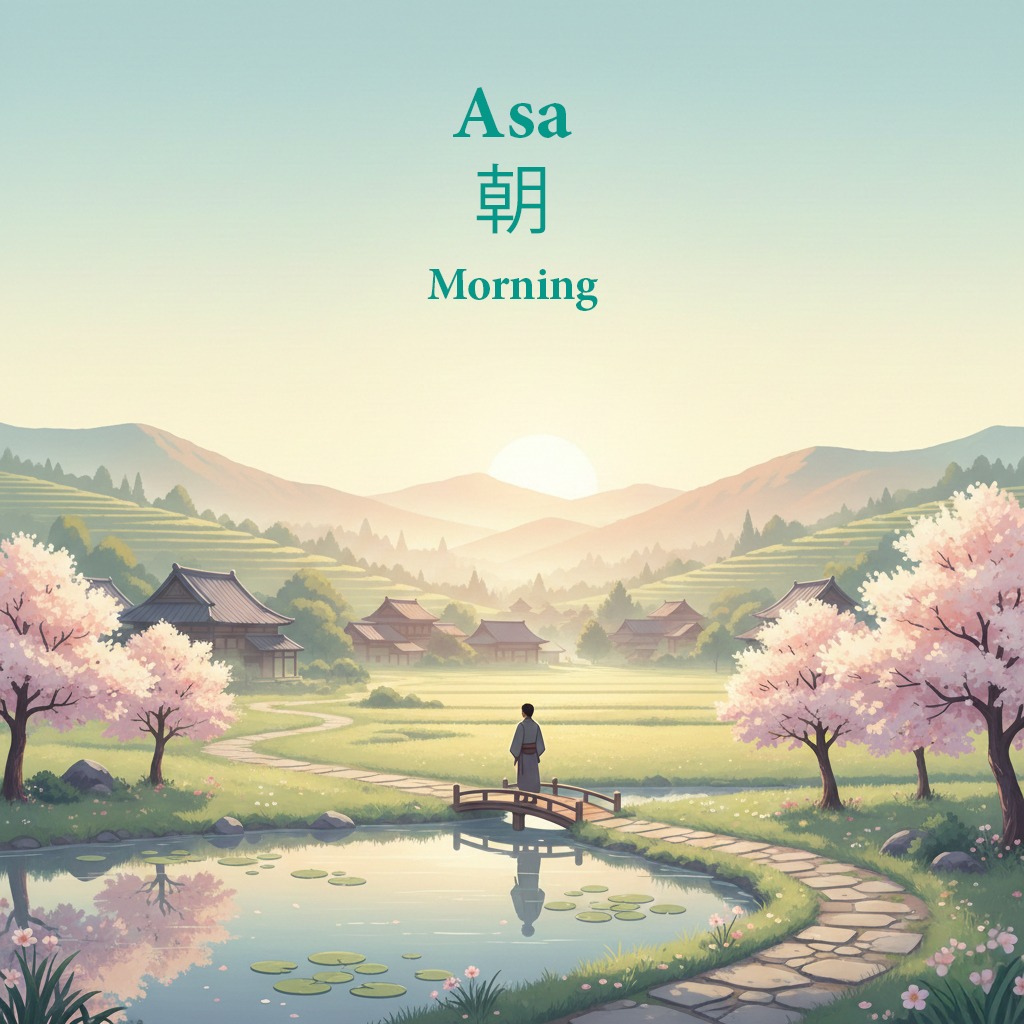

Japanese has a quiet talent for noticing subtle changes in the world – especially at the beginning of the day. While many languages might simply say sunrise or morning, Japanese offers a collection of words that describe different moods, colors, and moments of early light.
Words like asakaze, akatsuki, asayake, and asamoya may seem poetic, but they aren’t random. They share a common origin – both linguistically and culturally.
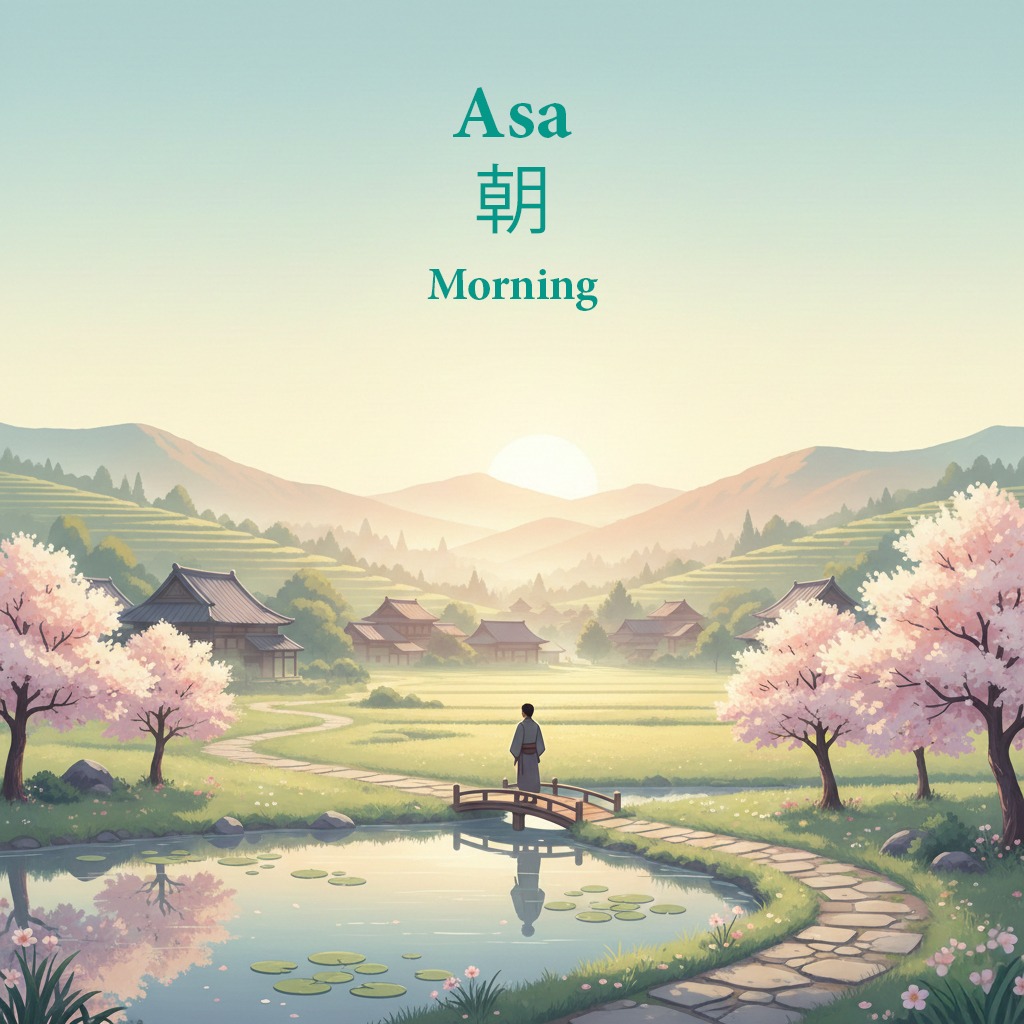
A shared beginning: Asa (朝)
All four words begin with asa (朝), the Japanese word for morning. This alone already tells us something important: in Japanese culture, morning isn’t just a time of day – it’s a state of transition. A moment when night loosens its grip and the world quietly resets.
From this shared root, the language branches out to describe what the morning feels like.
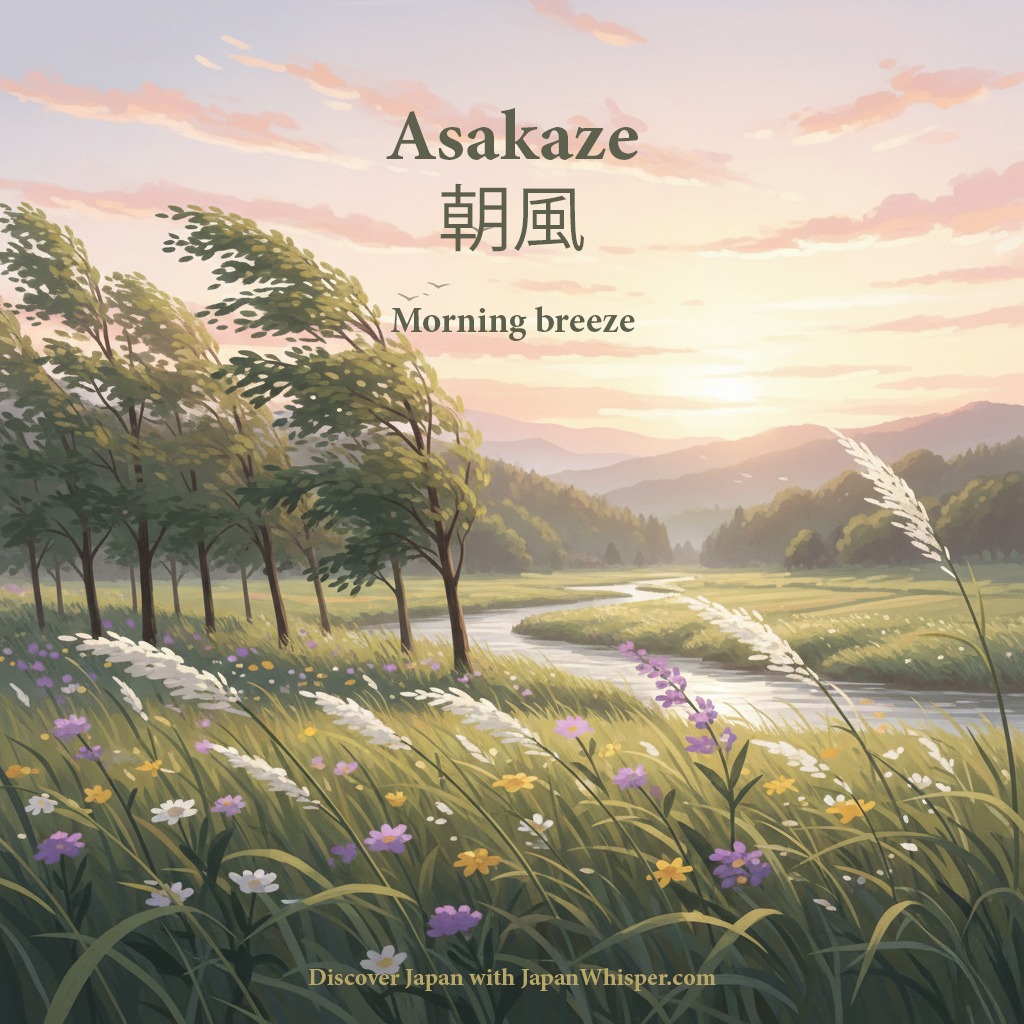
Asakaze (朝風) – the morning breeze
This word focuses on movement rather than light. Asakaze describes the gentle wind that passes through streets, fields, or open windows in the early hours. It’s often associated with freshness, clarity, and a sense of beginning before the day becomes busy.
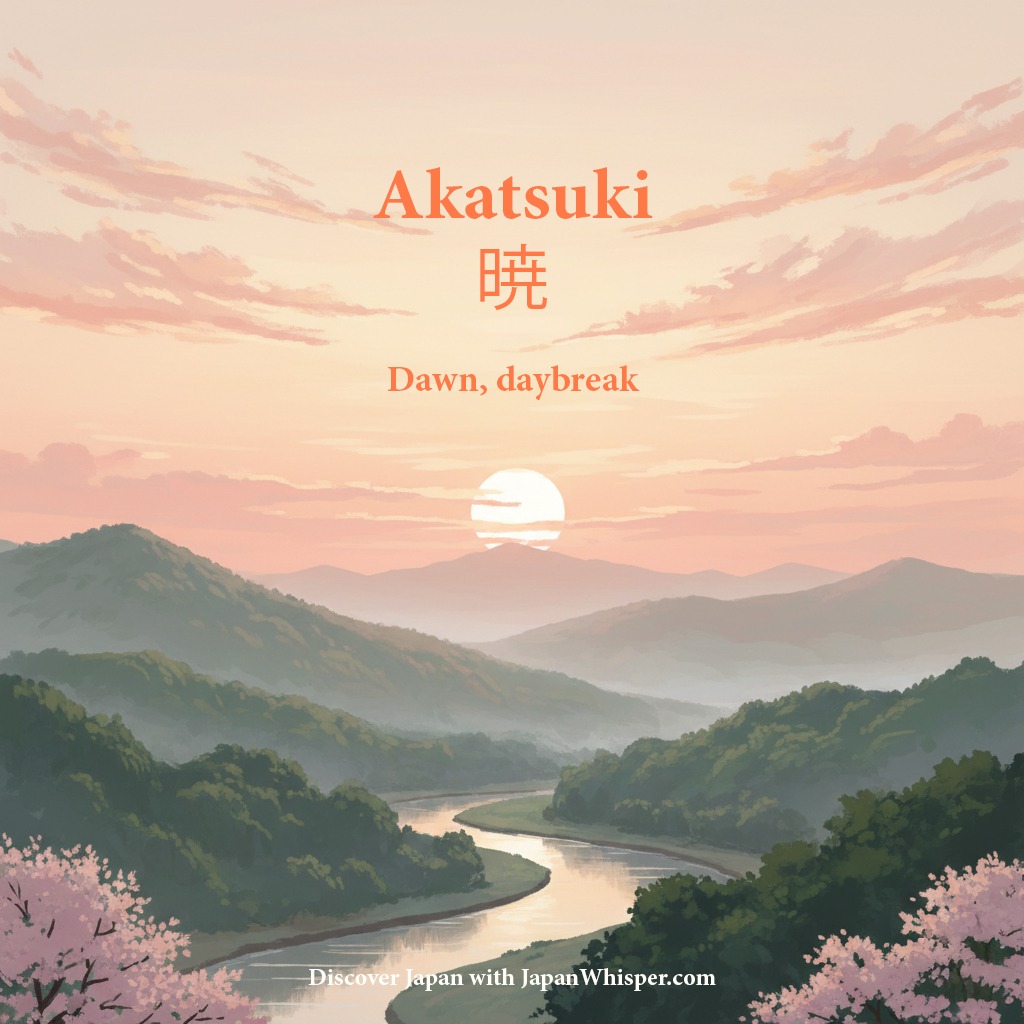
Akatsuki (暁) – dawn, just before sunrise
Akatsuki refers to the moment when night is ending but the sun hasn’t fully appeared yet. The sky is pale, quiet, and expectant. Historically, this word appears often in classical poetry, where it symbolizes change, impermanence, or emotional turning points.
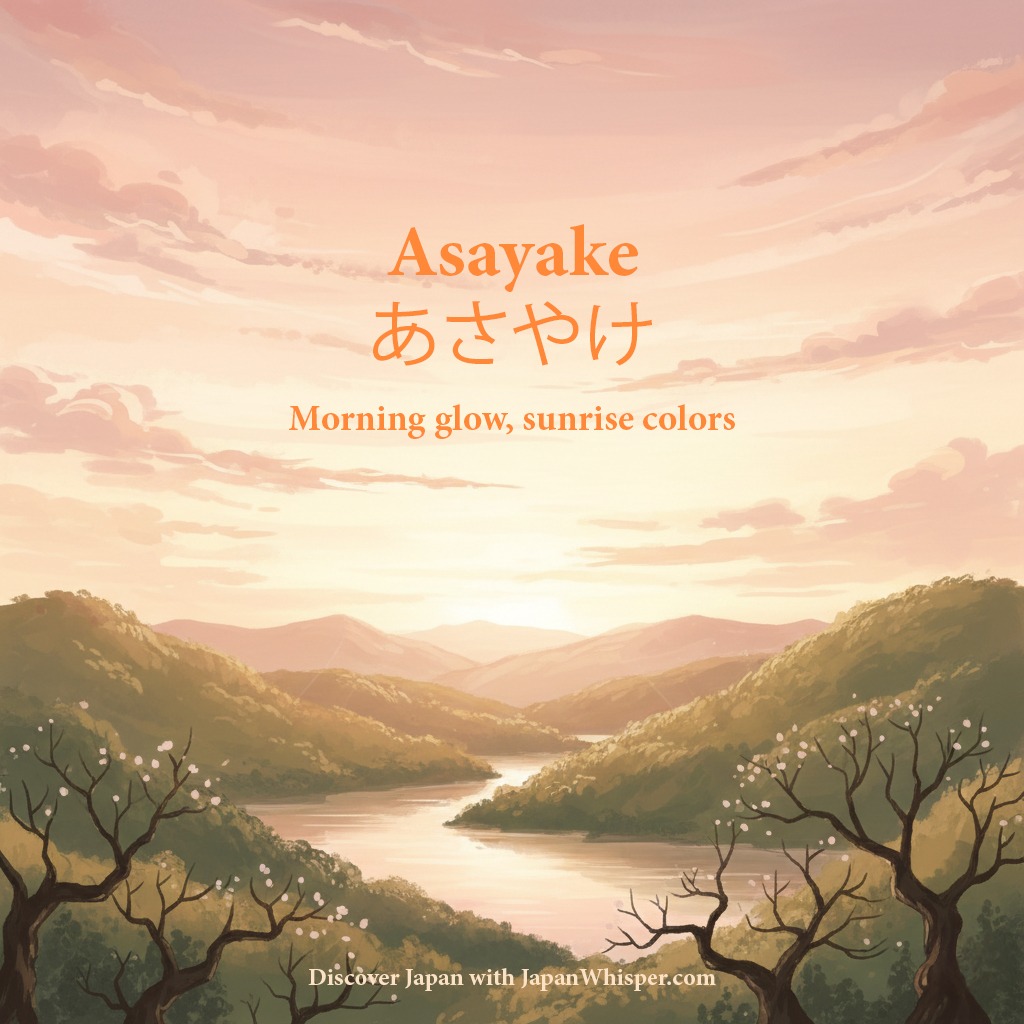
Asayake (あさやけ) – the morning glow
This is the moment when the sky is painted with pinks, reds, and warm tones as the sun rises. Asayake captures the visual beauty of sunrise – brief, vivid, and impossible to hold onto. It’s a word that reminds us how quickly beauty can pass.
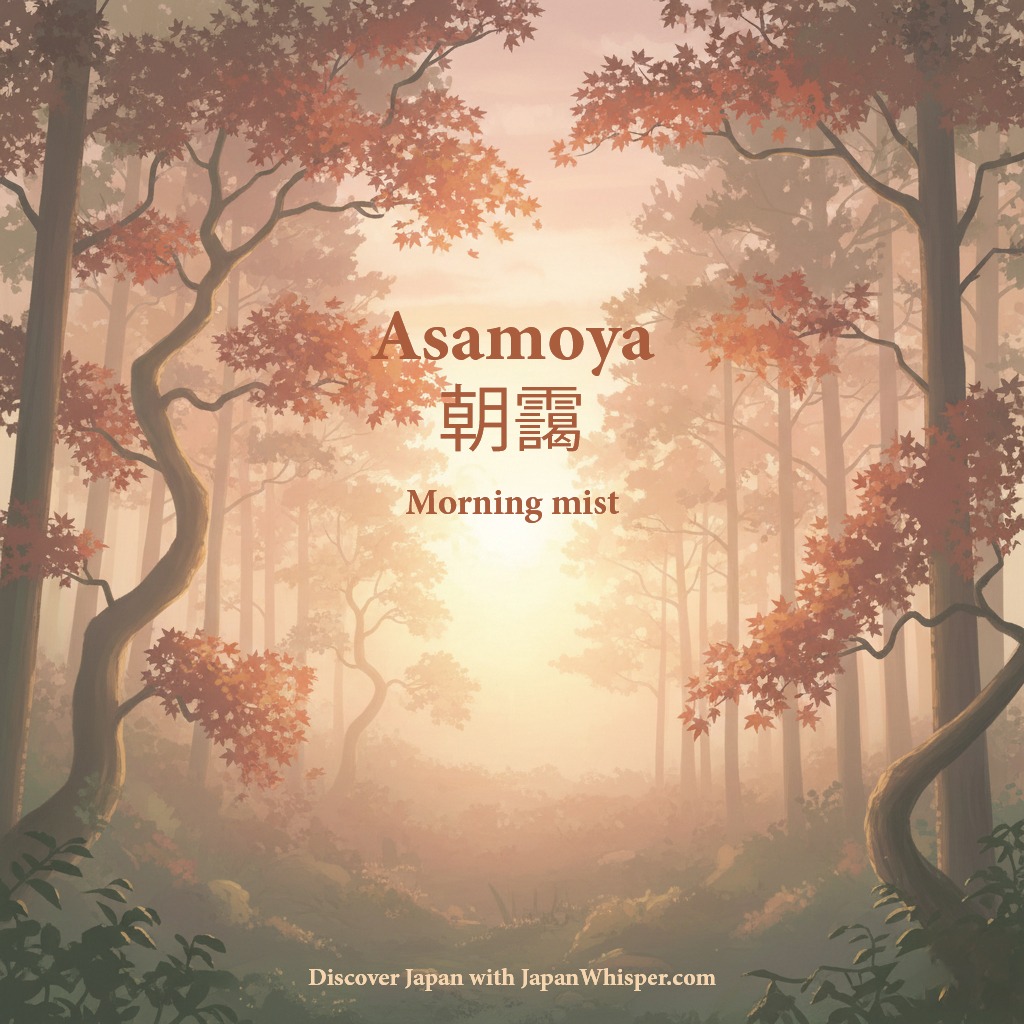
Asamoya (朝靄) – morning haze or mist
Asamoya describes the soft fog that lingers over fields, rivers, or cities in the early morning. It blurs outlines and slows perception, creating a dreamlike atmosphere where the world feels gentler and less defined.
More than weather words
What connects all these words isn’t just morning – it’s attention. Each term isolates a specific sensation: air, color, light, softness, movement. Together, they reflect a way of seeing the world where small differences matter.
In Japanese, naming these moments doesn’t make them bigger – it makes us quieter. It invites us to notice.
And perhaps that’s the real beauty behind these words: they remind us that the day doesn’t begin all at once – it unfolds.