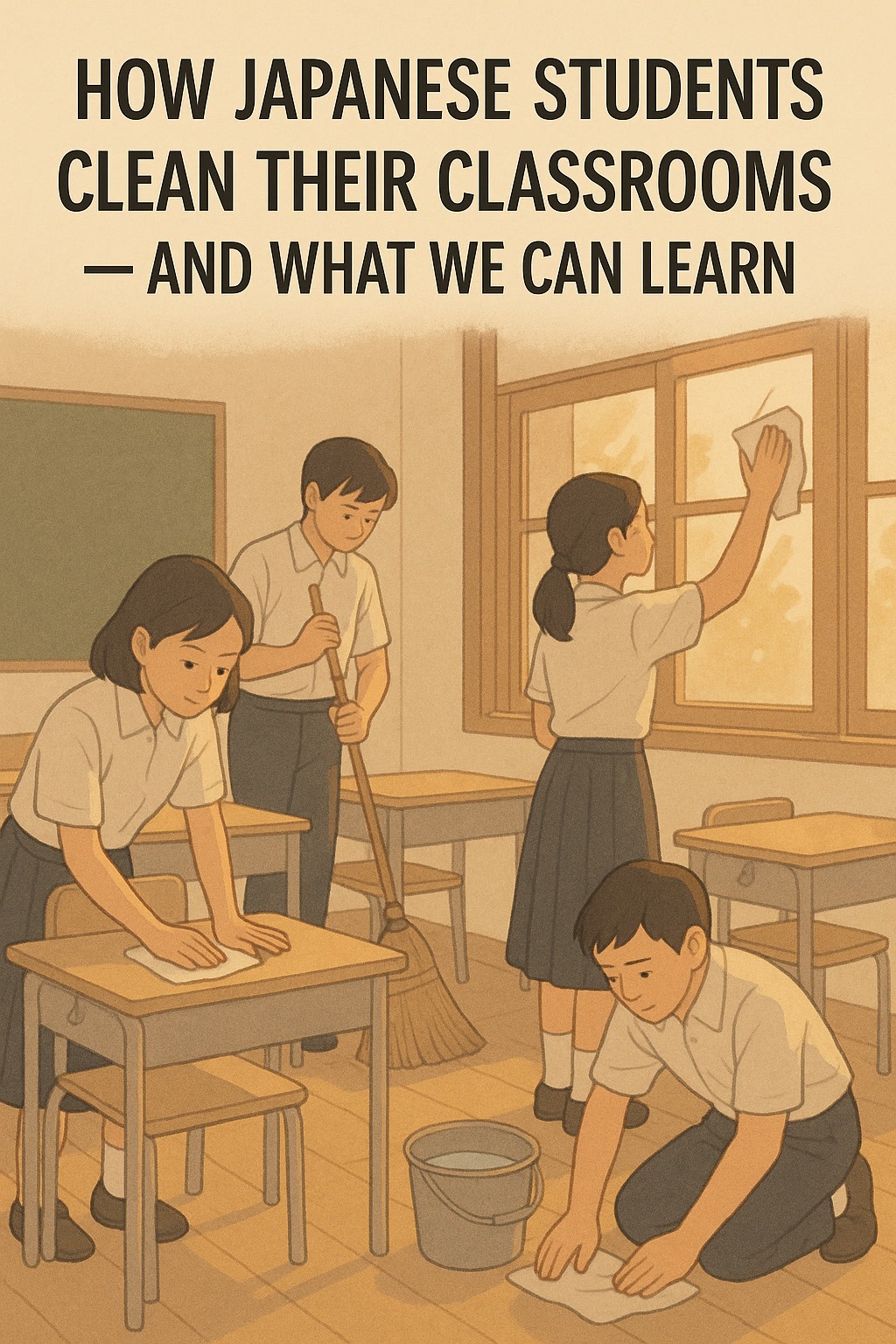

Quietly, every day after school, Japanese students put down their pencils, pick up brooms, and clean their classrooms together.
No janitors.
No fuss.
Just a shared sense of care.
This simple practice reveals a deep cultural value — and offers us gentle, powerful lessons in responsibility, community, and mindfulness. Here’s what we can learn from it 🧹🇯🇵
🧽 1. Cleaning is Part of the Learning
In Japan, cleaning is built into the school day. It’s called souji, and students of all ages participate.
Rather than being a chore, it’s seen as part of becoming a responsible human being.
They learn to take care of their shared space — and to notice the details others might overlook.
Takeaway: What if tidying up wasn’t something we rushed through at the end of the day, but something we taught — and valued?
🤝 2. Everyone Does Their Part
There’s no hierarchy.
Even principals and teachers pitch in.
You might see a group of 7-year-olds scrubbing a sink while a teacher sweeps the hall nearby. Everyone is equal when it comes to cleaning — no task is too small.
Try this: The next time you’re cleaning with others, invite everyone to choose a task they enjoy or rotate roles. Make it shared, not assigned.
🍃 3. Mindfulness Through Movement
Souji isn’t done in a rush.
Students take their time.
Sweeping becomes a rhythm. Wiping desks becomes a quiet ritual. There’s a calm, meditative quality to it.
Inspiration: Turn off music or distractions next time you clean. Notice how your body moves. Let it become a grounding ritual, not just a means to an end.
🏫 4. Respect for Shared Spaces
Because students clean their own classrooms, they treat them with more care.
There’s less graffiti. Fewer spills. More attention to keeping things in order.
Shift the mindset: Instead of blaming others when a space feels messy, try cultivating quiet ownership. What’s one small corner you can make beautiful?
🌱 5. Responsibility Starts Young
Even kindergartners help out — by wiping tables or straightening shoes at the door.
It’s not about perfection. It’s about building habits of care from the start.
For families or educators: Invite children to help with age-appropriate tasks. Praise their effort, not the outcome. Show them that every little bit matters.
🧺 6. Cleaning Builds Community
When students clean together, they talk, laugh, and support each other. It’s a moment of connection — not isolation.
There’s something quietly bonding about working side-by-side, making a space feel better together.
Try this with friends or family: Turn weekend chores into group moments. Put on a pot of tea, share tasks, and end with something cozy — like cookies or a shared meal.
💫 7. A Clean Space Reflects a Calm Mind
Japanese schools aren’t spotless by chance. They’re kept that way through intention, teamwork, and presence.
And in return, those clean, calm spaces nurture focus and peace.
Gentle reminder: Your space doesn’t have to be perfect — but giving it love each day, little by little, might just shift how you feel inside.
When we clean with care, we don’t just change our surroundings — we change ourselves.
It’s not about being spotless.
It’s about being present.
And that’s a beautiful thing to learn at any age. 🌿