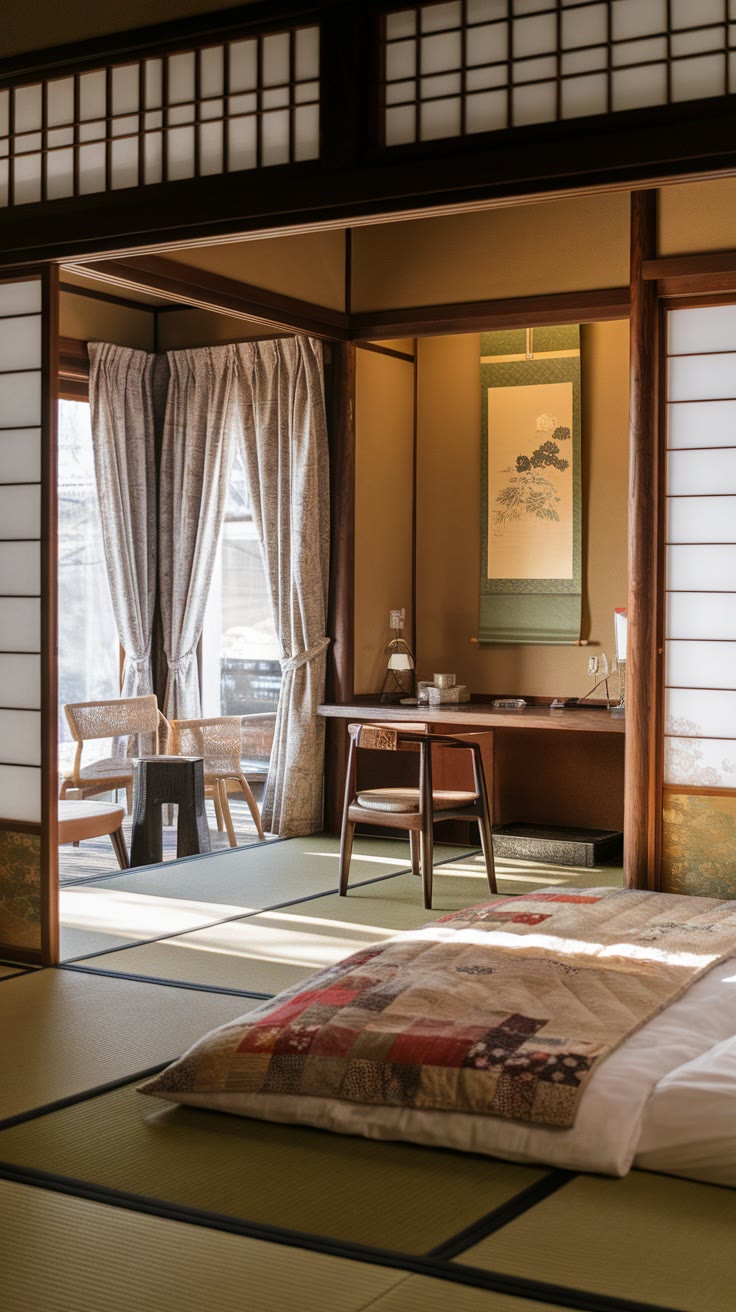
If you’re looking to create a cozy and inviting space, a Japanese futon bedroom might be just what you need. These traditional bedding arrangements are perfect for minimalist living, allowing for easy setup and storage while adding a touch of serenity to your room. With simple, natural materials, your bedroom can transform into a relaxing oasis that embraces comfort and style.
Incorporating Traditional Japanese Decor
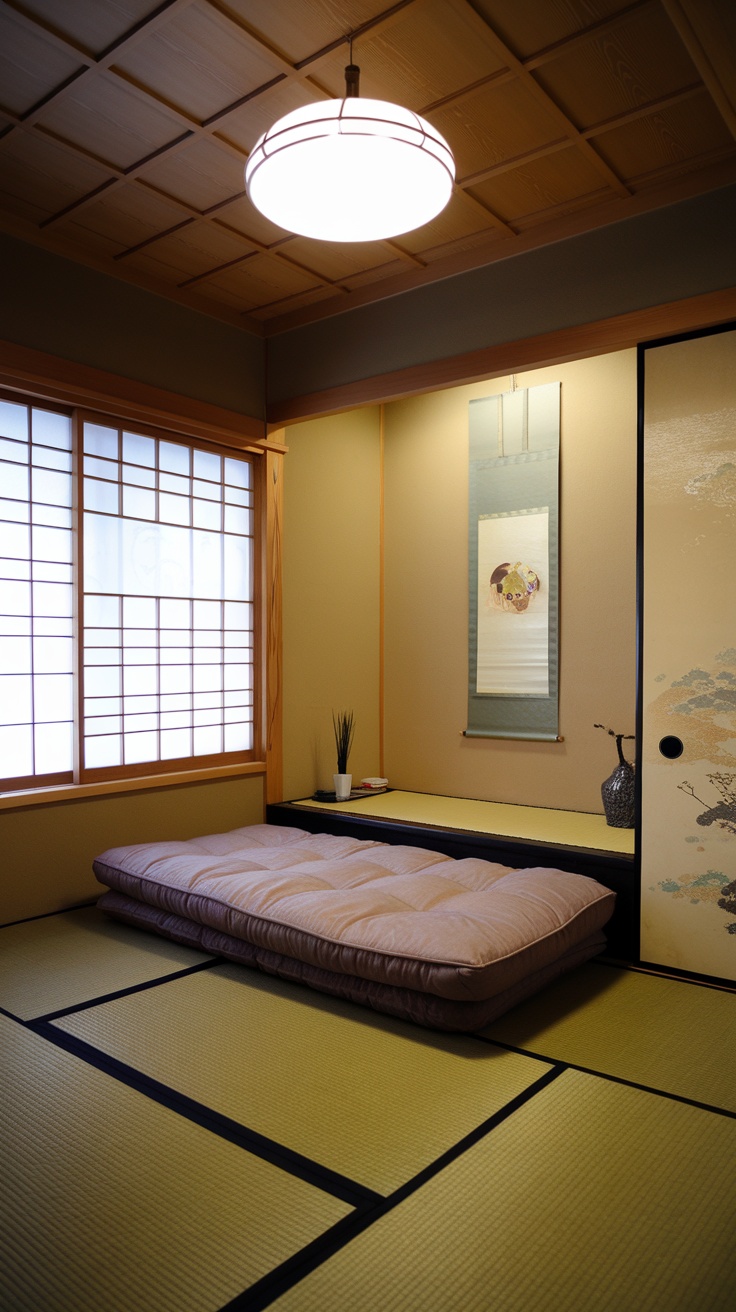
When you think of a Japanese futon bedroom, you might picture a serene and simple space. The image beautifully captures this essence with its minimalistic design. The futon, placed directly on the tatami mat, emphasizes a connection to tradition.
The window design adds to the room’s charm, allowing natural light to filter in softly. This soft lighting creates a calming atmosphere, perfect for relaxation after a long day. The use of wood and natural materials in the room highlights the importance of nature in Japanese decor.
Art pieces, like the scroll hanging on the wall, introduce a touch of culture and personality. These decorative elements are not just for aesthetics; they tell a story and reflect a way of life that values harmony and simplicity.
To achieve a similar look, consider using a futon mattress that is easy to store during the day. Pair it with tatami mats for an authentic touch. Incorporate wooden furniture and subtle decor to maintain the tranquil vibe that characterizes a traditional Japanese bedroom.
Space-Saving Solutions with Japanese Futons
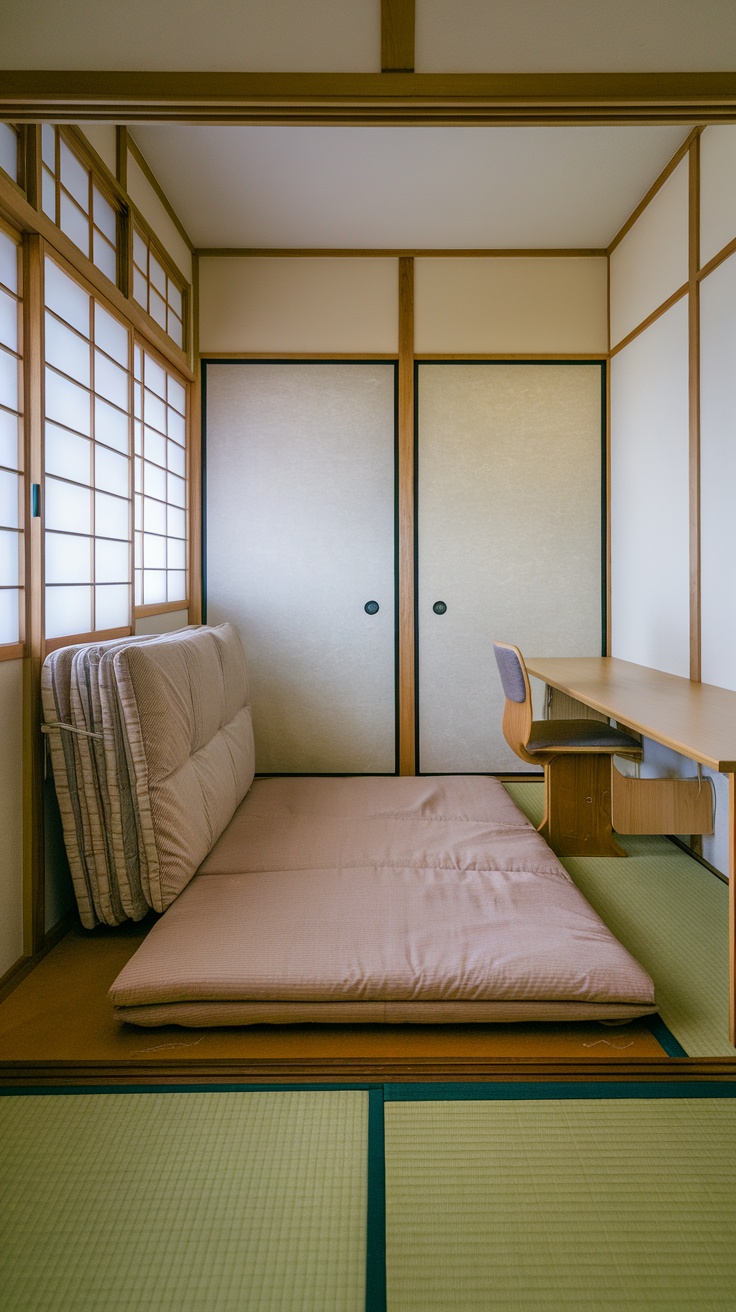
Japanese futons are a wonderful solution for small spaces. In the image, you can see a cozy bedroom setup, showcasing how futons can be used to maximize available area. The futon is neatly stacked against the wall during the day, keeping the room tidy and open.
This design promotes a minimalist lifestyle, allowing you to utilize the floor space effectively. When you want to sleep, simply unfold the futon onto the tatami mat. This makes it easy to transform the room from a living area to a sleeping area in moments.
In addition to being practical, Japanese futons also encourage a connection with the ground. This can create a calming atmosphere, perfect for relaxation. Plus, the simple aesthetics of the room, with its soft colors and clean lines, adds to the overall sense of peace.
Maintaining Your Futon for Longevity

Your futon can be a cozy centerpiece in your Japanese-style bedroom. But like any bedding, it needs care to last. Keeping it in good shape not only enhances your sleep experience but also adds charm to your space.
First, consider airing out your futon regularly. This helps reduce moisture and prevents odors. A sunny spot is perfect for this. Just a couple of hours can work wonders. Also, consider rotating your futon to ensure even wear. This simple practice can extend its life significantly.
Cleaning matters too! Use a vacuum with a brush attachment to remove dust and dirt. For stains, spot clean with a mild detergent. Avoid soaked futons, as excess water can lead to mold.
Lastly, invest in a good futon cover. It protects against spills and dirt while making cleaning easier. A stylish cover can also enhance your bedroom’s look. With these simple steps, you can keep your futon comfortable and inviting for years to come.
Layering Your Futon for Seasonal Comfort
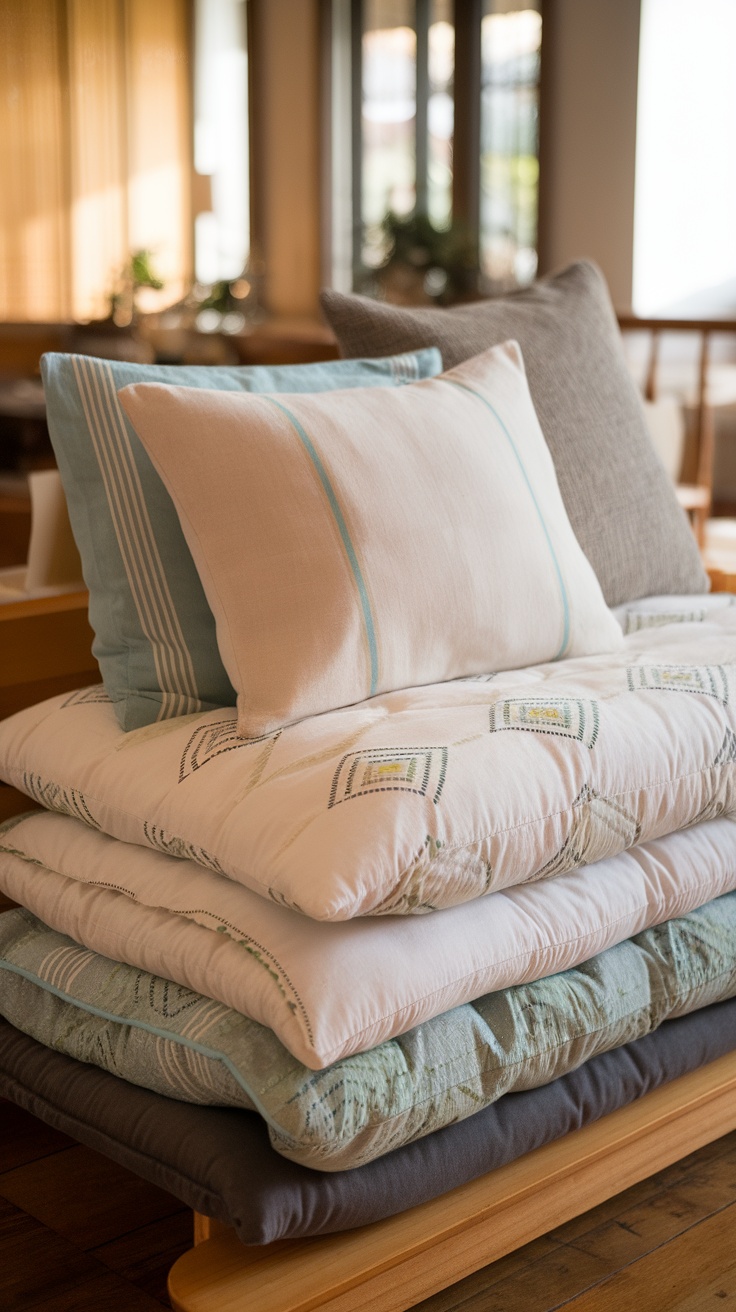
When it comes to creating a cozy Japanese futon bedroom, layering your futon is key to staying comfortable throughout the seasons. The image showcases a neatly stacked arrangement of futon bedding, each layer offering a different level of warmth and support.
As the weather changes, so should your bedding. In warmer months, a lightweight cotton futon is perfect. It allows for breathability while still providing comfort. The soft colors and patterns seen in the photo can also add a touch of style to your room.
As temperatures drop, you can easily add thicker layers or a heavier blanket for extra warmth. The beauty of futon bedding is its versatility; you can mix and match layers based on your preferences. For instance, pairing a lightweight futon with a warm comforter can create a snug sleeping environment.
Don’t forget about pillows! A few well-placed cushions, like those in the image, can enhance your comfort level. They can be swapped out seasonally, too, with fluffier options for winter and flatter ones for summer. This way, you can enjoy a restful night’s sleep no matter the season.
The Benefits of Sleeping on a Futon
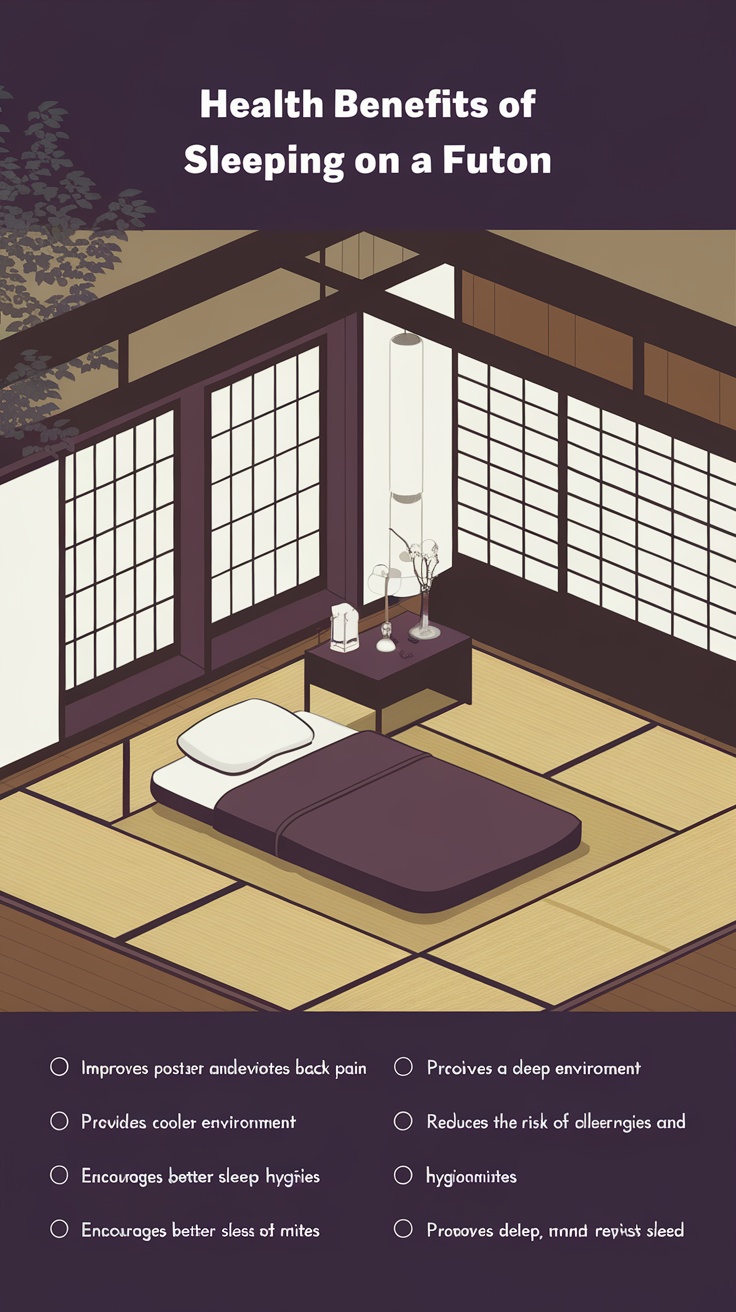
Sleeping on a futon offers several benefits that can enhance your overall well-being. As shown in the image, a traditional Japanese futon is laid out neatly on a tatami mat, creating a peaceful and simple sleeping environment.
One major benefit is improved posture. A futon is firmer than most mattresses, providing better support for your spine. This can help reduce back pain and promote a healthier alignment while you sleep.
Another advantage is temperature regulation. The futon allows air to circulate more freely, keeping you cooler during warmer nights. This is especially beneficial in hot climates, where a cooler sleeping environment can lead to better rest.
Using a futon also encourages better sleep hygiene. Because futons can be easily rolled and stored away, it’s easier to keep your sleeping area clean and clutter-free. This practice can help reduce allergens like dust mites, making your sleep space healthier.
Lastly, futons can promote deeper sleep. The minimalist setup and firm surface can help you settle in more quickly, leading to a more restful night. With fewer distractions, it’s easier to achieve that deep, restorative sleep we all crave.
The Art of Minimalism in Japanese Futon Design
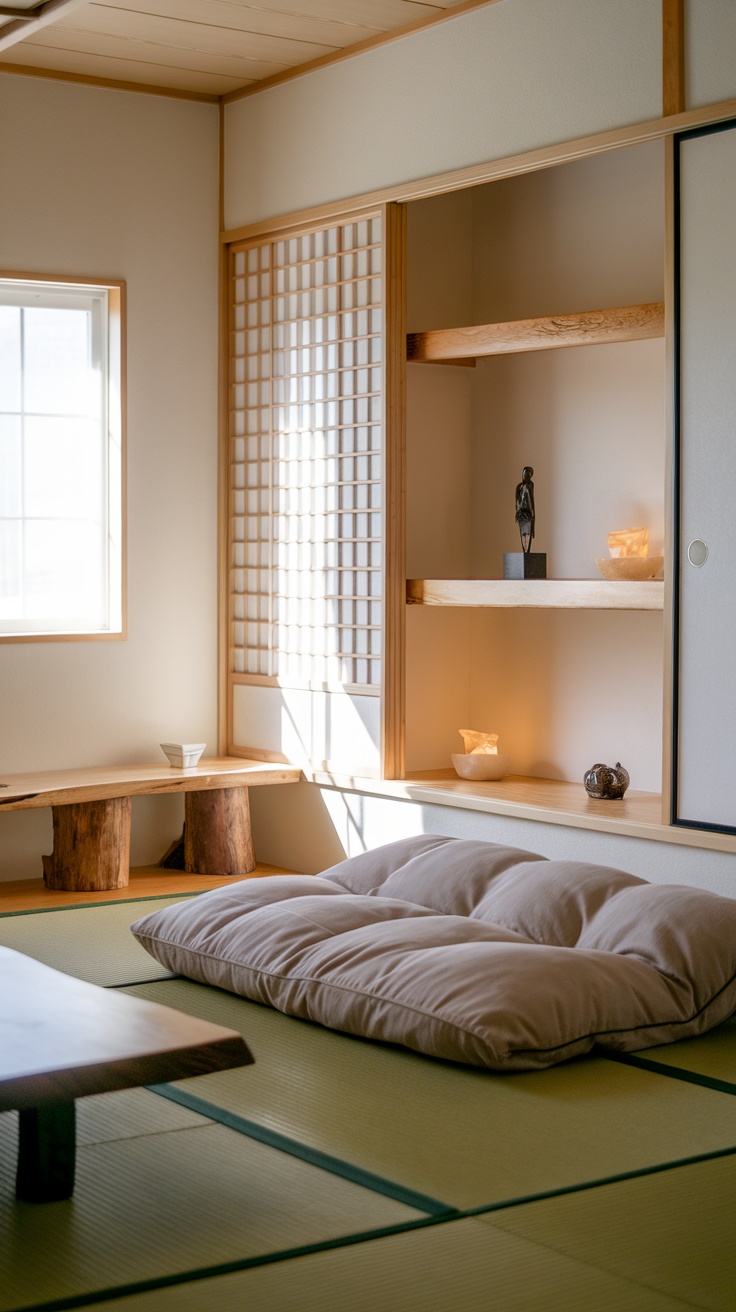
Japanese futons embody the essence of minimalism, creating spaces that are both calming and functional. In the image, a well-organized room showcases a soft, inviting futon laid on tatami mats, inviting rest and relaxation. The simplicity of the design is evident, with clean lines and muted colors contributing to a peaceful atmosphere.
Futons are traditionally stored away during the day, allowing the room to serve multiple purposes. This flexibility is a key feature of Japanese living, promoting a clutter-free environment. The natural materials used in the futon and the surrounding furniture, like the wooden bench and shelves, enhance the organic feel of the space.
Light plays a vital role in Japanese design, as seen through the large window that filters soft sunlight into the room. This connection to nature helps create a serene ambiance. The subtle decor, including a small statue and gentle lighting, emphasizes the beauty of simplicity, encouraging a mindful approach to living.
Overall, the minimalist approach in Japanese futon design not only provides comfort but also inspires a lifestyle centered around peace and tranquility.
Creating a Zen Atmosphere with Futons
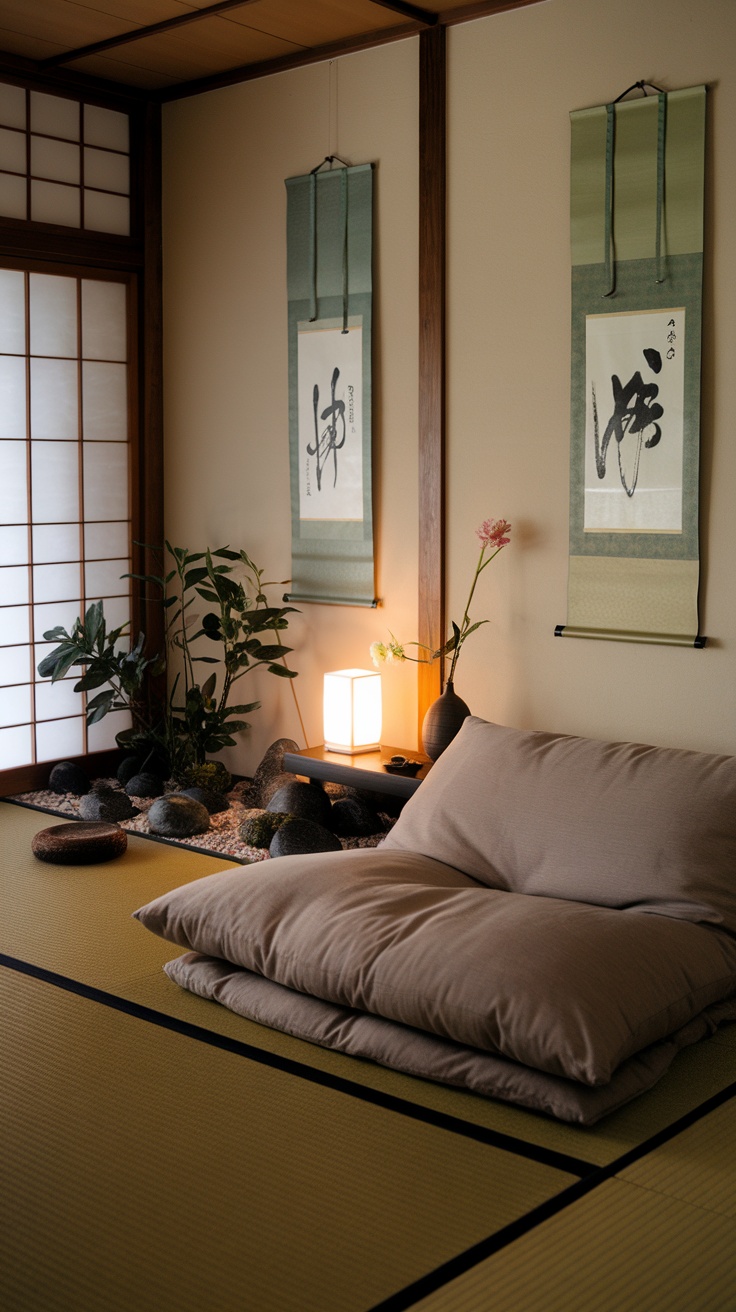
When you think of a Japanese futon bedroom, imagine a space that feels calm and inviting. In the image, you can see soft, plush futons that sit directly on a tatami mat. This setup creates a cozy area for relaxation and sleep.
The walls feature traditional scrolls, adding an artistic touch. These scrolls often display beautiful calligraphy, which can inspire a sense of tranquility. They remind us of the importance of mindfulness and simplicity in our lives.
Natural elements are also key to achieving that Zen feel. In the corner, a small arrangement of plants and stones brings the outside in. This greenery not only purifies the air but also enhances the room’s peaceful vibe.
Soft lighting from a stylish lamp casts a warm glow, making the space feel even more inviting. When combined with the earthy tones of the room, it creates an ambiance that’s perfect for meditation or quiet reflection.
Incorporating these elements into your own space can foster a calming atmosphere. Consider how you can mix traditional Japanese decor with your personal style to create a serene retreat in your home.
Choosing the Right Futon: Materials and Comfort
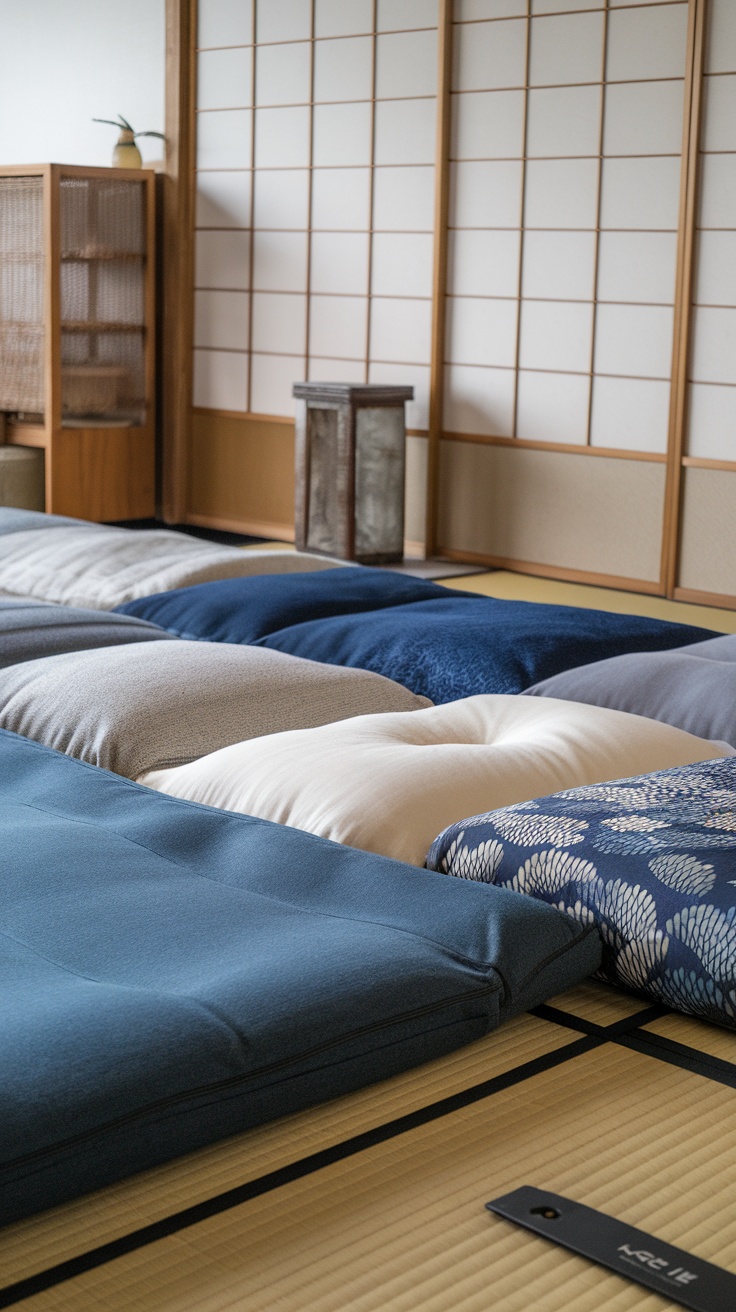
When selecting a futon, consider the materials that will make your sleep experience cozy and inviting. The image shows a variety of futons laid out in a traditional Japanese bedroom setting, showcasing different colors and textures. You can see the soft, plush surfaces that not only look appealing but also promise comfort.
Futons are typically filled with cotton, synthetic fibers, or a blend of both. Cotton offers breathability, while synthetic materials can provide better insulation. The choice depends on your personal preference and climate. In this room, the futons vary in color from deep blues to soft neutrals, allowing you to mix and match to fit your style.
Comfort is key when it comes to a good night’s sleep. Some futons are thicker, offering more cushioning, while others are thinner and firmer. The image illustrates this diversity, giving you an idea of how different styles can impact your sleeping comfort. Don’t hesitate to try them out before making a decision to find the one that feels just right for you.