Japanese gardens are serene outdoor spaces that beautifully blend nature with art. They create a peaceful environment, showcasing elements like rocks, water, and carefully placed plants, each with its own significance. Whether you’re looking for a quiet spot to relax or a source of inspiration, these gardens offer a delightful escape into a world of tranquility.
Seasonal Changes in Japanese Gardens
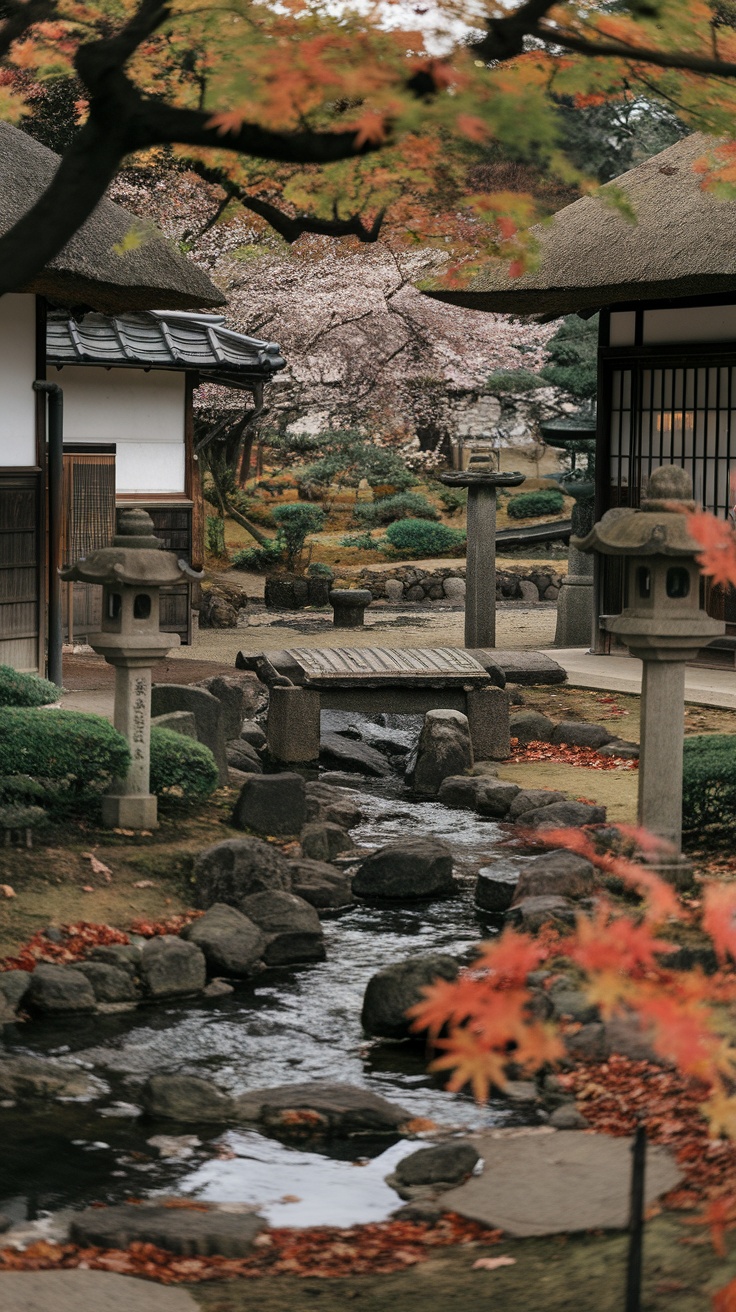
Japanese gardens beautifully showcase the changing seasons. In this image, you can see how the vibrant reds and oranges of autumn leaves contrast with the soft pink blossoms of cherry trees in the background. This blend of colors creates a serene and peaceful atmosphere.
The layout of the garden is designed to reflect nature’s harmony. Stone lanterns and a small wooden bridge add rustic charm, inviting visitors to explore the tranquil pathways. The gentle flow of water in the stream enhances the soothing sounds of nature.
As the seasons change, so does the garden. Spring brings delicate flowers, while summer offers lush greenery. In winter, the bare branches create a stark beauty. Each season provides a unique experience, reminding us to appreciate nature’s cycles.
Tea Houses and Their Significance
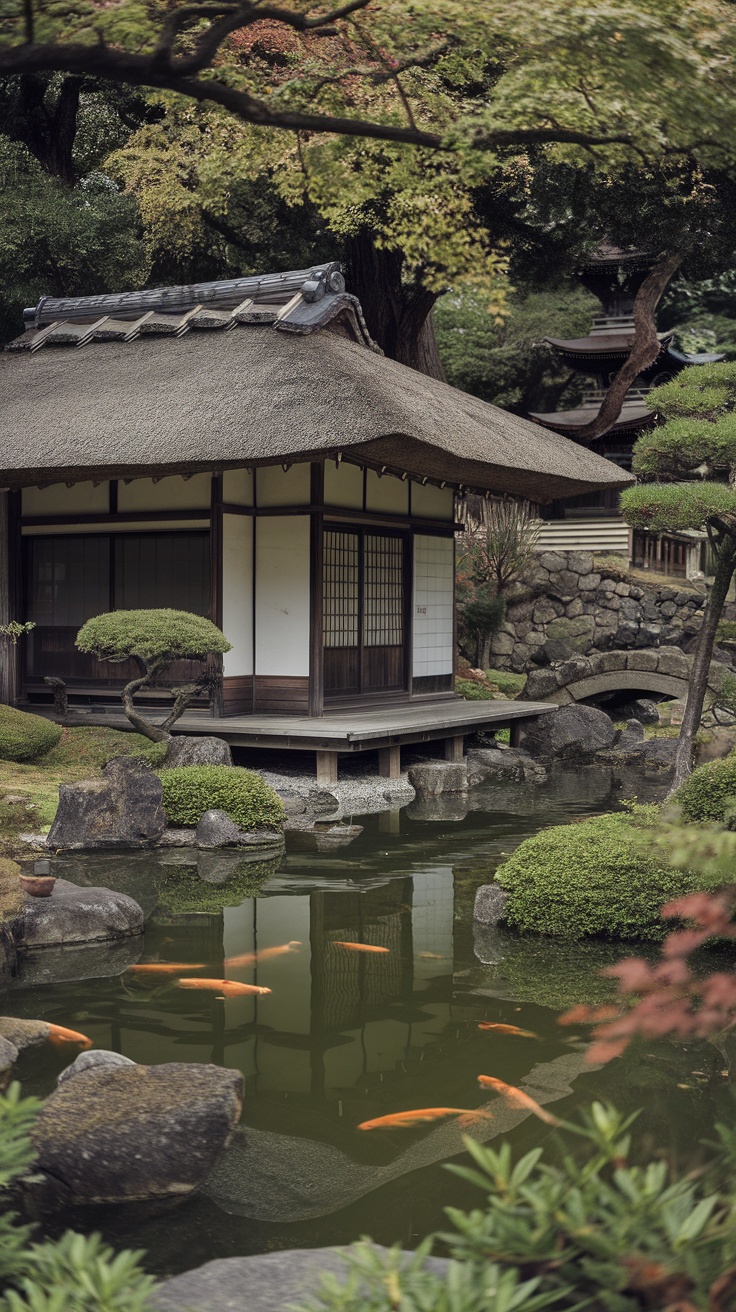
In the heart of a Japanese garden, tea houses are more than just charming structures; they are symbols of tranquility and tradition. The image beautifully captures a tea house nestled beside a serene pond, reflecting the harmony of nature and architecture. The thatched roof and wooden framework create a warm, inviting atmosphere.
Tea houses play a vital role in Japanese culture. They serve as spaces for the traditional tea ceremony, known as ‘chanoyu.’ This ceremony is not just about drinking tea; it’s a meditative practice that emphasizes mindfulness, respect, and the beauty of simplicity. Visitors often find a sense of peace and connection to nature within these spaces.
As you explore a garden with a tea house, take a moment to appreciate the surrounding elements. The carefully arranged rocks, lush greenery, and the gentle movement of koi fish in the pond enhance the overall experience. It’s a reminder of how nature and human craftsmanship can coexist harmoniously.
Elements of a Traditional Japanese Garden
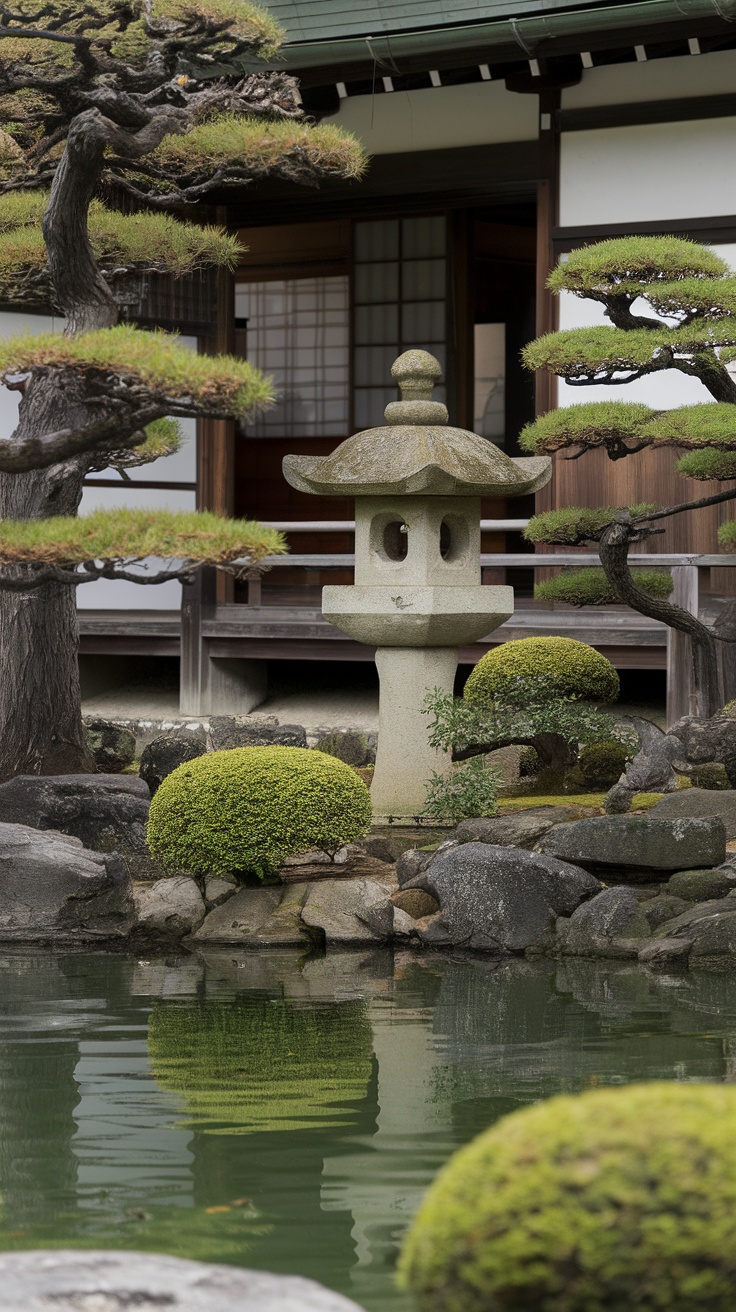
In a traditional Japanese garden, you’ll often find a mix of natural and man-made elements that create a serene atmosphere. The stone lantern in the image is a classic feature. These lanterns not only illuminate the garden at night but also symbolize enlightenment and guidance.
Another key element is the carefully pruned trees. They show the skill and patience of the gardener. The trees here are shaped to accentuate their natural beauty, creating a sense of harmony with the surroundings.
Also, notice the perfectly round bushes. These plants add a touch of elegance and softness to the landscape. Their shapes are intentional, designed to complement the angular forms of the rocks and lanterns.
The water in the garden also plays a vital role. It reflects the surrounding elements, enhancing the sense of tranquility. The calm surface invites contemplation and gives life to the garden, making it feel more dynamic.
Each of these components works together to create a peaceful retreat. Whether you’re strolling through or simply enjoying the view, a Japanese garden offers a unique experience that connects you with nature.
The Role of Water in Japanese Gardens
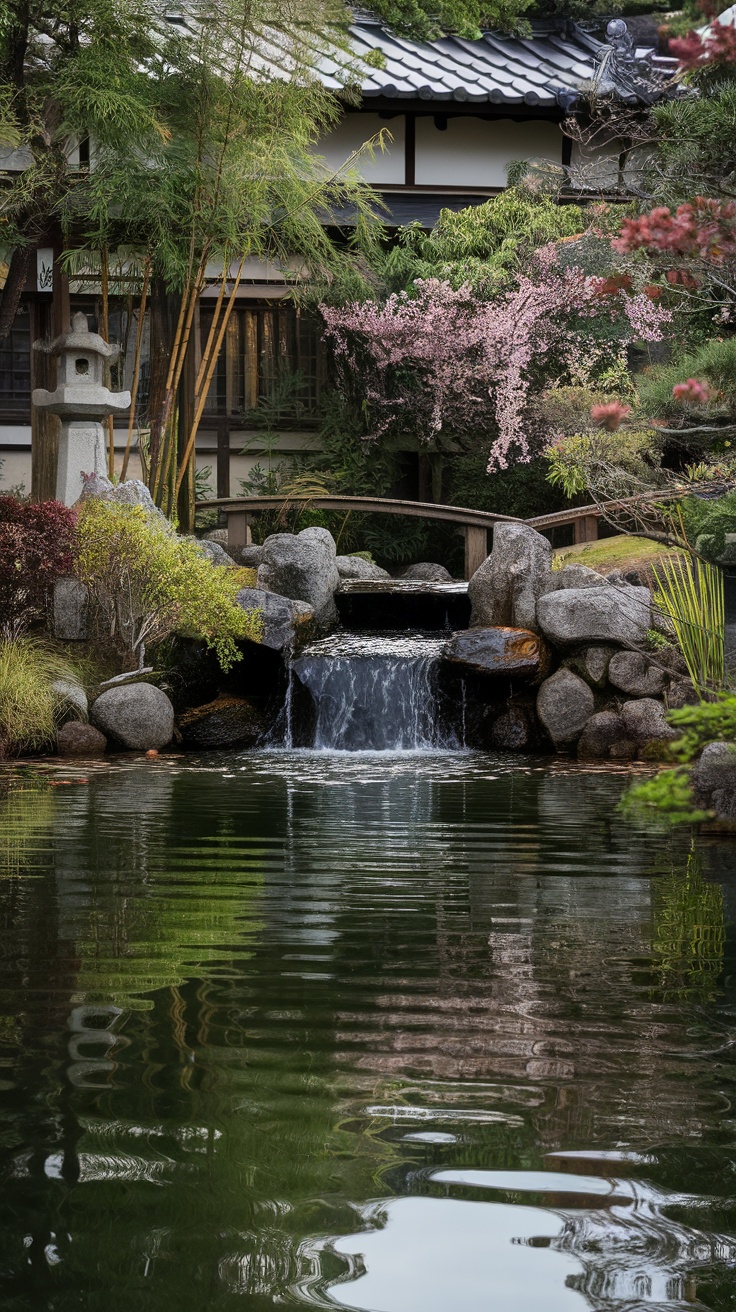
Water is a vital element in Japanese gardens, serving both aesthetic and symbolic purposes. In the image, a serene pond reflects the surrounding greenery and vibrant cherry blossoms. The gentle sound of a small waterfall adds to the peaceful atmosphere, inviting visitors to pause and take in the beauty.
The arrangement of rocks and water creates a natural flow, mimicking river landscapes. This design not only enhances the visual appeal but also promotes tranquility and mindfulness. The still surface of the pond acts as a mirror, reflecting the intricate details of the trees and structures nearby.
Moreover, water symbolizes purity and renewal in Japanese culture. It’s often seen as a source of life and is carefully integrated into the landscape. The presence of water in gardens encourages a connection between nature and the viewer, making it a space for contemplation and relaxation.
Symbolism in Japanese Garden Features
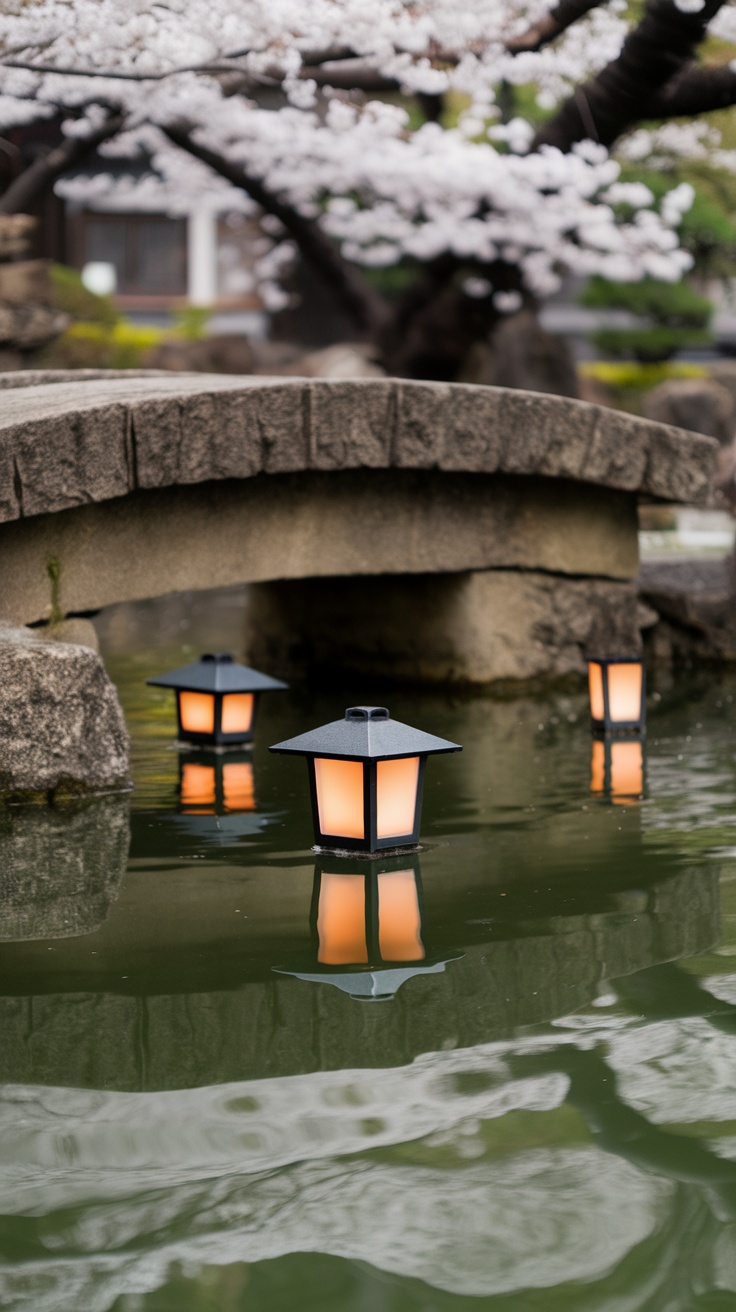
Japanese gardens are rich in symbolism, and each element plays a significant role. The scene depicted in the image captures this essence beautifully. The lanterns floating in the water symbolize enlightenment and guidance. They illuminate the path, inviting visitors to contemplate their surroundings and find peace.
The stone bridge in the image represents the journey of life. Crossing it may symbolize overcoming obstacles. This bridge connects different areas of the garden, reflecting how experiences shape our paths.
Additionally, the cherry blossoms in the background carry profound meaning. They symbolize the fleeting nature of life, reminding us to appreciate beauty while it lasts. This blend of elements creates a serene environment that encourages reflection and mindfulness.
Incorporating these features into a Japanese garden allows for a harmonious balance between nature and human experience. Each visit offers a chance to reconnect with oneself and the world around.
The Art of Zen in Japanese Garden Design
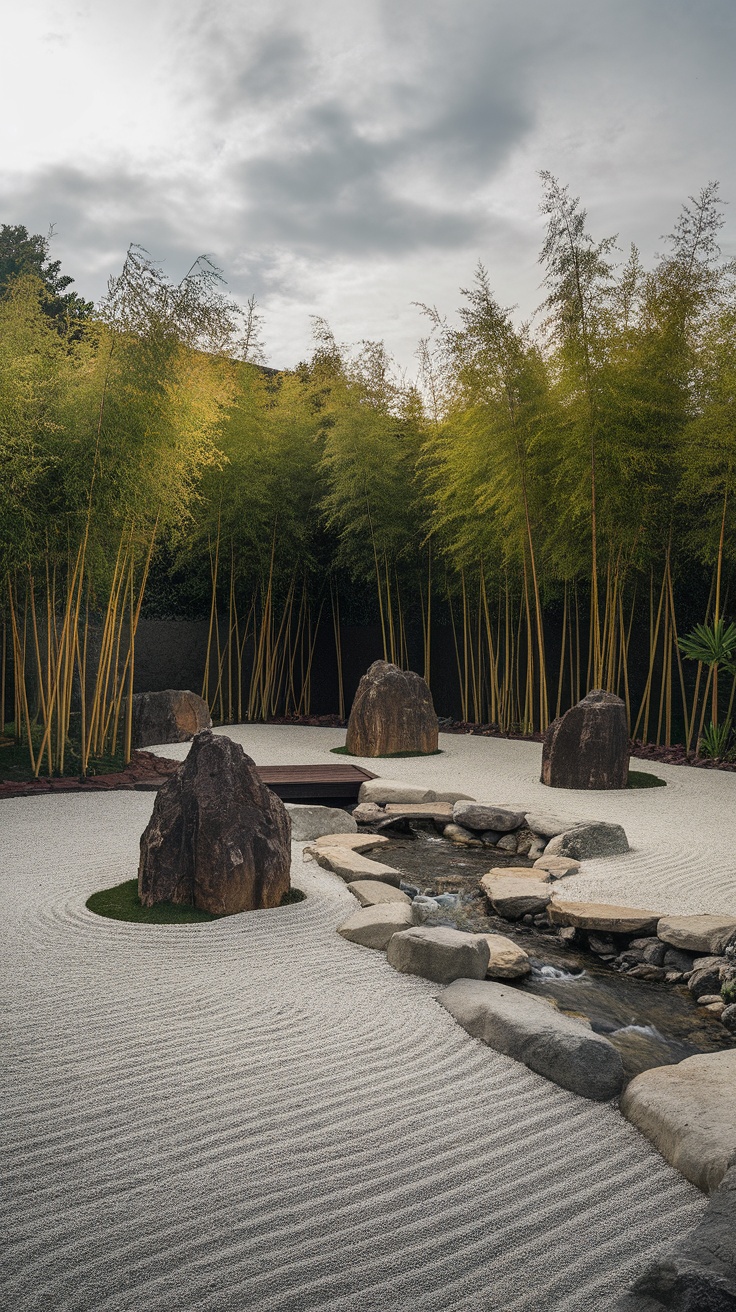
Japanese gardens are a beautiful blend of nature and design, creating a peaceful atmosphere that invites contemplation. In this particular garden, you can see how various elements work together to create a sense of harmony.
The gentle curves of the gravel, raked into soothing patterns, mimic the flow of water. This technique not only looks appealing but also represents the essence of nature. It encourages visitors to walk slowly and reflect.
Large stones serve as focal points, representing mountains or islands. Their rugged textures contrast nicely with the smoothness of the gravel, drawing the eye and adding depth to the scene. It’s all about balance and creating a space that feels alive.
Bamboo grows tall in the background, providing height and tranquility. The soft rustling of the bamboo leaves can be quite calming, enhancing the overall zen experience. Together, these elements create a garden that promotes relaxation and mindfulness.
If you ever find yourself in a Japanese garden, take the time to breathe deeply and appreciate the thoughtful design. Each aspect encourages you to slow down and connect with nature in a simple yet profound way.
Incorporating Stone Pathways for Serenity
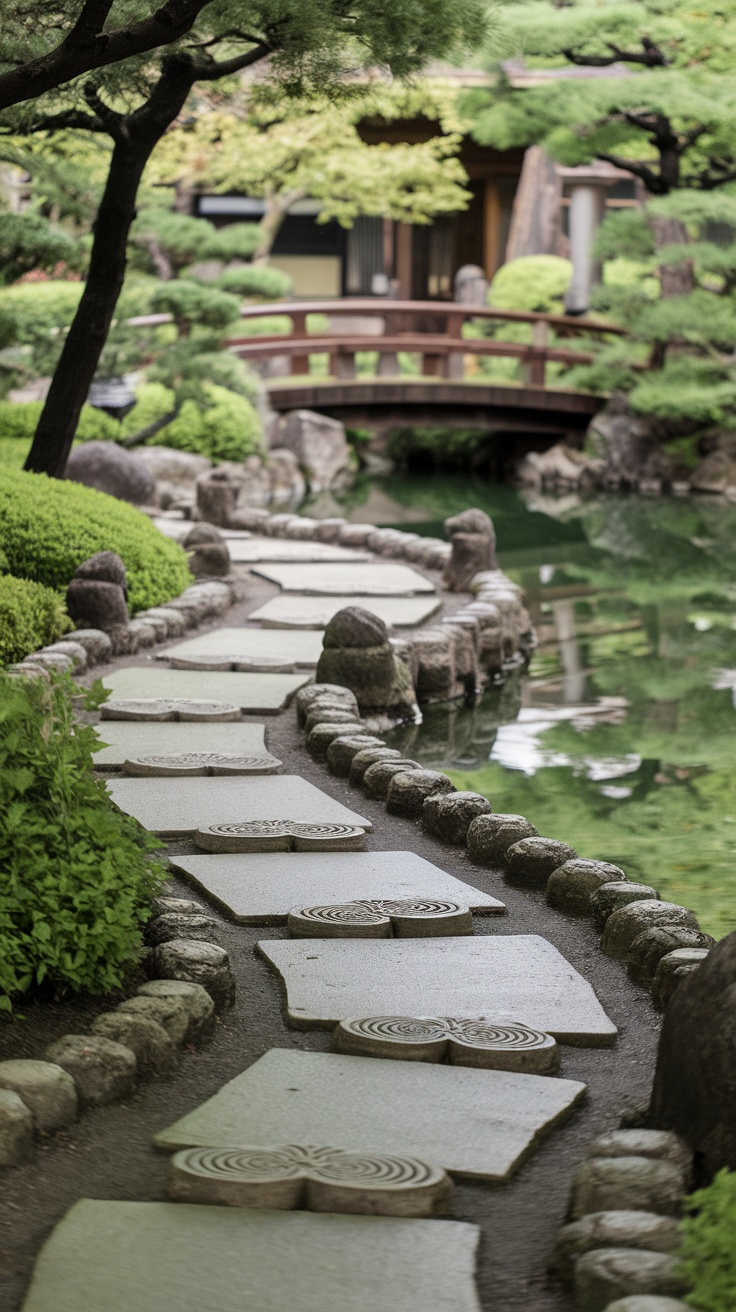
Stone pathways are a beautiful way to enhance the tranquility of a Japanese garden. They guide visitors gently through the landscape, inviting them to explore each carefully curated corner. The image captures a serene pathway, bordered by lush greenery and a peaceful pond.
These pathways often feature unique stone designs that add character. The circular patterns on the stepping stones create a sense of harmony and connection to nature. As you walk along the path, you can appreciate the natural beauty surrounding you, from the manicured bushes to the reflection of trees in the water.
A bridge in the background offers a focal point, drawing the eye and encouraging further exploration. This setup not only creates visual interest but also symbolizes the journey and discovery within the garden.
Incorporating such pathways can be a simple yet effective way to promote relaxation and mindfulness. Whether you’re walking alone or with friends, each step along the stones helps to cultivate a sense of peace, making the experience truly enjoyable.
The Importance of Plant Selection in Japanese Gardens
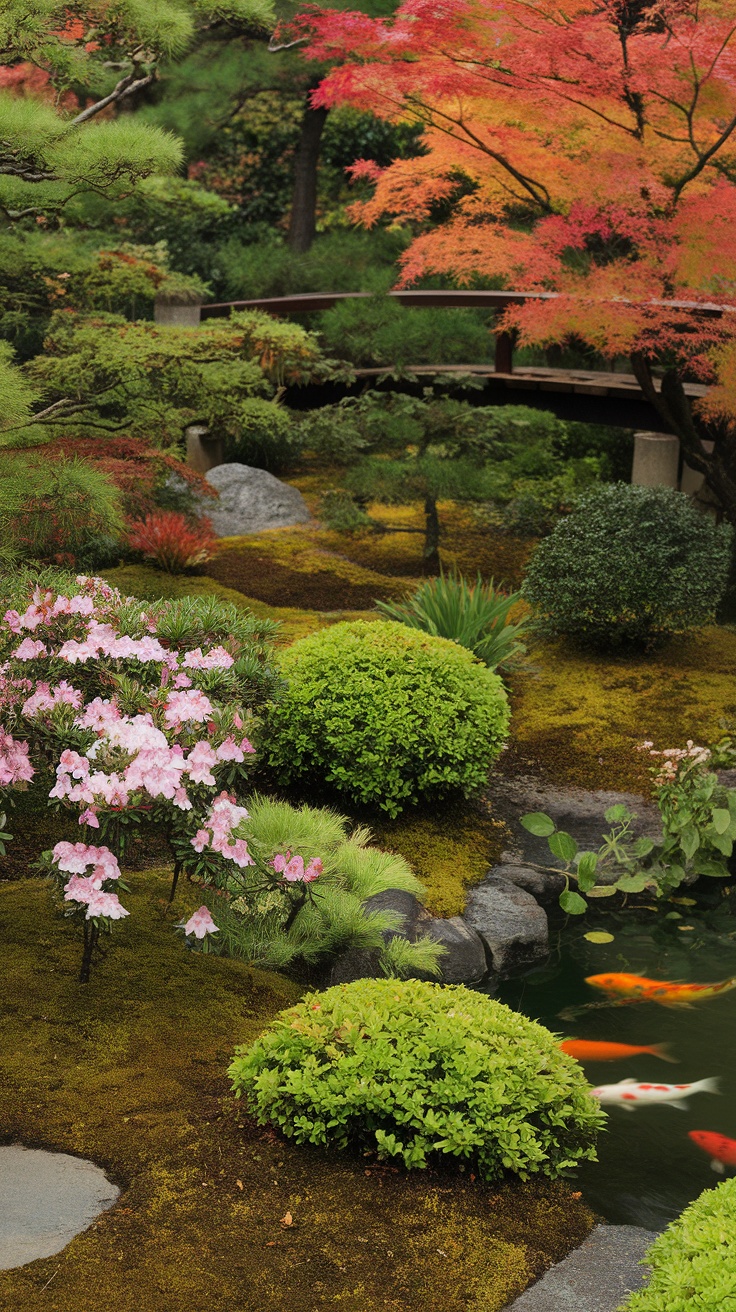
Plant selection is a key element in creating a Japanese garden. The plants chosen are not just about looks; they play a vital role in the garden’s overall atmosphere and harmony.
In the image, you can notice various plants that contribute to the garden’s serene feel. The pink flowers add a touch of color and softness, while the lush greenery around them creates a sense of calmness. Each plant has a purpose, whether it’s to provide shade, attract wildlife, or enhance the visual appeal.
Additionally, the choice of plants reflects the changing seasons. For instance, the vibrant red leaves hint at the fall season, reminding us of nature’s cycles. This seasonal aspect is important in Japanese gardens, as it encourages visitors to appreciate the beauty in change.
Furthermore, the combination of textures, colors, and shapes can evoke different feelings. Rounded bushes contrast well with the linear forms of trees, creating balance. Such careful consideration makes the garden inviting and peaceful.
In conclusion, when selecting plants for a Japanese garden, think about their visual impact, seasonal changes, and how they work together to create a cohesive space. This attention to detail is what makes these gardens special.
Creating a Sense of Balance and Harmony
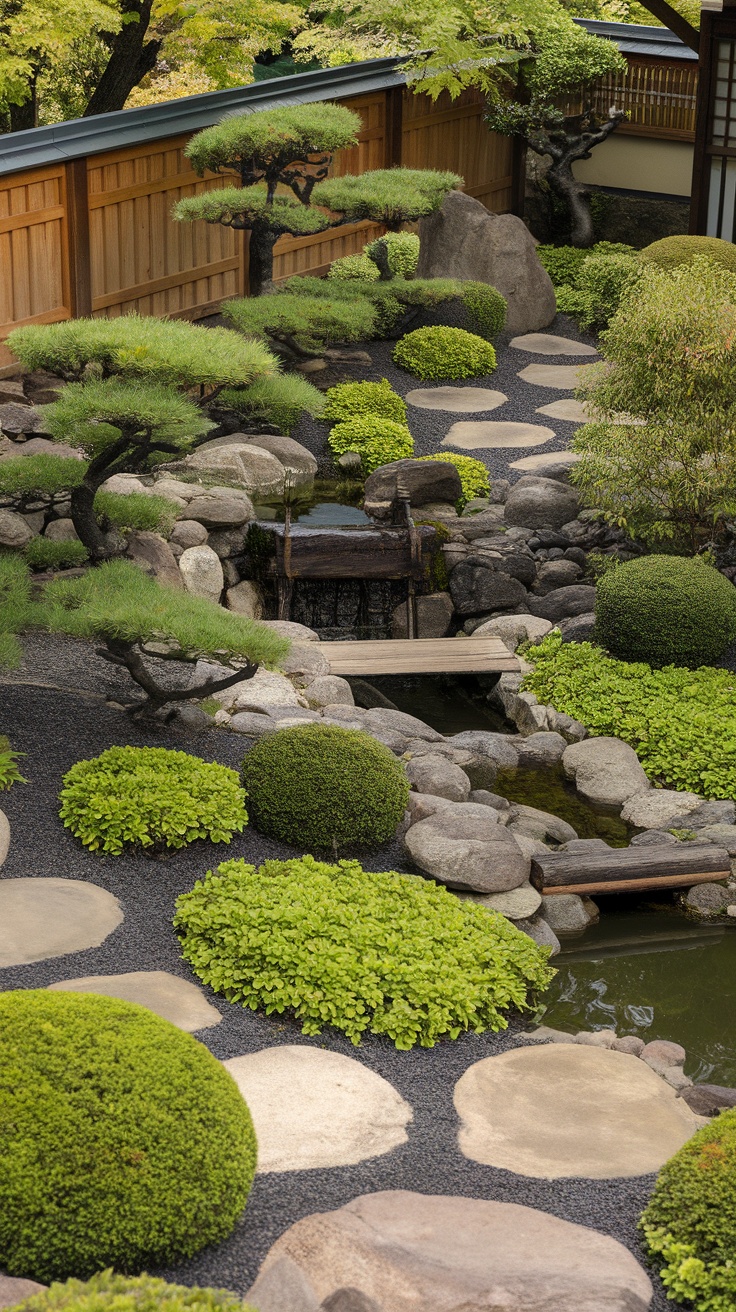
Japanese gardens are known for their serene beauty, and this garden is a perfect example. The layout creates a sense of balance that draws you in. From the carefully placed rocks to the artfully trimmed trees, every element has its role.
The gentle sound of the water adds to the calming atmosphere. The small stream flowing through the garden guides the eye and provides a natural soundtrack. Walking along the stone path, you can appreciate the harmony achieved through careful planning.
Greenery is abundant, with lush bushes and trees complementing the rocky textures. The round shapes of the plants contrast nicely with the angular stones, creating a visual rhythm. This garden invites you to pause and appreciate the little details.
Ultimately, this garden encapsulates the essence of balance and harmony. It’s a reminder that nature, when thoughtfully arranged, can bring peace to our busy lives.
Cultural Practices and Rituals in Japanese Gardens
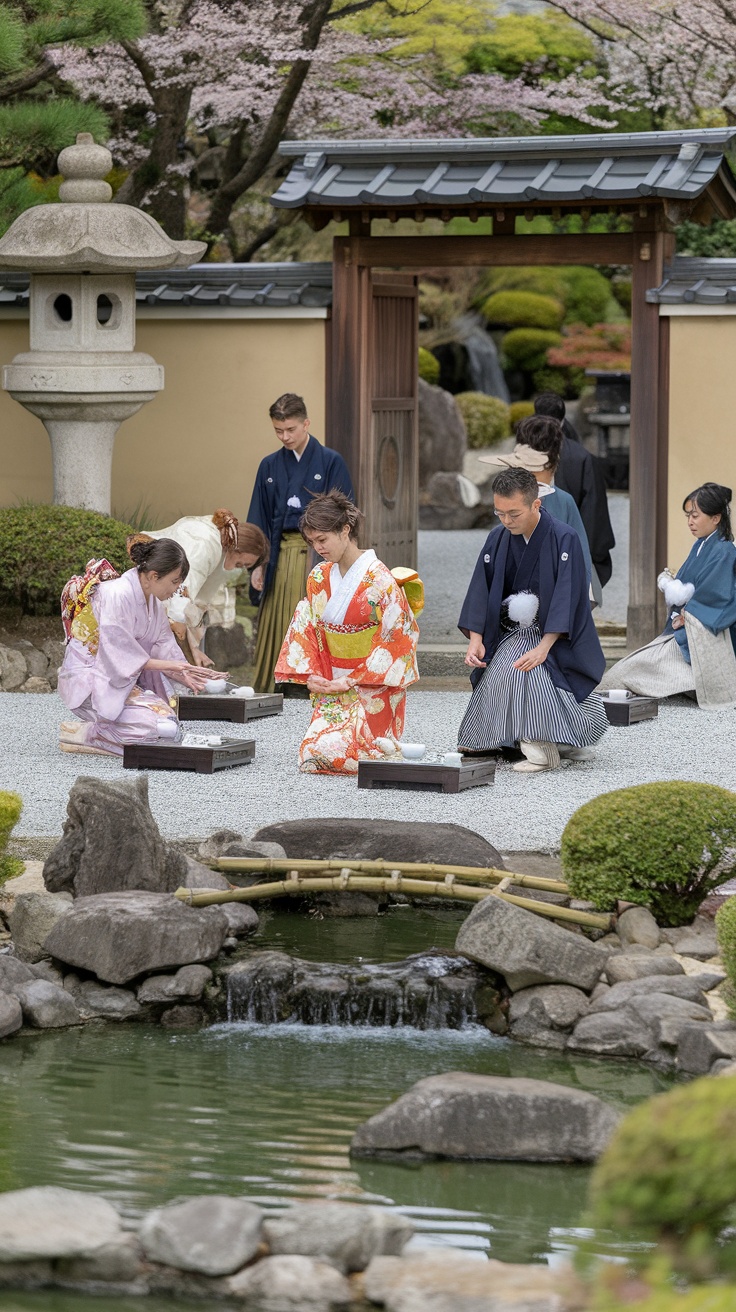
Japanese gardens are more than just beautiful landscapes; they hold deep cultural significance. The scene depicted in the image showcases a traditional gathering, where individuals are dressed in elegant kimonos. This setting highlights the importance of rituals in Japanese culture, particularly in gardens.
In the image, participants engage in a tea ceremony, an exquisite ritual that symbolizes harmony, respect, purity, and tranquility. The careful arrangement of tea utensils and the serene environment of the garden create a perfect backdrop for mindfulness and appreciation of nature.
Japanese gardens often serve as venues for various cultural practices. Events like flower viewing, or Hanami, take place under blooming cherry trees, inviting people to reflect on the transient beauty of life. The meticulous design of these gardens encourages visitors to find peace and contemplation.
Another cultural aspect is the practice of Shinto rituals, where offerings and prayers are made to spirits residing in nature. This connection to the spiritual world adds another layer of depth to the experience of a Japanese garden, making it a place of both beauty and reverence.
Overall, the rituals and practices associated with Japanese gardens invite visitors to not only enjoy the scenery but also to engage with Japan’s rich cultural heritage.