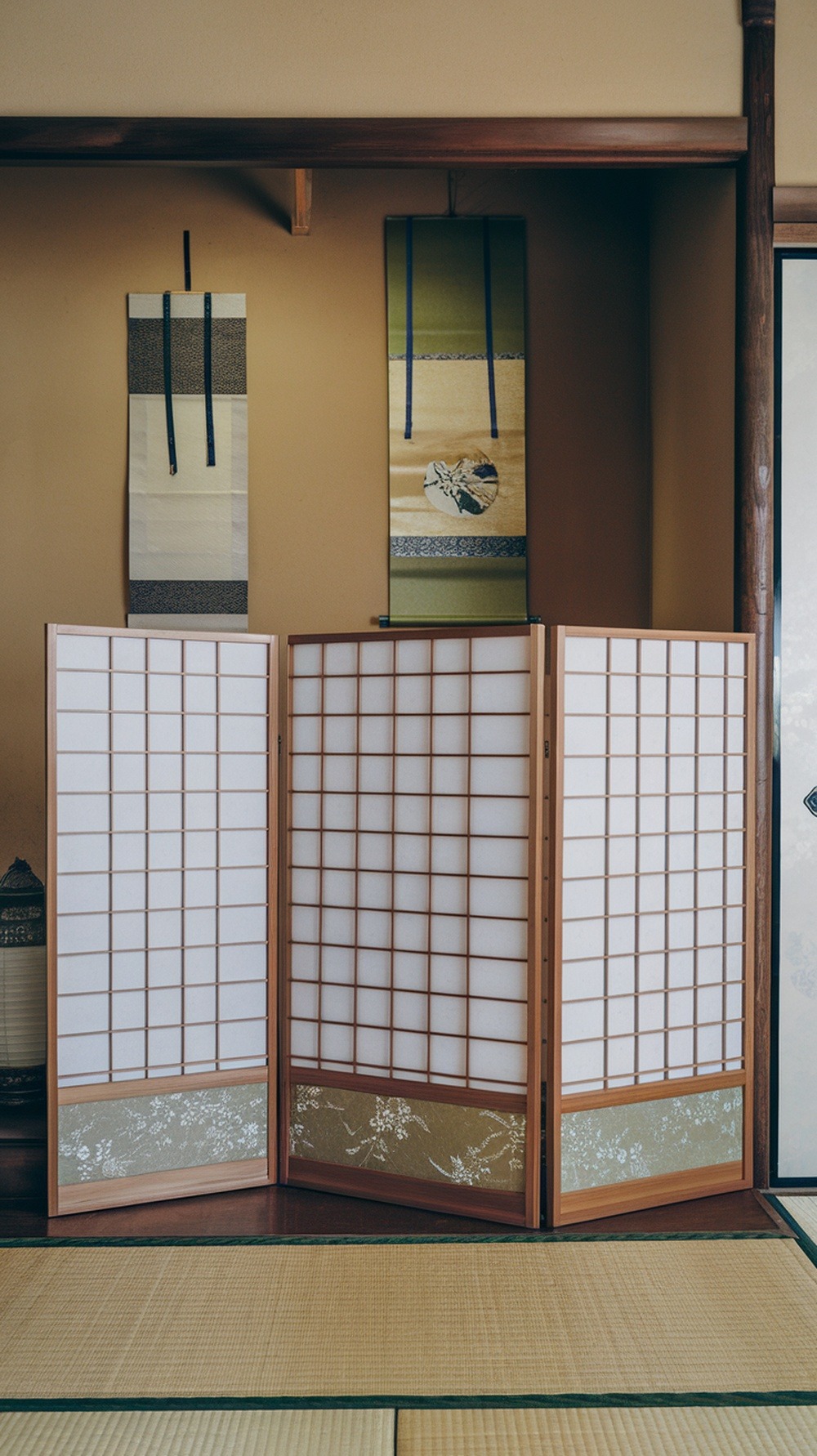
If you’re looking to create a cozy and inviting space, a Japanese-style living room might be just what you need.
By focusing on simplicity, natural materials, and minimalism, you can transform your space into a tranquil retreat.
Think tatami mats, sliding doors, and low furniture to embrace that serene aesthetic. Let’s explore how to infuse your living room with a touch of Japanese charm!
Minimalist Furniture and Decor
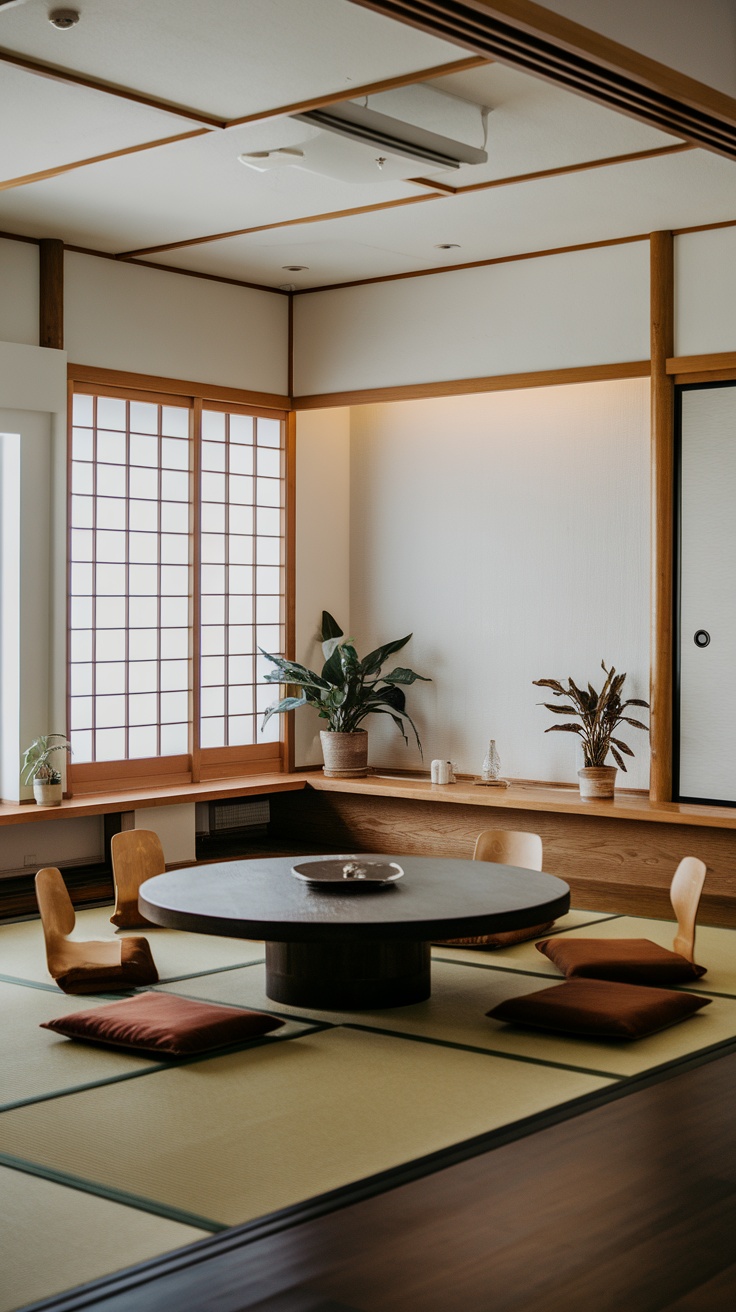
In a Japanese-style living room, the furniture and decor reflect simplicity and harmony. The low, round table sits at the center, encouraging a relaxed atmosphere.
Around it, floor cushions create a casual seating arrangement, perfect for gatherings or quiet moments. The use of natural materials, like wood and tatami mats, adds warmth to the space.
The decor is minimal, emphasizing function over excess. A few carefully placed plants bring a touch of nature indoors, enhancing the calming vibe of the room. Sliding shoji screens filter light beautifully, creating an inviting glow throughout the space. This approach to furniture and decor not only maximizes comfort but also aligns with the principles of minimalism, making each piece feel intentional and meaningful.
Low Lighting and Warm Ambiance
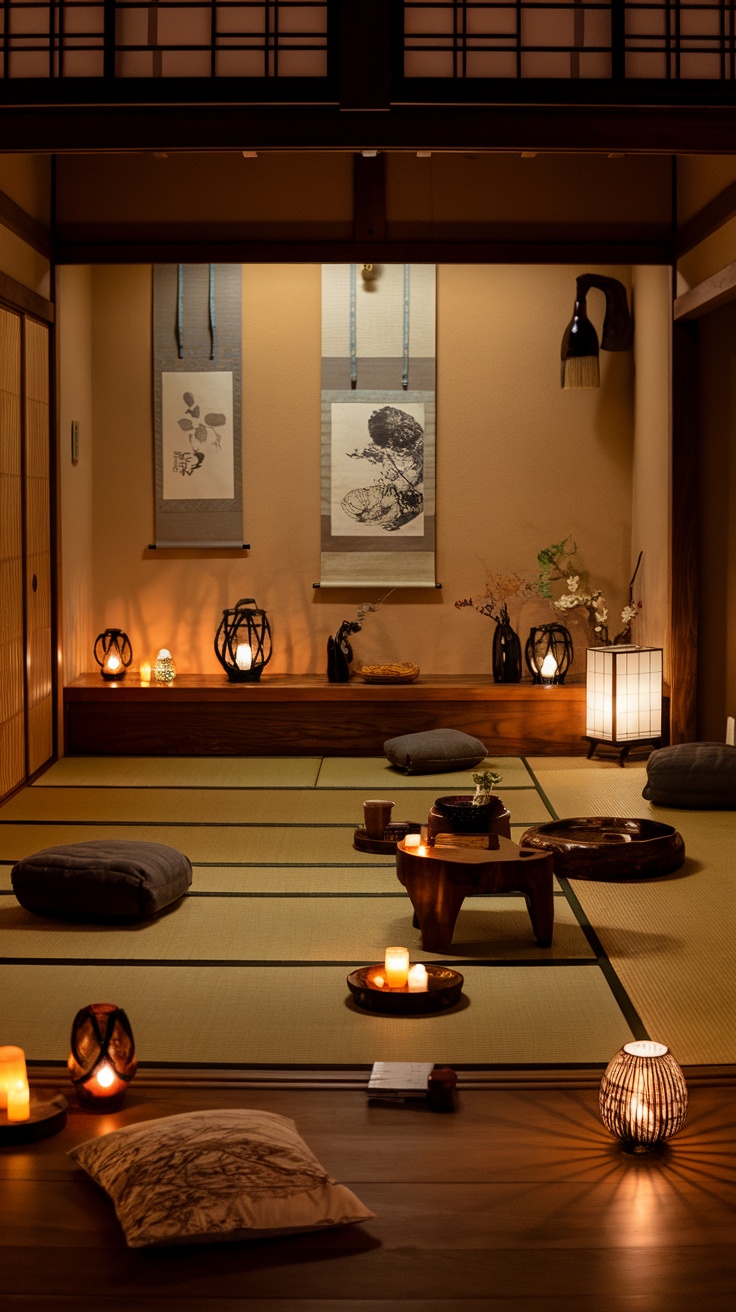
In a Japanese-style living room, low lighting plays a crucial role in creating a cozy atmosphere. Soft, warm lights invite you to unwind and relax. The gentle glow of candles and lanterns adds to the charm, setting the perfect mood for quiet evenings or intimate gatherings.
The use of natural materials, like wood and paper, further enhances this warm ambiance. Shoji screens diffuse light beautifully, casting soft shadows that dance across the tatami mat flooring. This creates a serene environment, ideal for meditation or simply enjoying a cup of tea.
Decorative elements such as flower arrangements and traditional artwork also contribute to the overall feel. These subtle details bring a touch of nature indoors, connecting you with the outside world while still feeling at home.
Incorporating Nature with Plants
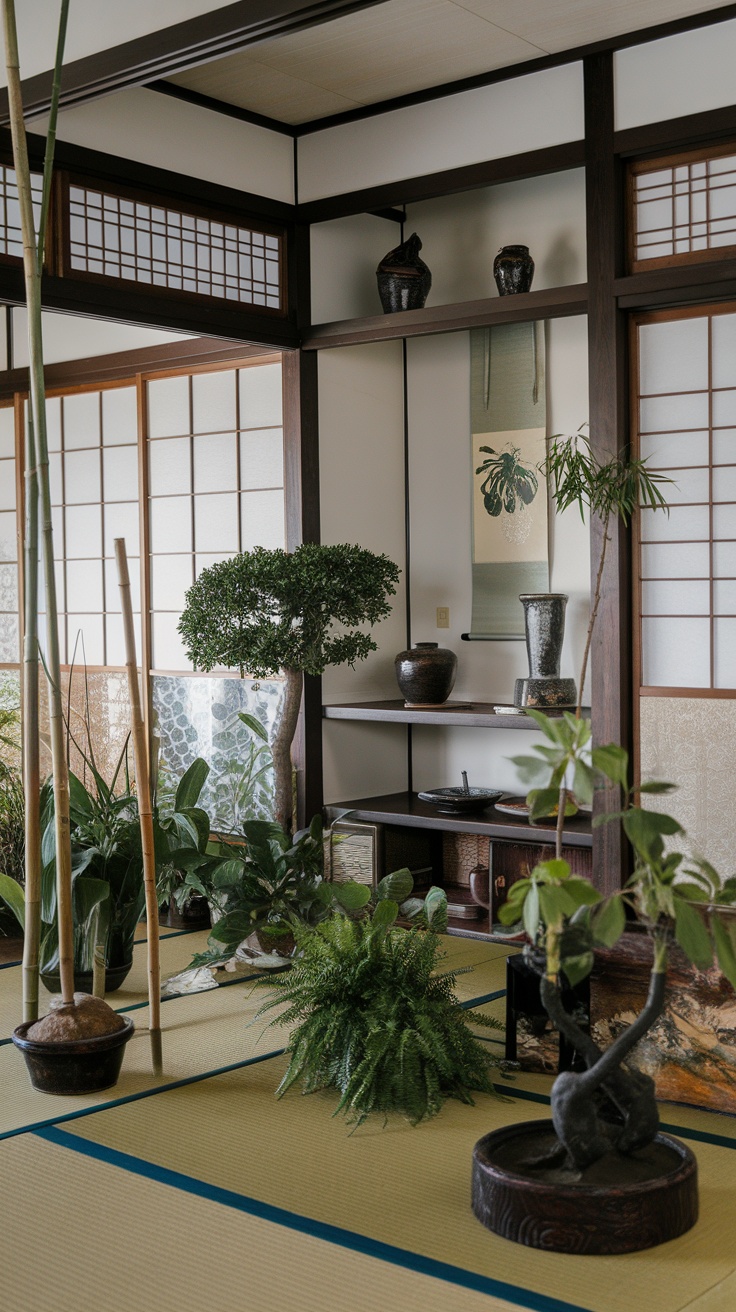
Bringing plants into your living room is a key element of Japanese style. The image shows a serene space filled with greenery. The arrangement of plants creates a sense of balance and harmony, which is essential in Japanese design.
Notice how the tall bamboo stalks add height and a natural vibe. They draw the eye upward, making the room feel more open. The round, leafy plants contribute to the tranquility of the space, providing a calming presence.
The carefully placed bonsai tree serves as a focal point, representing patience and care in its cultivation. This reflects a deeper connection to nature, which is central to Japanese aesthetics.
Using a mix of various plant types—like ferns and small shrubs—adds texture and interest. It shows that incorporating nature doesn’t have to be uniform; variety can enhance the beauty of your living room.
To achieve a similar look, consider choosing plants that thrive indoors and fit your personal style. The key is to create a space that feels alive and inviting, while still being peaceful and organized.
Harmonious Color Palette
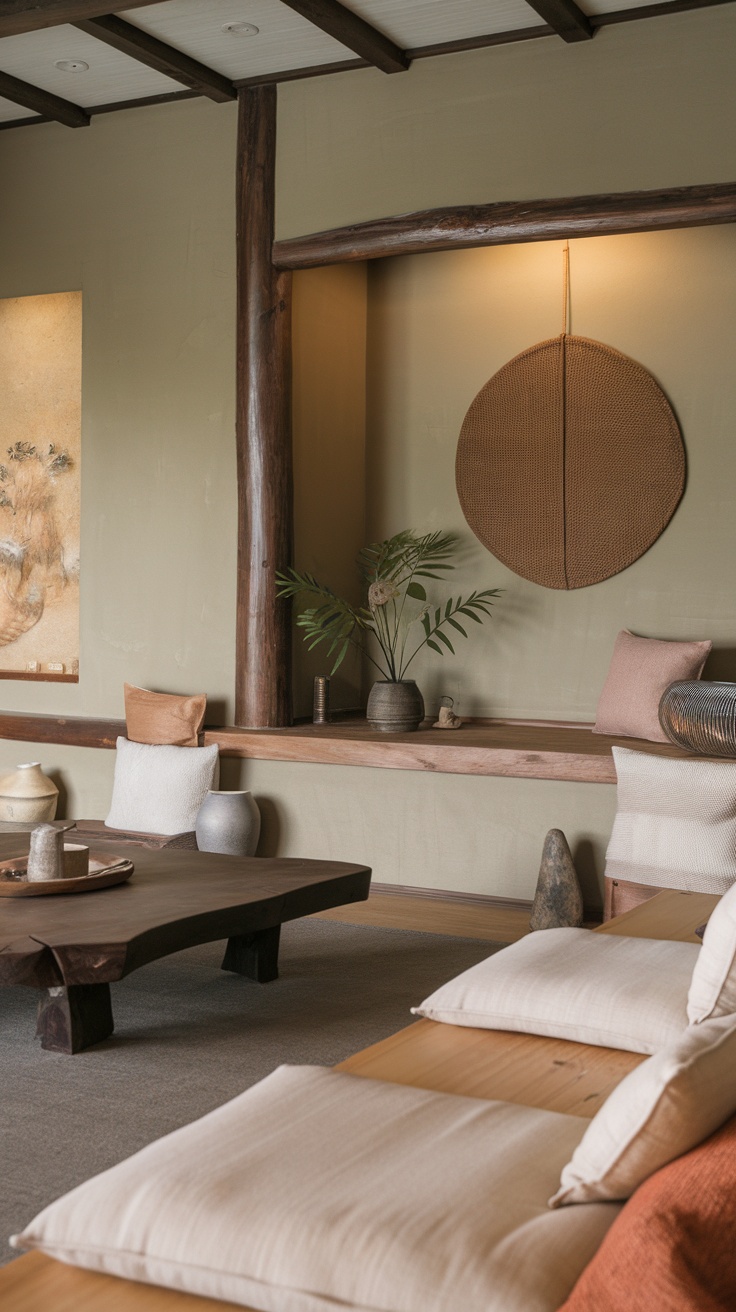
The Japanese style living room you see here embraces a soothing color palette that truly reflects tranquility. Soft earth tones dominate the space, creating a warm and inviting atmosphere. The muted greens and browns on the walls blend effortlessly with the natural wooden elements, bringing a sense of calm to anyone who enters.
In this design, the color choices aren’t just random; they resonate with nature. The shades of beige and soft pink in the cushions add a gentle touch, enhancing the overall harmony. Each piece complements the others, making the room feel cohesive.
This living room also highlights the importance of texture. The mix of smooth fabrics and rustic wooden surfaces brings depth to the color scheme. The subtle variations keep the space interesting without overwhelming the senses.
Incorporating plants adds a lively but gentle pop of green, which ties back to the nature-inspired theme. It reminds us that a harmonious palette is not just about colors—it’s about creating a relaxing haven that feels connected to the outdoors.
Tatami Mat Flooring
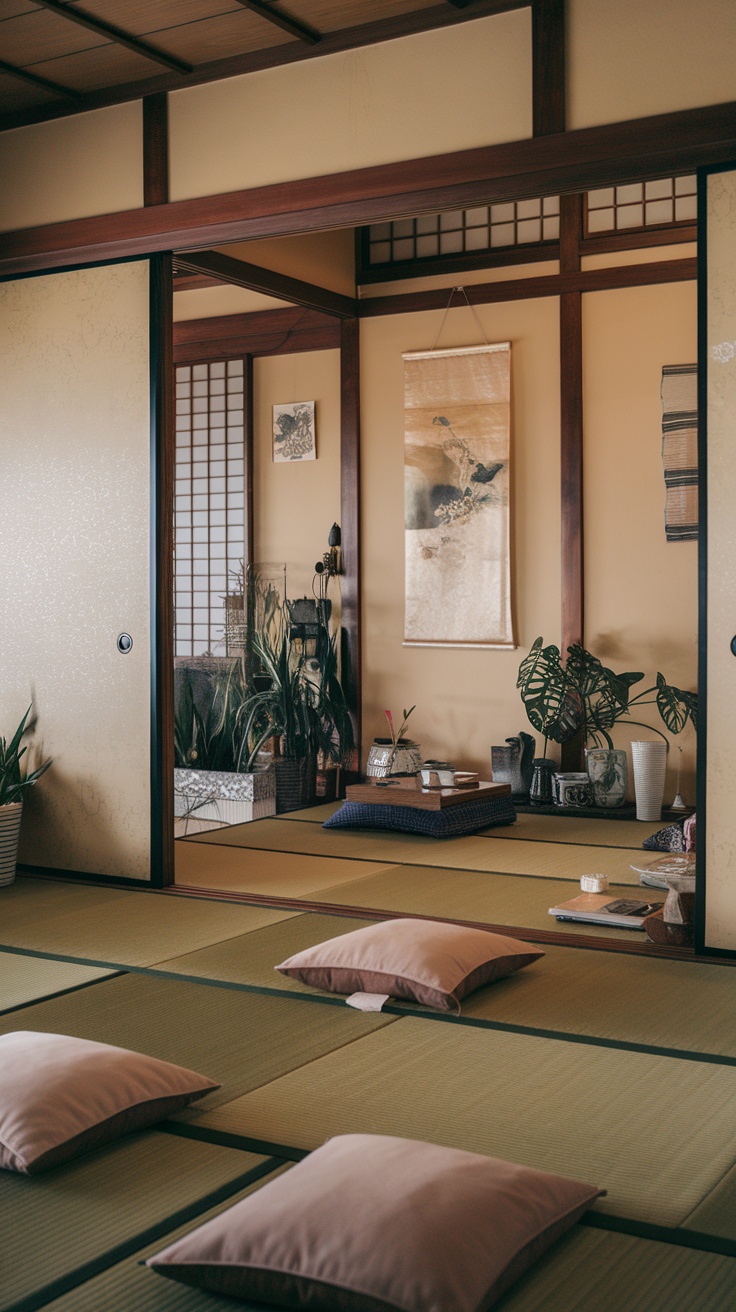
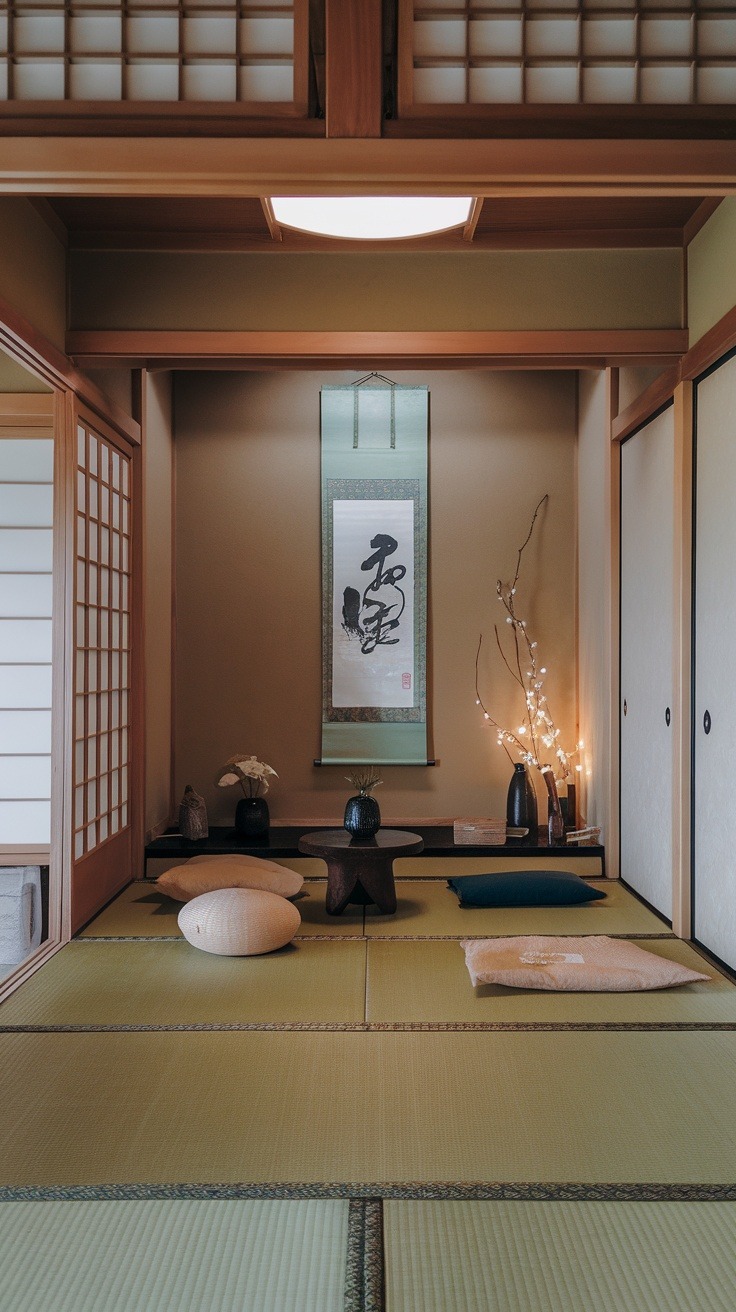
Tatami mats are a key feature of traditional Japanese living rooms. These mats are made from rice straw, tightly woven together and covered with a soft, green rush grass. This natural material not only looks lovely but also has a warm and inviting feel underfoot.
The image shows a spacious room adorned with tatami flooring. The mats create a cozy atmosphere that encourages relaxation. You can spot soft cushions scattered around, perfect for sitting comfortably on the floor. It’s common to use these cushions for casual gatherings or quiet moments.
In addition to their aesthetic appeal, tatami mats have practical benefits. They help regulate humidity and provide insulation, making the space feel cozy in both summer and winter. Plus, the earthy scent of tatami adds to the charm of the room.
Decorating a living room with tatami mats allows for a minimalist approach. The simplicity of the mats complements various styles, from traditional to modern. With minimal furniture, the focus shifts to the beauty of the materials and the overall ambiance of the space.
So, whether you’re sipping tea with friends or enjoying a quiet evening, the comfort of tatami flooring enhances every experience in a Japanese-style living room.
Folding Screens for Privacy
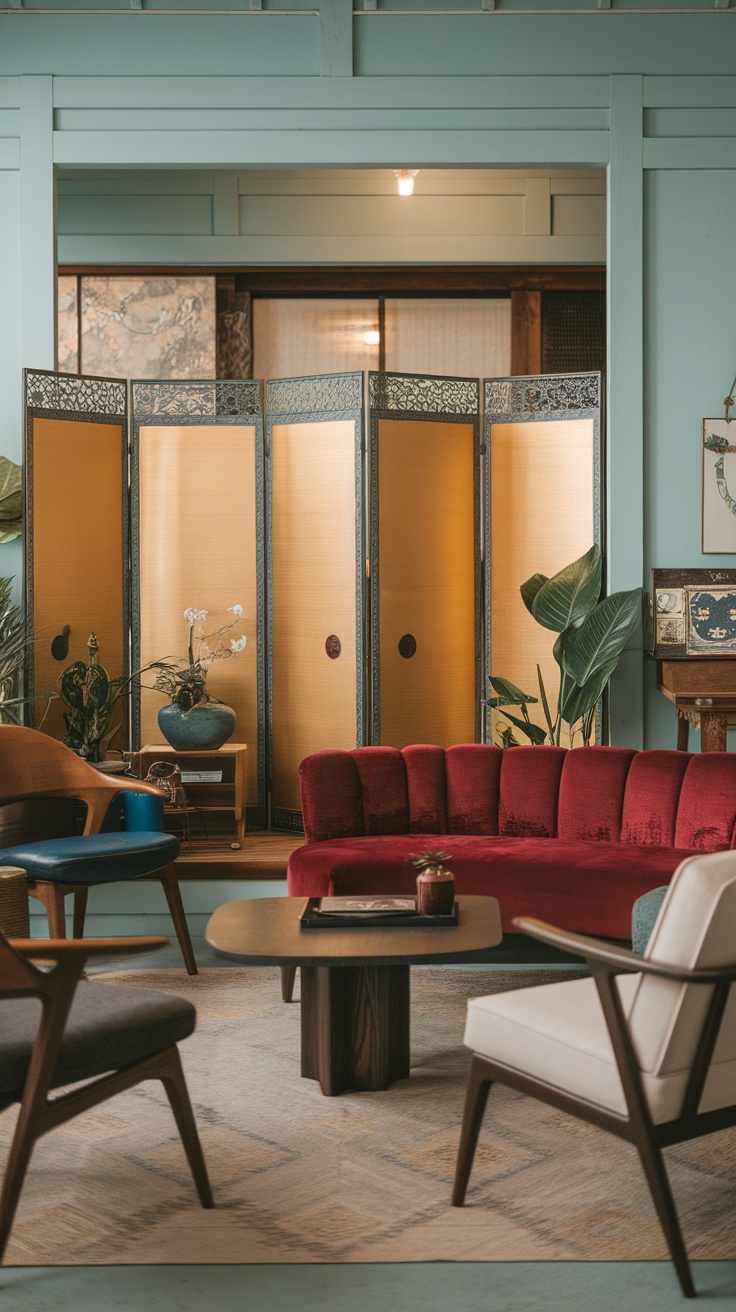
Folding screens, or “shoji,” play a key role in Japanese-style living rooms, offering both beauty and functionality. In the image, you can see a beautifully crafted folding screen that divides the space while adding a touch of elegance.
These screens are not just for looks; they provide a sense of privacy without completely closing off a room. This balance between openness and seclusion is important in Japanese design, making it easier to create cozy, intimate areas for conversation or relaxation.
The warm colors of the screen complement the vibrant red sofa and the natural greens of the plants. This harmonious color scheme enhances the overall atmosphere, making the room feel inviting and serene. It’s a great example of how thoughtful design can transform a living space.
Using folding screens allows for flexibility in how you use your space. You can move them around to change the layout as needed, making them a practical choice for any home. Plus, their traditional craftsmanship adds a unique character to modern interiors, blending the old with the new.
Natural Light and Open Spaces
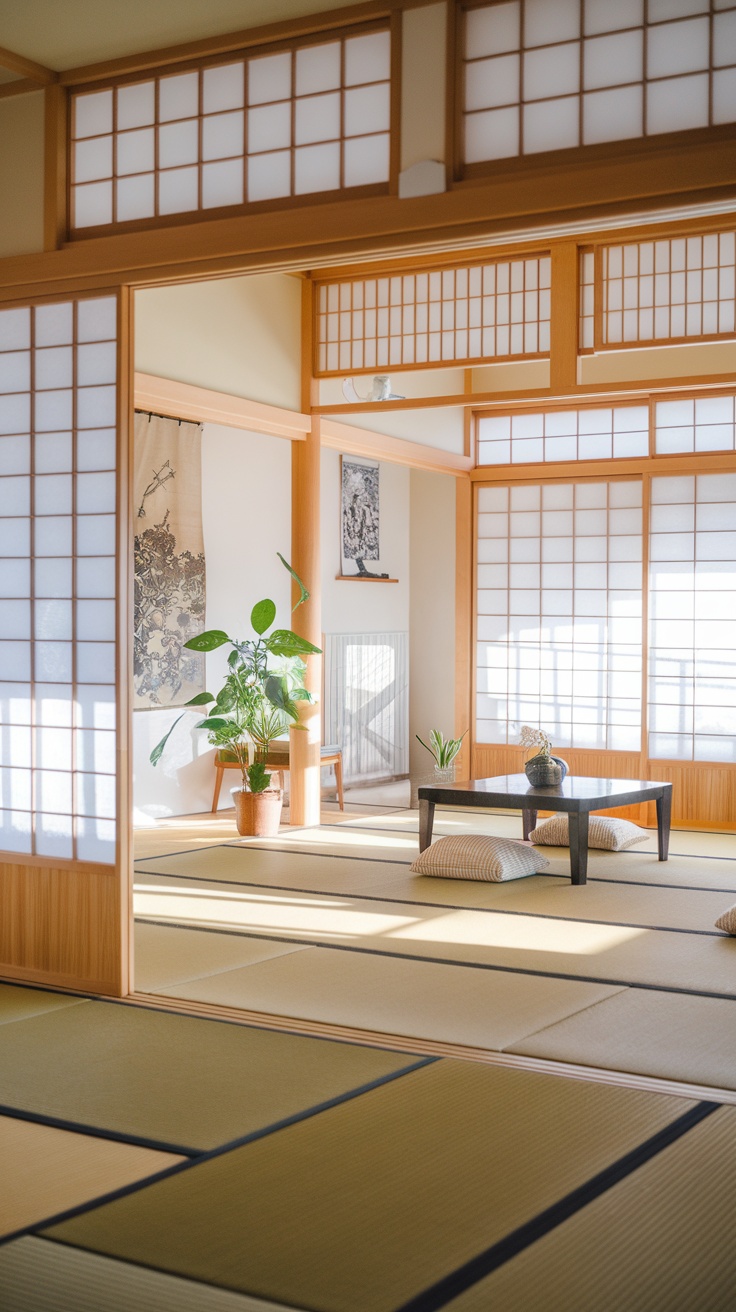
In a Japanese-style living room, natural light plays a key role. The large windows and sliding shoji screens allow sunlight to flood the space, creating a warm and inviting atmosphere. This emphasis on light is not just for aesthetics; it brings a sense of calm and tranquility into the home.
The open layout is another hallmark of this style. Without heavy walls or clutter, the room feels spacious and airy. The tatami mats on the floor add a touch of authenticity and comfort, making it a perfect spot for relaxation. You can easily move from one area to another, enhancing the flow of the space.
Plants in the corners, like the lush green leaves seen here, contribute to the natural vibe. They bring a bit of the outdoors inside, connecting you to nature. This blend of light and space truly embodies the essence of Japanese design, making it both functional and pleasing to the eye.
Zen Garden Elements
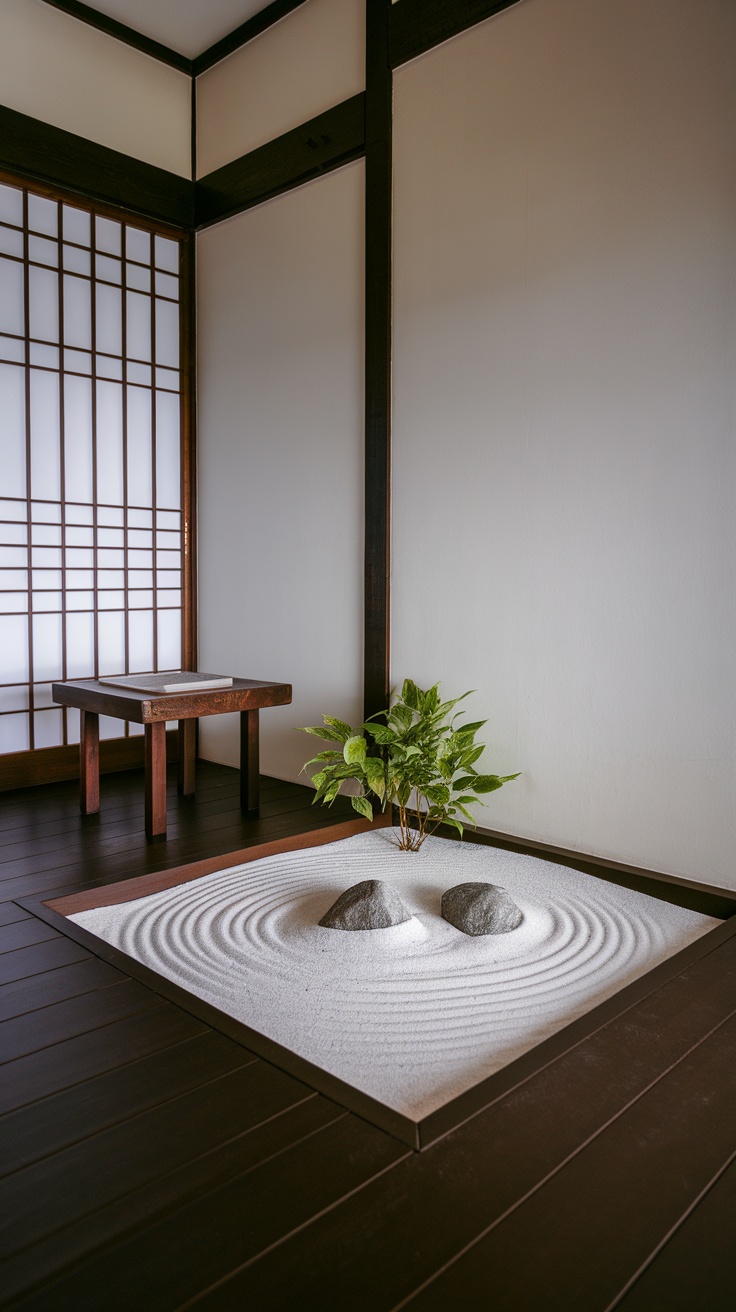
A Japanese-style living room often features serene and calming elements, and a zen garden is a perfect addition. The image showcases a small sand garden, also known as a ‘karesansui.’ It holds a couple of carefully placed stones, surrounded by meticulously raked sand, symbolizing mountains and water.
The simplicity of the design invites tranquility into the space. The gentle curves in the sand provide a sense of rhythm, drawing the eye and creating a peaceful focal point. In a busy world, having a small zen garden allows you to pause and reflect, making it a lovely element in any room.
The addition of a small green plant brings life to the design. It contrasts beautifully with the neutral tones of the sand and the earthy hues of the stones. This natural balance is key in Japanese aesthetics, where nature and minimalism work in harmony.
Moreover, the warm wooden table nearby adds functionality without overcrowding the space. It’s perfect for a cup of tea or a good book, enhancing the overall sense of calm. This approach to living room design emphasizes simplicity and mindfulness, making it a delightful retreat.
Cozy Nooks for Relaxation
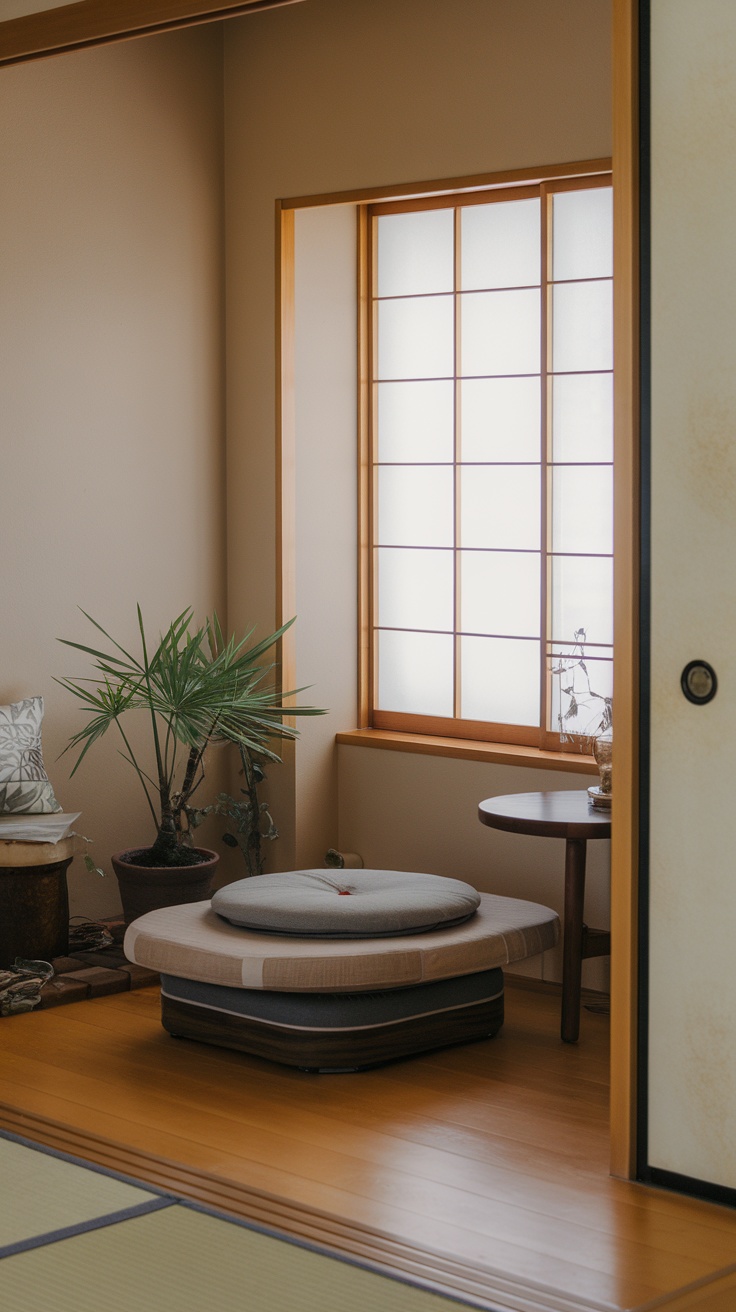
In a Japanese-style living room, cozy nooks are designed for relaxation and peace. This corner features a circular seating arrangement that invites you to unwind. The soft cushions offer comfort, making it an ideal spot to enjoy a book or sip tea.
Natural light streams in through the window, enhancing the calmness of the space. The shoji screen adds a traditional touch while allowing gentle illumination. Nearby, a small table provides a perfect place for your favorite drinks or snacks.
Adding a touch of greenery, the indoor plant brings a bit of nature inside, contributing to a serene atmosphere. This nook embodies the essence of Japanese design, showcasing simplicity and harmony in every element. It’s a perfect retreat where you can escape from daily stress.
Artful Display of Ceramics and Crafts
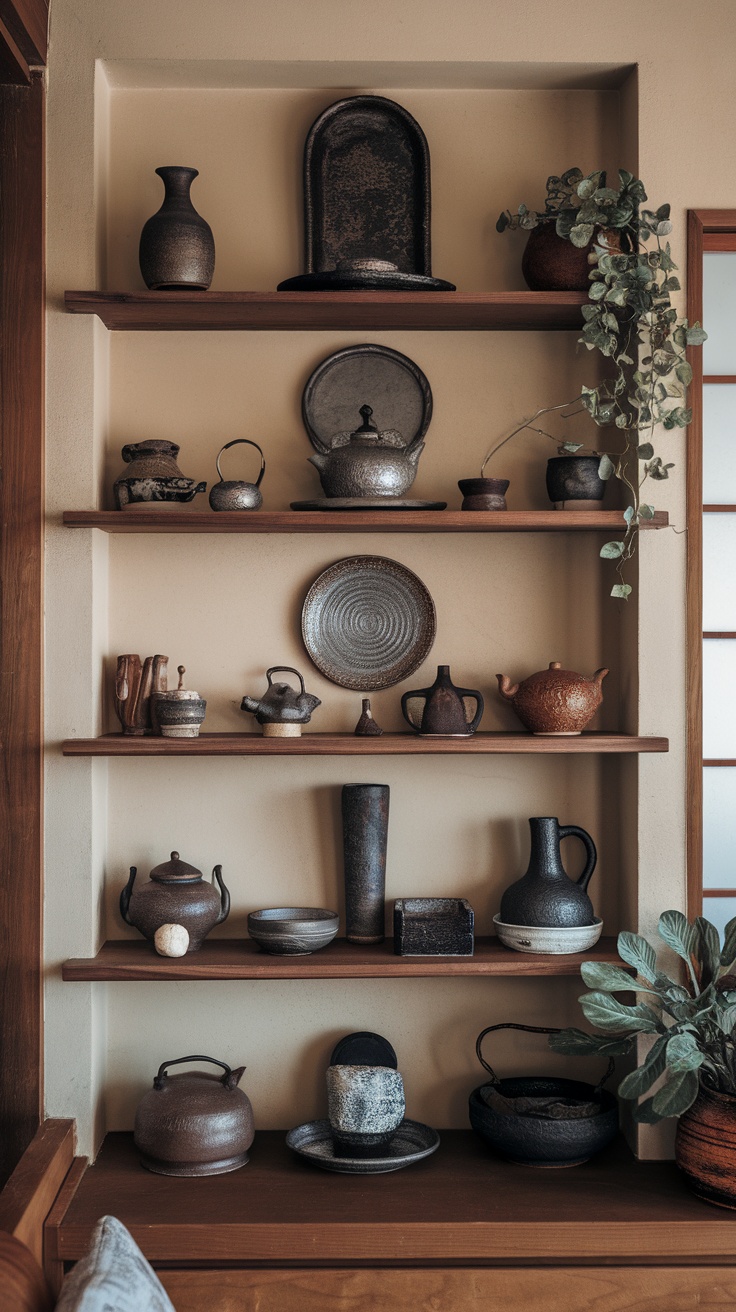
The living room reflects a serene Japanese style, highlighted by a beautiful array of ceramics and crafts. Each piece, carefully arranged on wooden shelves, tells a story of craftsmanship and tradition.
From the intricate teapots to the elegant vases, the collection showcases the beauty of simplicity. These ceramics often feature earthy tones and natural textures, perfectly complementing the tranquil atmosphere. The thoughtful arrangement allows each item to shine, creating a visual harmony that is both pleasing and inviting.
Adding to the aesthetic are subtle touches of greenery. A few small plants peeking from the shelves bring a breath of life into the space. This combination of organic elements with handcrafted pieces embodies the essence of Japanese design, where nature and art intertwine seamlessly.
The unique shapes and finishes of the ceramics invite conversation and admiration. Guests can appreciate not just the beauty, but also the skill that goes into making each piece. This artful display is an essential aspect of Japanese living, reminding us of the value of handcrafted items in our everyday lives.