Zaru soba, a classic Japanese dish featuring chilled buckwheat noodles served with a dipping sauce, epitomizes the elegant simplicity of Japanese cuisine.
Particularly popular during hot summer months, this refreshing dish offers a clean, pure taste experience that highlights the nutty flavor of buckwheat.
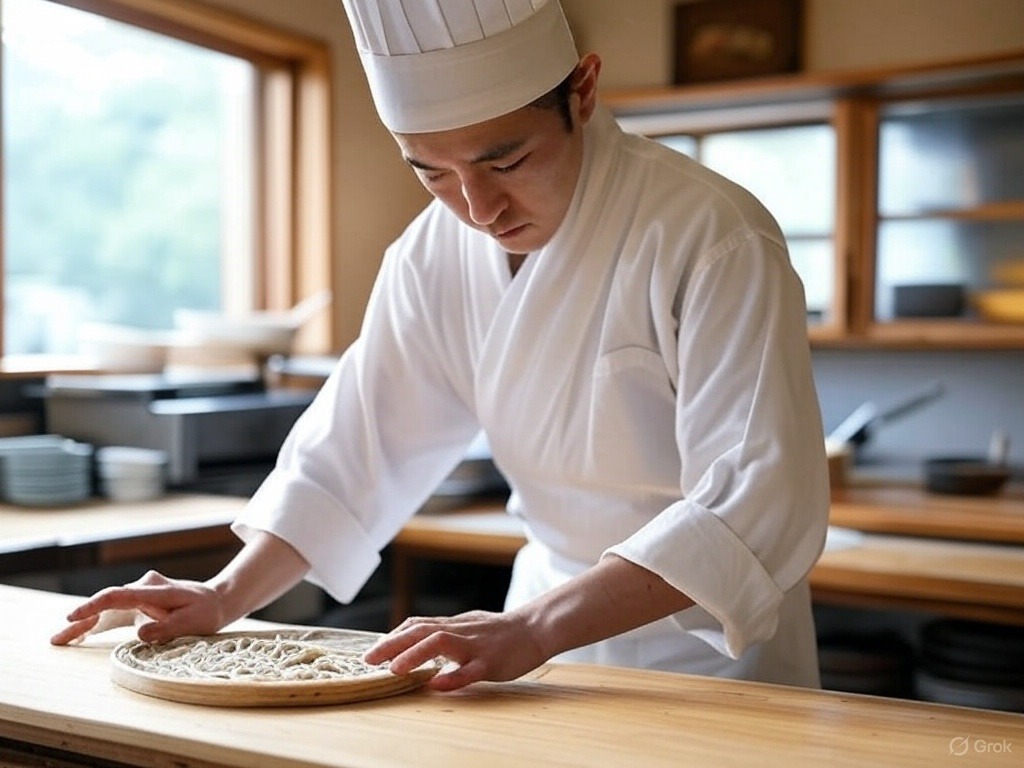
The name “zaru” refers to the traditional bamboo strainer used to serve the noodles, creating a beautiful presentation that’s as appealing to the eye as it is to the palate.
The Essence of Zaru Soba
At its core, zaru soba consists of just a few elements: cold buckwheat noodles, a savory-sweet dipping sauce called tsuyu, and simple garnishes. This minimalist approach allows the quality of each ingredient to shine. The slight chewiness of the noodles, the umami-rich dipping sauce, and the bright notes from condiments create a perfectly balanced dish that’s both satisfying and light.
Traditional Zaru Soba Recipe
Serves: 2
Ingredients
For the Noodles:
- 7 oz (200g) dried soba noodles
- Cold water for rinsing
- Ice cubes
For the Tsuyu Dipping Sauce:
- 1/2 cup (120ml) dashi stock (homemade or instant)
- 3 tablespoons soy sauce
- 2 tablespoons mirin
- 1 tablespoon sugar (optional, adjust to taste)
Traditional Garnishes:
- 2 stalks green onions, finely chopped
- 2 teaspoons wasabi paste
- 2 tablespoons dried nori seaweed, cut into thin strips
- 1 teaspoon toasted sesame seeds (optional)
Instructions
Cook the Soba:
- Bring a large pot of water to a boil (do not salt the water)
- Add soba noodles and stir gently to prevent sticking
- Cook according to package directions, usually 4-5 minutes, until al dente
- Drain immediately in a colander
- Rinse thoroughly under cold running water, using your hands to gently rub the noodles to remove excess starch
- Continue rinsing until noodles are completely cold
- Drain well and arrange on a bamboo mat or plate
Prepare the Tsuyu Dipping Sauce:
- Combine dashi, soy sauce, and mirin in a small saucepan
- Add sugar if using
- Bring to a gentle simmer and stir until sugar dissolves
- Remove from heat and allow to cool completely
- Transfer to small individual dipping bowls
Serve:
- Arrange the cold soba noodles on individual plates or a traditional zaru bamboo strainer
- Place a small mound of chopped green onions and a dab of wasabi on the side of each dipping bowl
- Sprinkle nori strips over the noodles
- Add sesame seeds if using
- Serve immediately with the dipping sauce
To Eat:
- Take a small portion of noodles with your chopsticks
- Add desired amount of garnishes to your dipping sauce
- Dip noodles briefly in the sauce (don’t soak them)
- Slurp noodles—this is traditional and enhances the flavor!
Homemade Dashi for Enhanced Flavor
While instant dashi is convenient, making your own dashi stock elevates the dish considerably:
Quick Homemade Dashi:
- 4 cups water
- 1 piece kombu (dried kelp), about 4×6 inches
- 1 cup bonito flakes (katsuobushi)
Instructions:
- Wipe the kombu with a damp cloth (do not wash)
- Place kombu in cold water and let soak for 30 minutes
- Heat water with kombu on low heat
- Remove kombu just before water boils
- Add bonito flakes and turn off heat
- Let stand for 2 minutes until bonito flakes sink
- Strain through a fine-mesh sieve lined with cheesecloth
- Use immediately or refrigerate for up to 3 days
Modern Variations
While traditional zaru soba is perfect in its simplicity, these variations offer delicious alternatives:
Vegetable Zaru Soba
Add thinly sliced cucumber, grated daikon radish, and microgreens to the noodles for extra freshness and nutrition.
Tempura Zaru Soba
Serve with a side of tempura shrimp or vegetables for a more substantial meal. Dip both the noodles and tempura in the same tsuyu sauce.
Sesame Zaru Soba
Add 1 tablespoon of ground toasted sesame seeds and 1 teaspoon of sesame oil to the dipping sauce for a nutty enhancement.
Yuzu Zaru Soba
Add a few drops of yuzu juice and some yuzu zest to the dipping sauce for a bright, citrusy note.
Tips for Perfect Zaru Soba
- Noodle quality matters: Choose soba with a high percentage of buckwheat flour (ideally 80% or more) for authentic flavor and texture.
- Thorough rinsing is crucial: This removes excess starch and prevents noodles from becoming gummy.
- Ice bath finish: After rinsing, some chefs place the noodles in ice water for a minute to achieve extra firmness.
- Sauce concentration: Traditional tsuyu is quite strong, as the noodles only get a quick dip. If you prefer milder flavor, add a little water.
- Soba yu: In traditional service, the cloudy water in which soba is cooked (soba yu) is often served at the end of the meal. It’s mixed with remaining dipping sauce and drunk as a soup.
Zaru soba exemplifies the Japanese appreciation for seasonal eating and simplicity. The dish allows one to experience the pure flavor of buckwheat while the cooling properties make it perfect for hot weather.
Master this basic recipe, and you’ll have a refreshing, authentic Japanese dish that’s impressive in both taste and presentation yet surprisingly easy to prepare.