Just returned from Japan and feeling a little awestruck?
You’re not alone.
There’s something deeply grounding about the way everyday life flows there.
It’s not flashy or loud — it’s thoughtful.
Harmonious.
Built on shared respect.
If you’ve ever wondered why Japan feels so calm and well-orchestrated, here’s a gentle look at the quiet habits and values that shape one of the most well-functioning societies in the world.
🧘♀️ Don’t be a burden
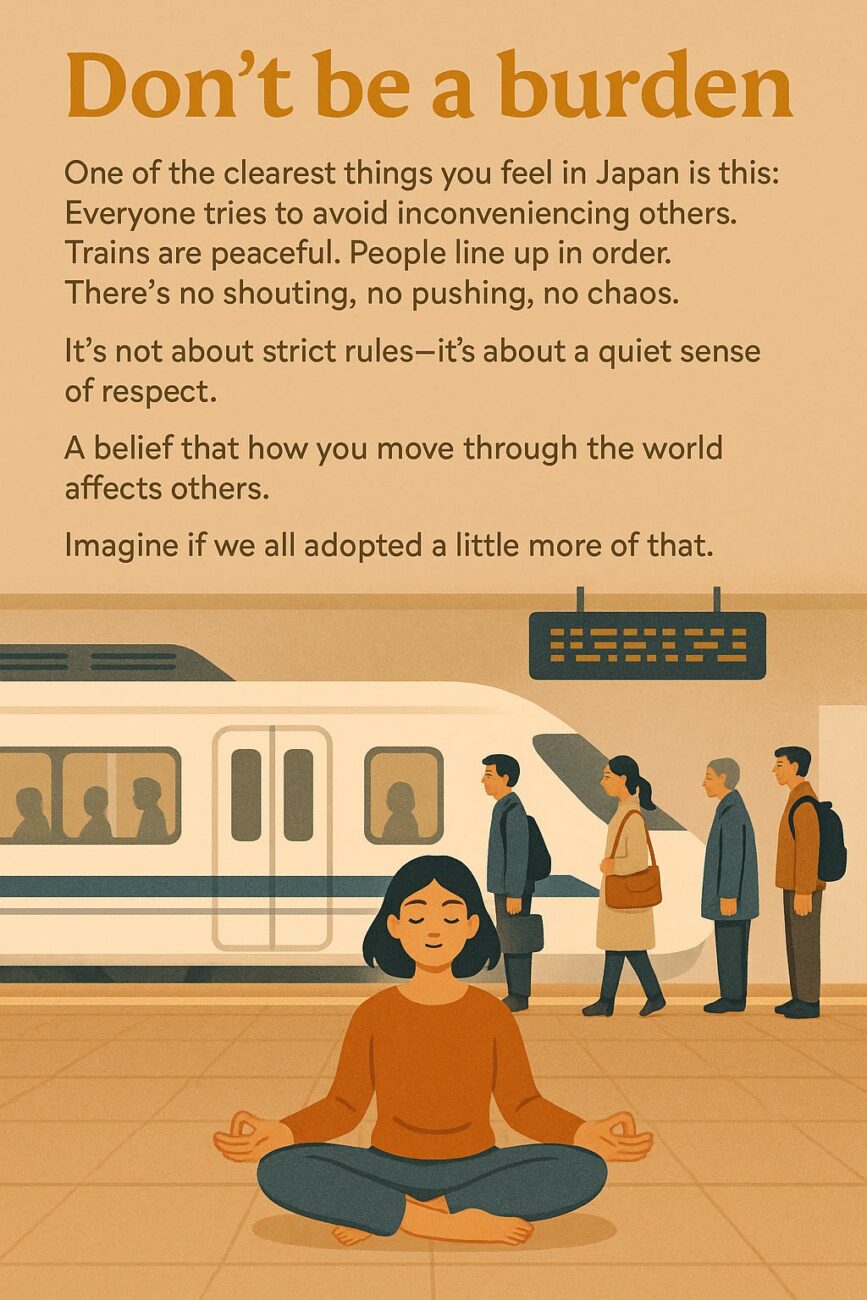
One of the clearest things you feel in Japan is this:
Everyone tries to avoid inconveniencing others.
Trains are peaceful. People line up in order.
There’s no shouting, no pushing, no chaos.
It’s not about strict rules — it’s about a quiet sense of respect.
A belief that how you move through the world affects others.
Imagine if we all adopted a little more of that.
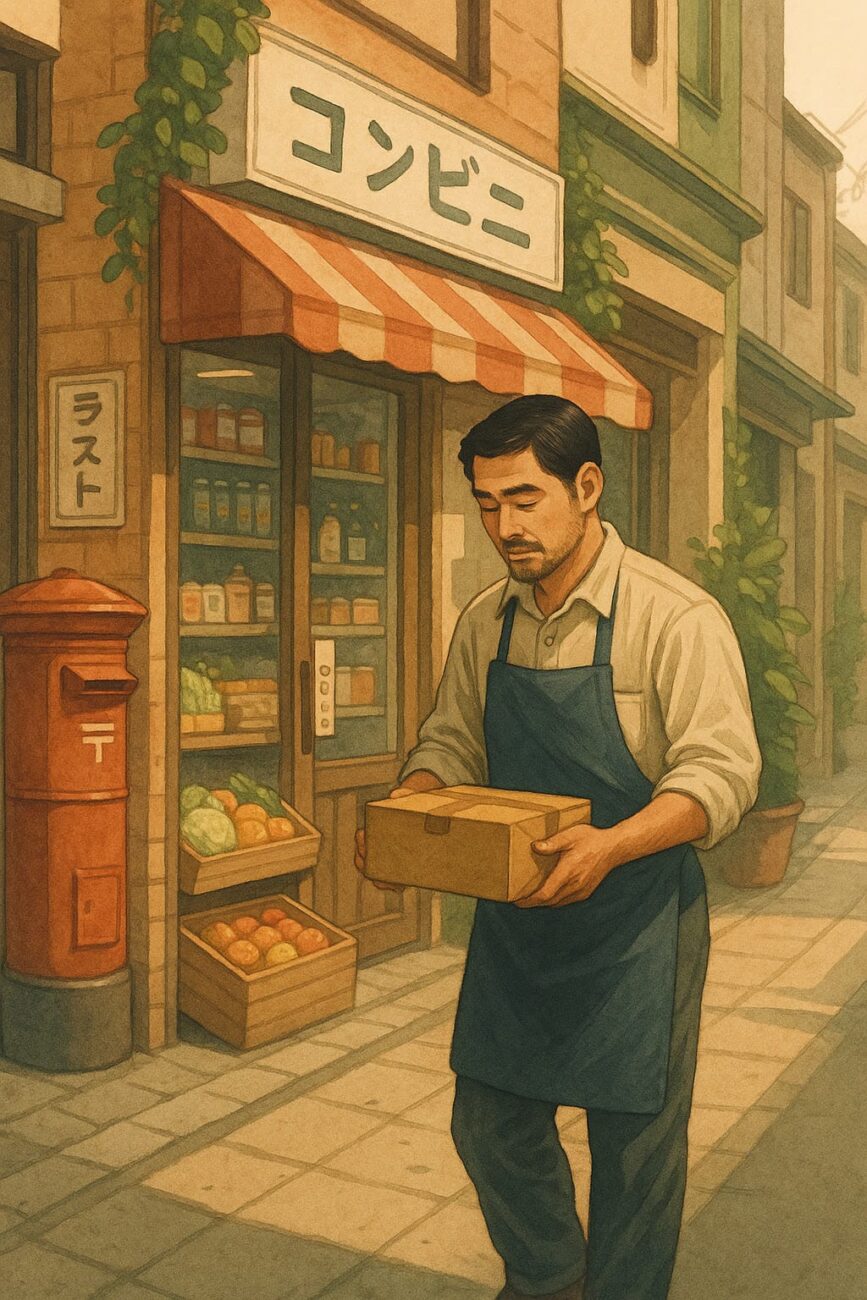
🍱 Every job deserves dignity
Whether it’s a taxi driver or a cashier at the konbini, there’s pride in every role.
People don’t act like they’re stuck.
They show up — present, focused, and intentional.
Work isn’t “just a paycheck.”
It’s something you do well because it reflects who you are.
That mindset? It’s contagious.

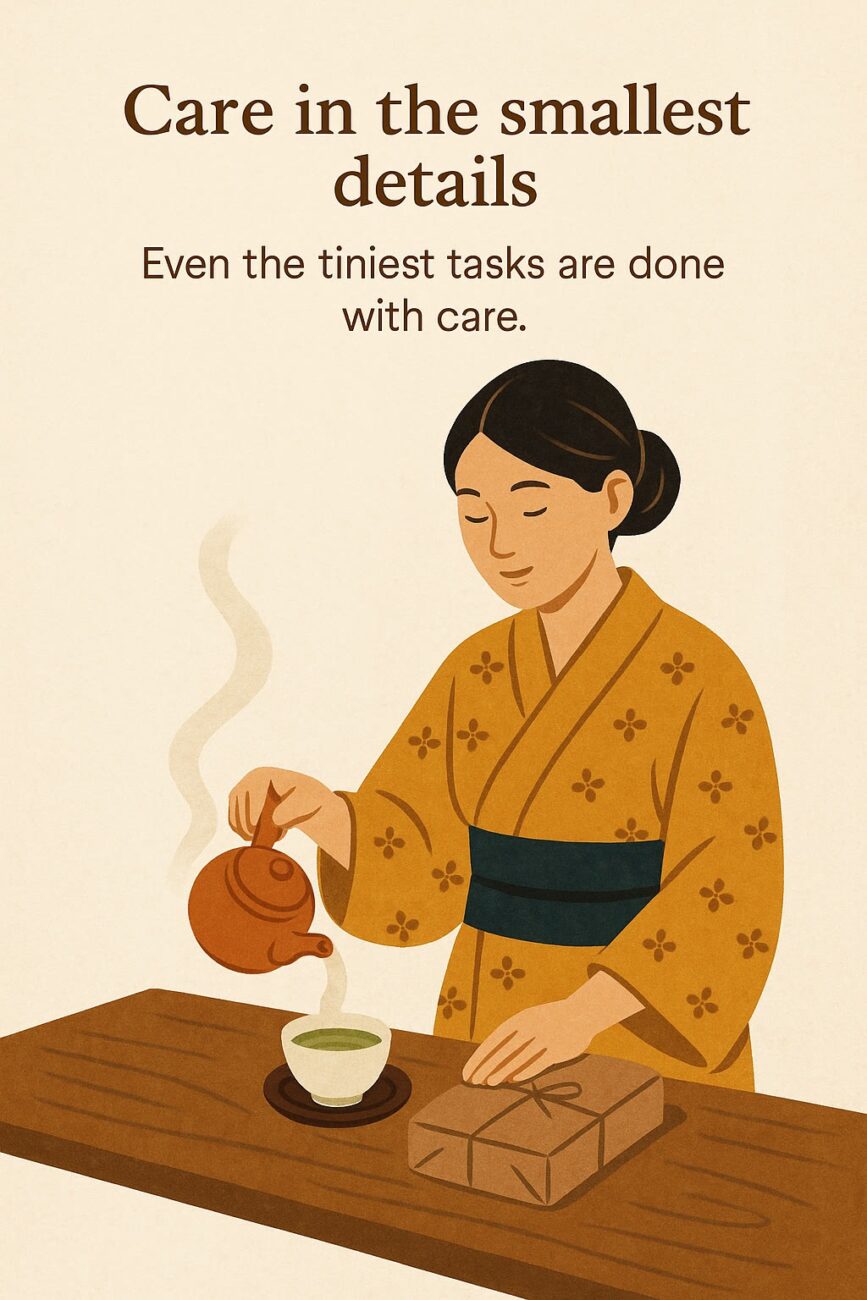
✨ Care in the smallest details
Even the tiniest tasks — pouring tea, wrapping a package, cleaning a counter — are done with care.
Nothing feels rushed or sloppy.
It’s not about perfection. It’s about presence.
Doing something well isn’t a performance.
It’s a quiet form of respect.
🧼 Cleanliness without trash cans
It sounds impossible — but Japanese streets are spotless.
And there are almost no public trash bins.
Why? People take their trash home.
It’s a norm, not a law. A habit, not a chore.
Clean public space is everyone’s responsibility.
That sense of shared stewardship creates an environment that feels calm, respected, and cared for.
📏 Unspoken rules, effortlessly followed
There are few signs telling you what to do.
But everyone seems to just know.
No one cuts in line.
People walk on one side of the escalator.
No loud phone calls in public.
It’s not about being policed.
It’s about mutual understanding — and quietly upholding it.
🕊 Integrity when no one’s watching
One of the most beautiful things?
People do the right thing just because it’s right.
You rarely see police.
There are no cameras tracking your every move.
And yet — people behave with trust and decency.
It’s a culture that assumes goodness, not guilt.
And people live up to that trust.
🌱 Raised on shared responsibility
In Japan, kids grow up cleaning their classrooms and serving lunch to their classmates.
It’s not “someone else’s job.”
It’s just part of being in a community.
From a young age, they learn:
We take care of our spaces — and each other.
That mindset doesn’t fade with age. It deepens.
🧠 Values are taught, not assumed
Japanese schools include moral education alongside math and reading.
Respect, empathy, and awareness of others aren’t left to chance — they’re intentionally nurtured.
It’s a gentle kind of guidance that sticks.
🧘 Harmony over spotlight
Individuality isn’t erased.
But there’s a cultural preference for blending in with care, not standing out for attention.
Calm over chaos.
Balance over bravado.
There’s grace in that restraint — and peace in that mutual consideration.
🎐 Final thought
Japan reminds us that beauty isn’t always loud.
Respect isn’t always enforced.
And community isn’t built by rules — but by quiet choices, made again and again.
Maybe the best way to change the world…
is simply to be a little less of a burden,
and a little more of a blessing — wherever you are.