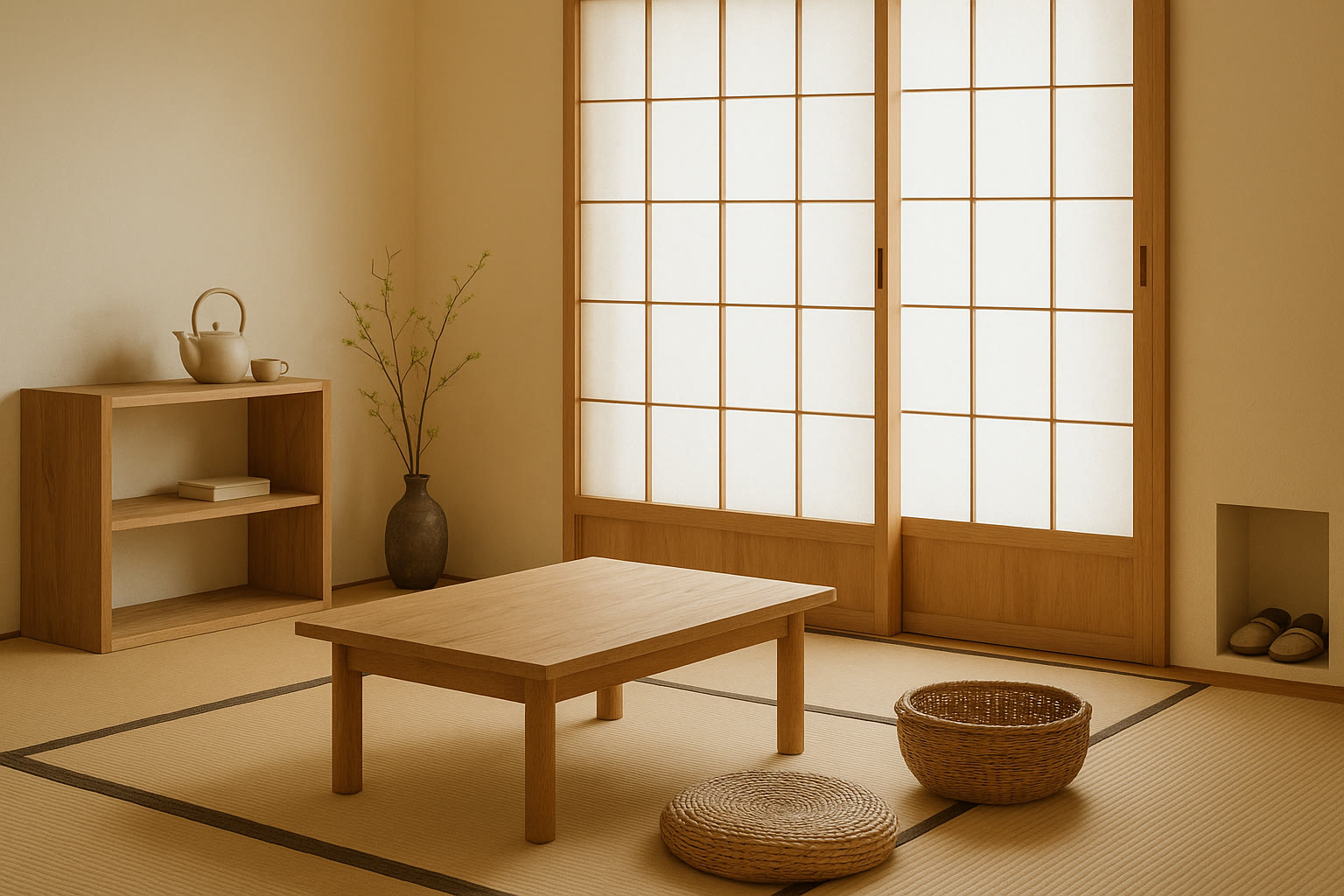
Soft light filtering through paper screens.
The gentle creak of floor mats beneath bare feet.
A quiet room where simplicity feels like luxury.
There’s something deeply calming about traditional Japanese interiors. Tatami mats, shoji screens, and futons aren’t just beautiful — they invite a slower, more mindful way of living.
Here are 7 inspiring ways to bring these timeless elements into your own home, no matter where you live.
🧘♀️ 1. Create a Tatami Meditation Nook
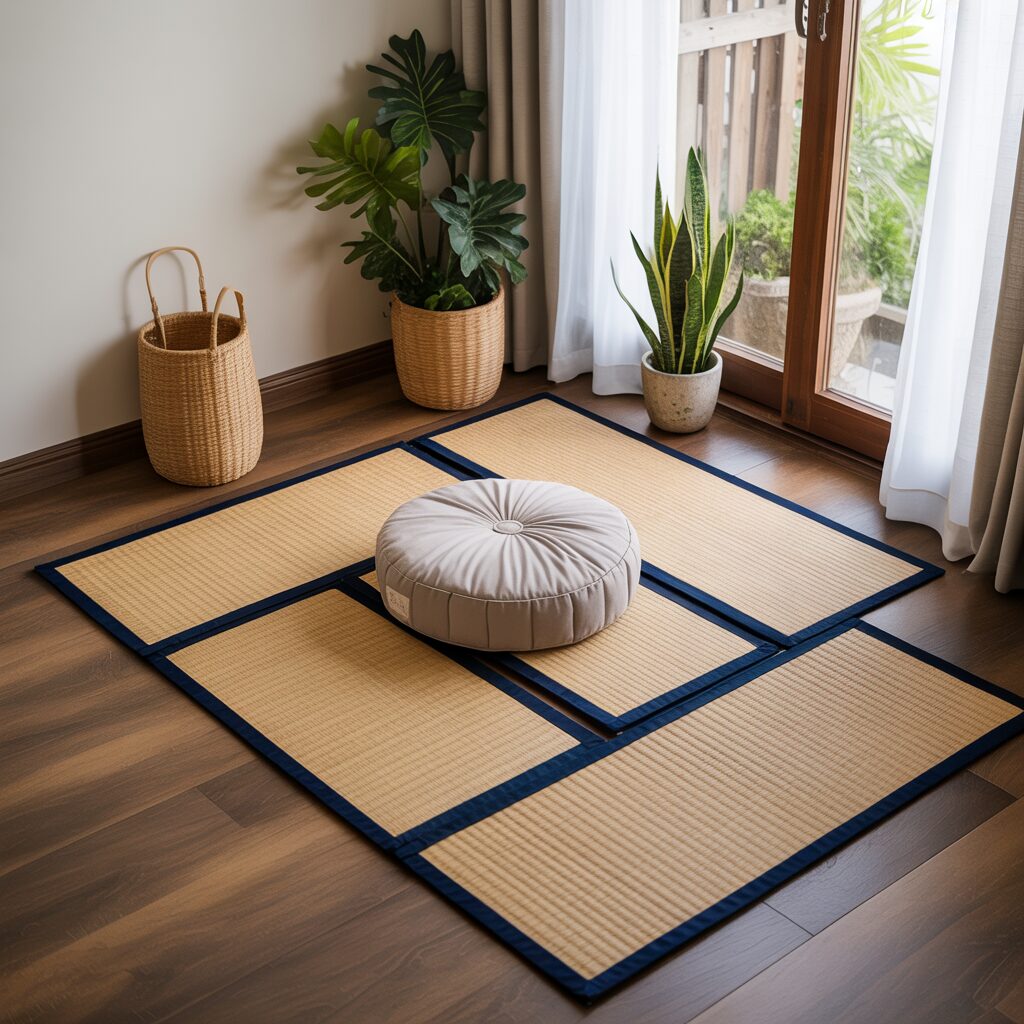
Tatami mats are made of woven straw and have a natural, grounding scent. Even one or two can transform a corner of your home.
Lay them down near a window or a quiet spot. Add a floor cushion or zafu.
This instantly becomes a serene space for journaling, yoga, or a cup of tea.
Tip: Start with a small mat (90x180cm is standard) and layer soft textiles for comfort.
🏠 2. Use Shoji Screens to Soften Light
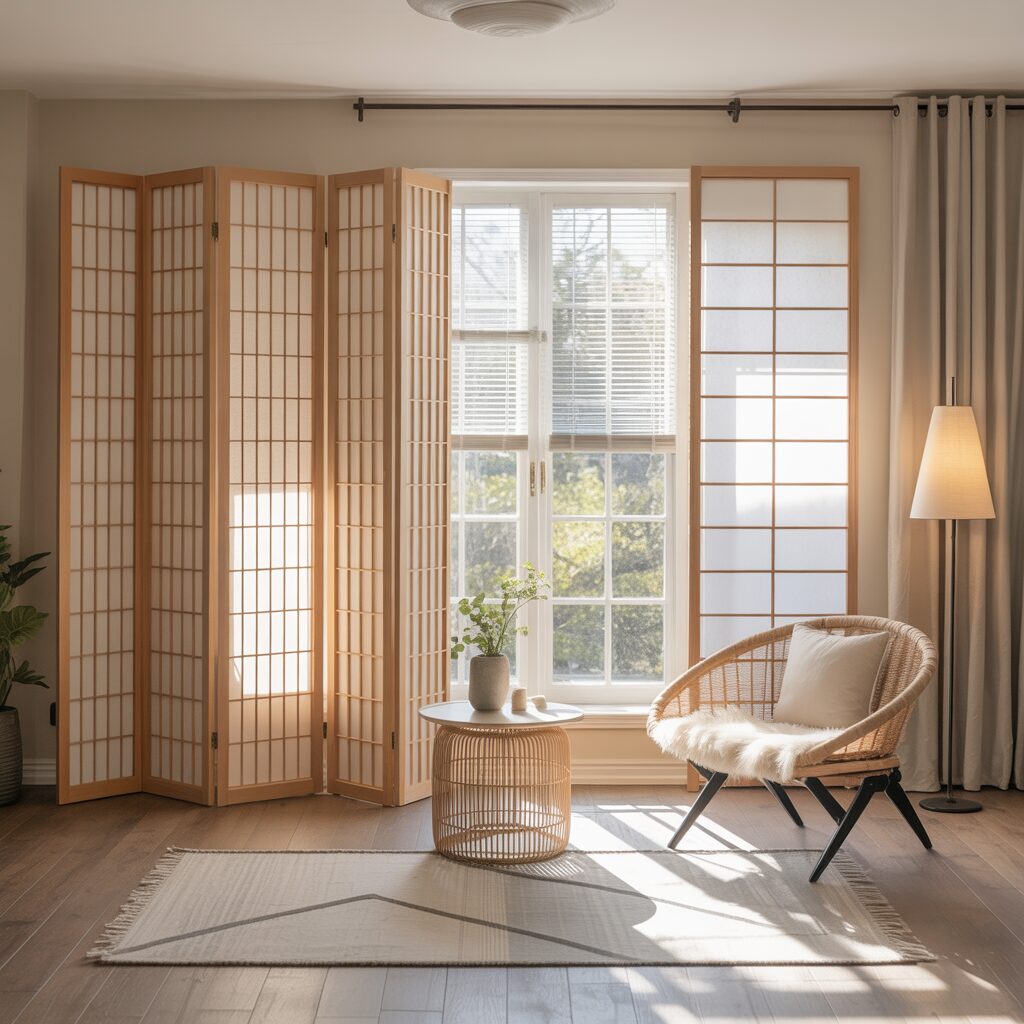
Shoji screens are sliding panels made of wood and paper. They let light in gently, like morning sun through clouds.
Try using one as a room divider in an open space — it brings privacy without heaviness.
Or place it near a window to diffuse harsh sunlight in a cozy reading nook.
No renovation needed. Many modern shoji panels are freestanding or foldable.
🛏 3. Sleep Closer to the Earth with a Futon
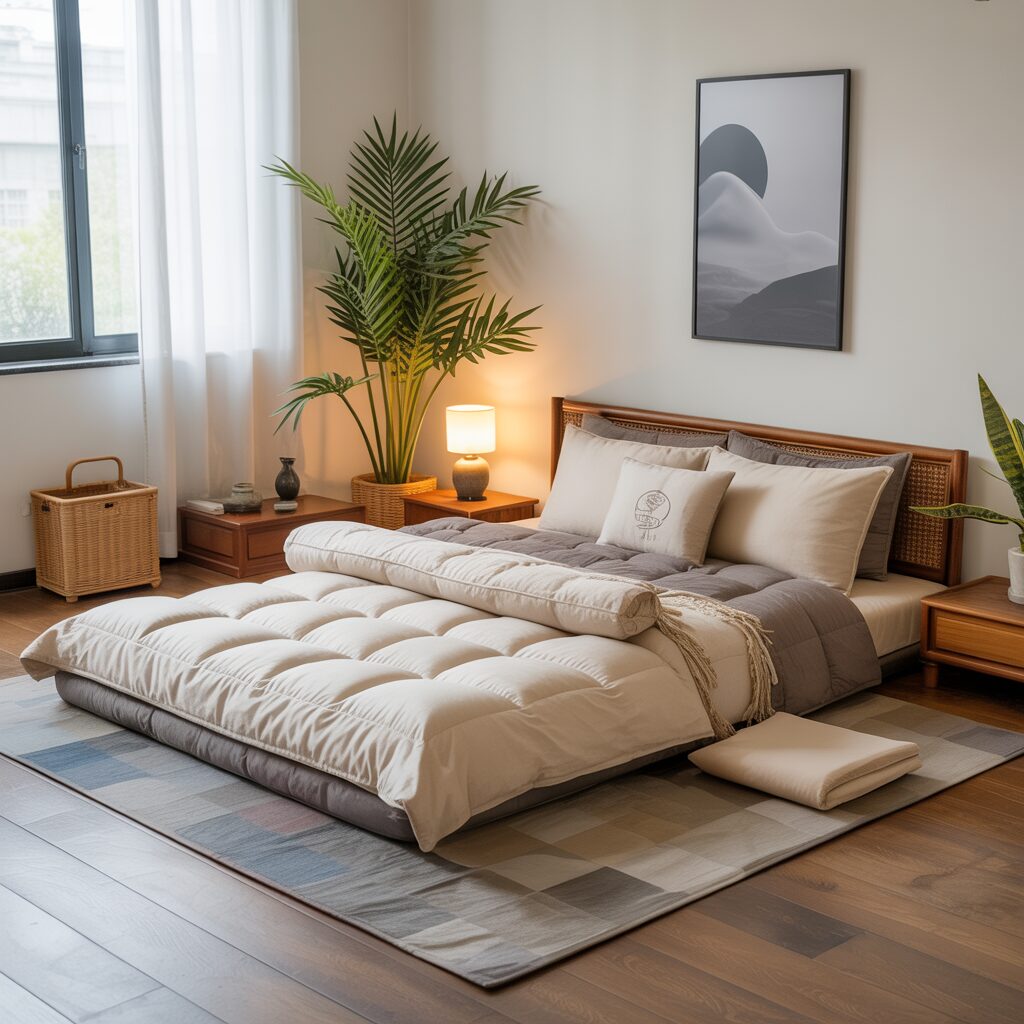
Sleeping on a futon can feel surprisingly restful. Traditional Japanese futons are stored away each morning, freeing up the room.
If you’re curious, try it for a night or two. Lay it on tatami, a rug, or a thick mat. Add layers like a duvet or wool blanket for comfort.
Bonus: Folding it daily becomes a calming morning ritual.
🌿 4. Keep a Minimal, Nature-Centered Palette
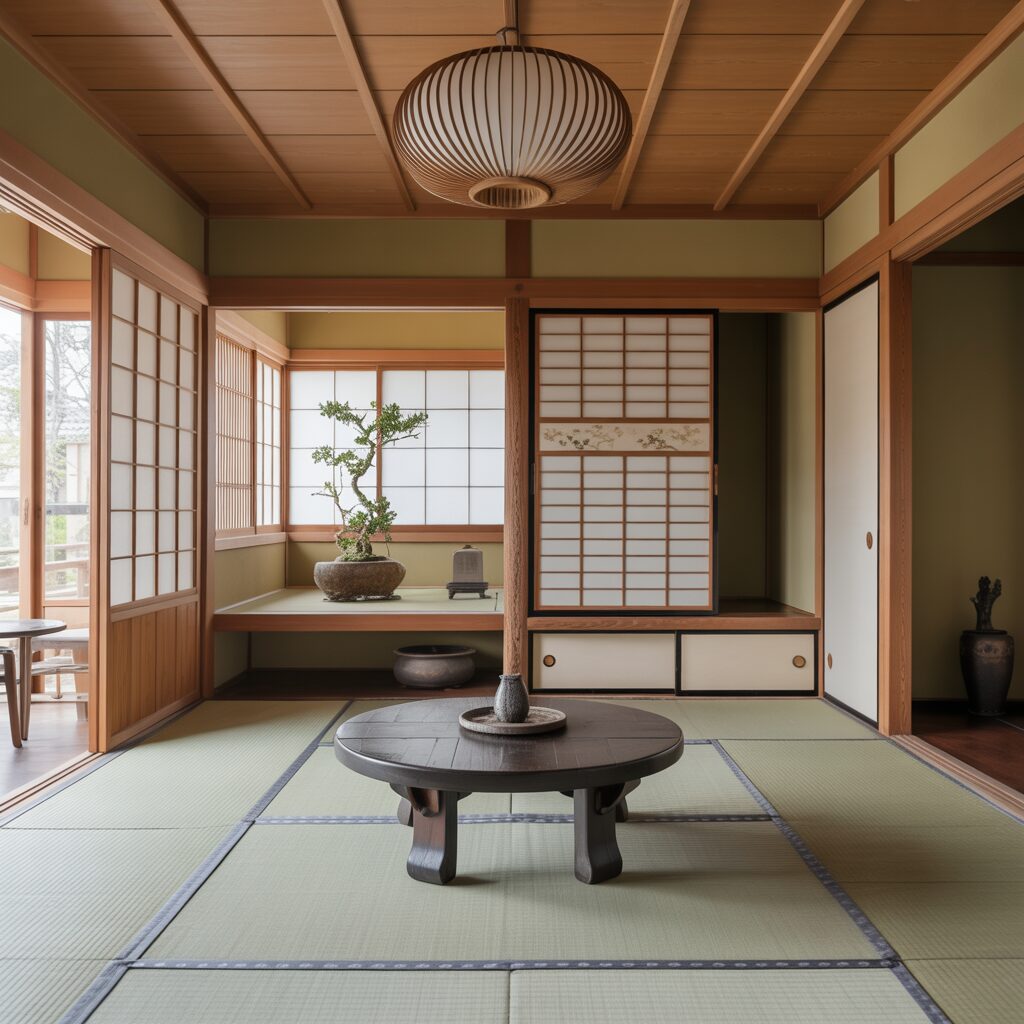
Japanese interiors often use muted tones: cream, soft browns, charcoal, moss green.
Tatami’s gentle gold and shoji’s milky white already create harmony.
Add a low wooden table, a small bonsai, or a stone tray for incense.
It’s not about matching — it’s about quiet balance.
🧺 5. Embrace Flexible, Clutter-Free Living
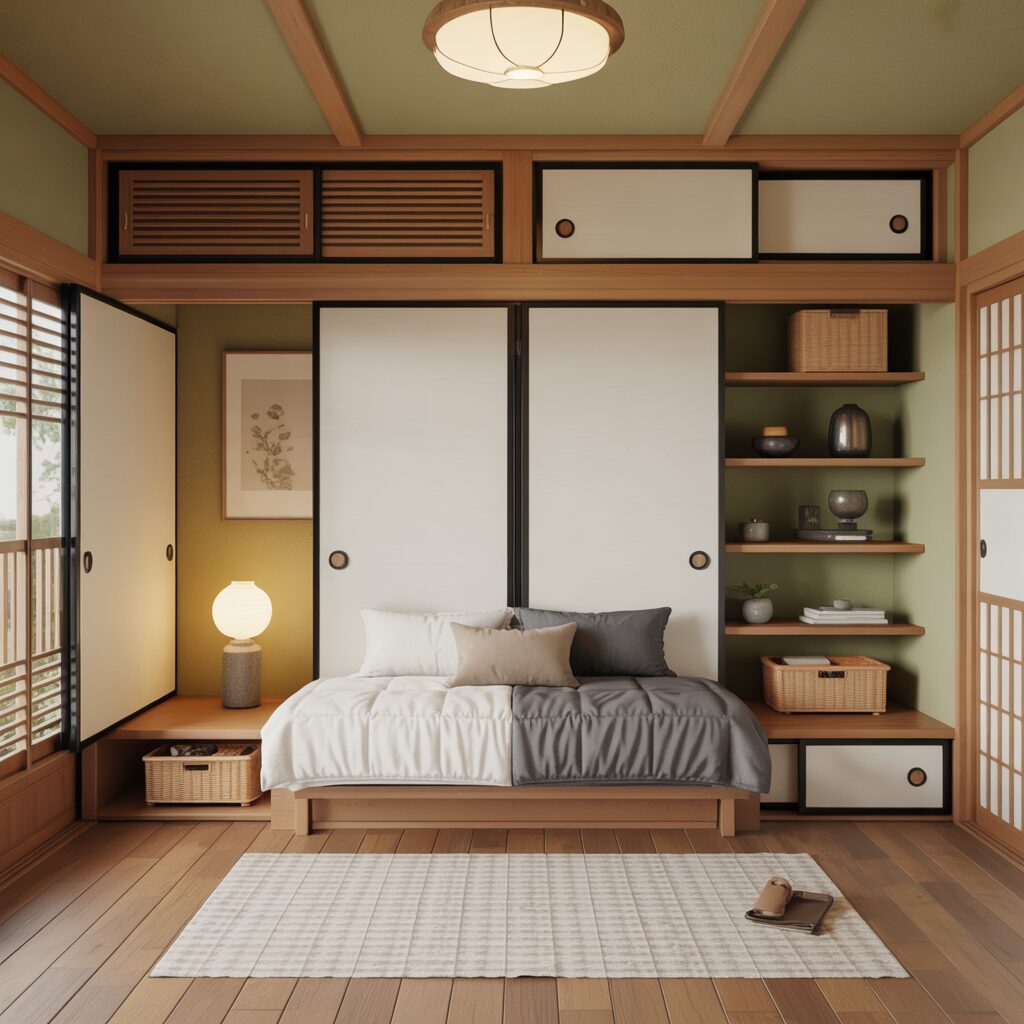
Futons and sliding panels are part of a flexible lifestyle. By storing bedding or opening up a room with a screen, you make space adapt to your needs.
Keep only what you use and love.
One drawer of neatly folded items can feel more spacious than an overflowing closet.
Visualize your home like a ryokan (traditional inn): open, airy, and intentional.
🍵 6. Design a Low Tea Table Area
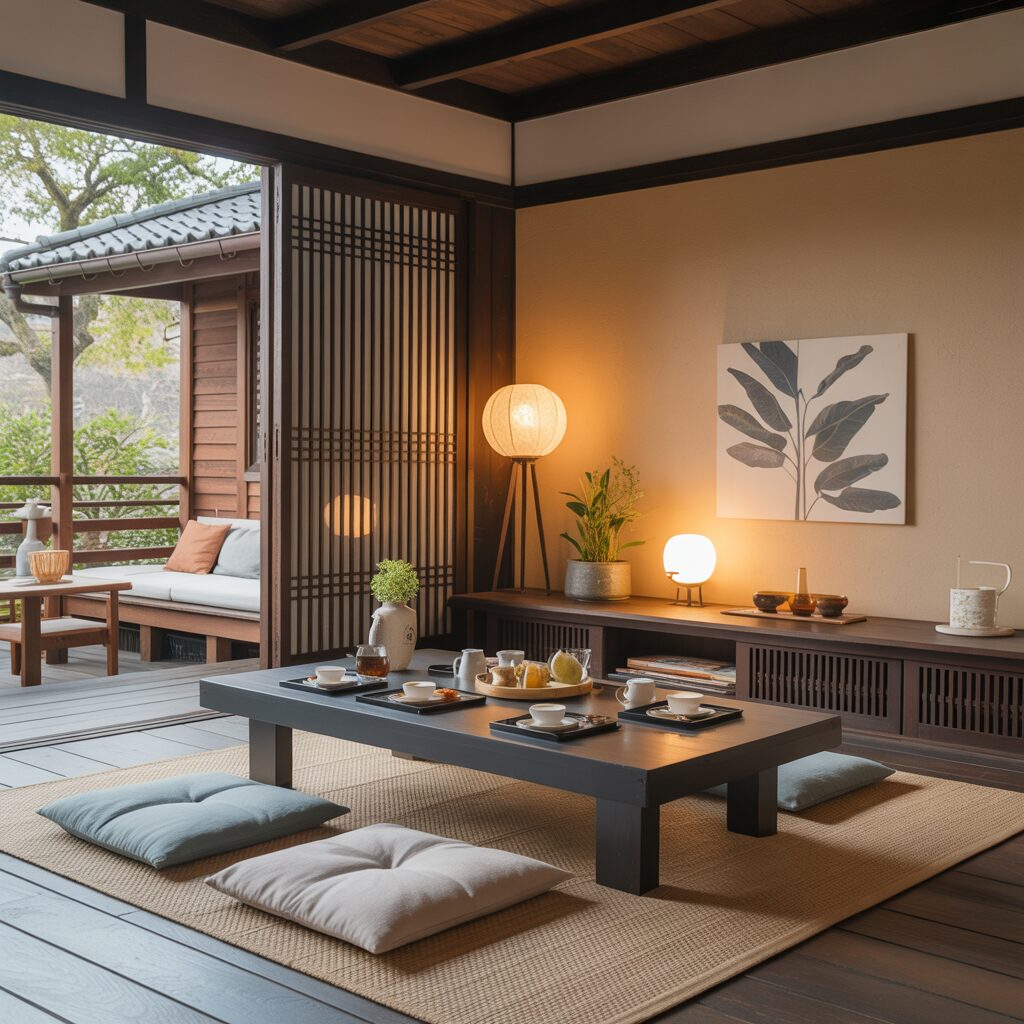
Gathering around a low table invites closeness.
Add floor cushions (zabuton), soft lighting, and a tea set or tray with snacks.
It’s a beautiful space for winding down in the evening — or sharing simple meals with friends, Japanese-style.
You don’t need a full set — even a small coffee table can become this space.
✨ 7. Let Silence and Space Be Decorative
The beauty of tatami, shoji, and futons lies in what they don’t do — they don’t shout for attention.
They offer presence without clutter.
Leave areas intentionally bare. Let the play of light and shadow be enough.
A single scroll or vase can speak louder than a wall of art.
Incorporating these Japanese design elements isn’t about redoing your whole house.
It’s about inviting calm.
Inviting intention.
Inviting beauty in simplicity.
And sometimes, all it takes is one mat, one screen, or one quiet moment.