At its core, interior design with natural materials is about bringing elements like wood, stone, linen, and clay into our homes to create spaces that feel calming, warm, and deeply connected to the outdoors. It's a philosophy built on authenticity and sustainability, choosing materials that create a grounded, timeless feeling rather than just chasing the latest trend.
Why Natural Materials Are Redefining Modern Design
Have you ever walked into a room with a beautiful oak floor or a rugged slate fireplace and felt an instant sense of calm? There's a powerful reason for that. We have an instinctual pull toward these elements, a deep-seated need for a connection to nature. This concept is known as biophilic design, and it's fundamentally changing how we think about our living spaces.
We're shifting away from seeing our homes as just static structures. Instead, we're starting to view them as living environments that can actively improve our well-being. Using natural materials is the most direct way to forge that connection, helping to reduce stress and create a sense of peace that synthetic materials just can't replicate.
The Tangible Benefits of a Natural Home
Choosing natural elements is about so much more than just looks. They introduce unique textures, subtle imperfections, and an honest warmth that engage our senses and make a home feel truly alive. It's the difference between a mass-produced piece and something with character—think of the rich grain in a walnut table or the cool, smooth feel of a marble countertop.
Sustainability has also become a massive part of the conversation. More and more, homeowners and designers are seeking out materials like limestone and reclaimed wood not just for their organic beauty but for their durability and lower environmental impact. This shift is part of a broader embrace of biophilic design, which has been shown to boost mental well-being by linking our indoor lives with the natural world. You can see how these ideas are shaping what's next by exploring the full 2025 design trends report on Revel Real Estate.
A home built with natural materials nurtures its inhabitants. It’s not just a backdrop for life, but an active participant in creating a serene and healthy existence.
This infographic really puts the impact of biophilic design into perspective, showing just how much well-being can increase—and stress can decrease—in interiors that prioritize a connection to nature.
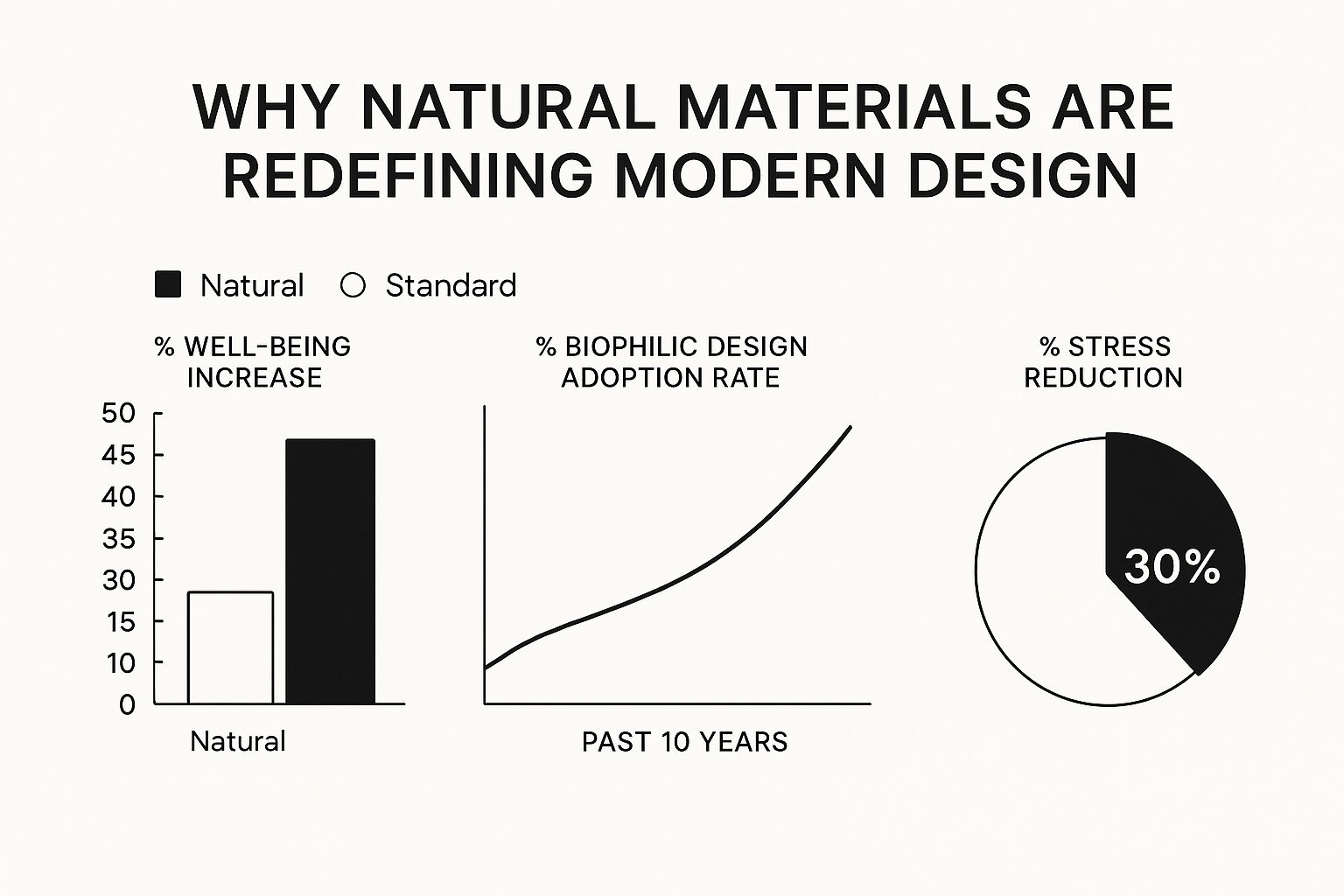
The data speaks for itself. As more people adopt these principles in their homes, the documented wellness benefits for those living inside them continue to grow.
Choosing Your Foundational Materials
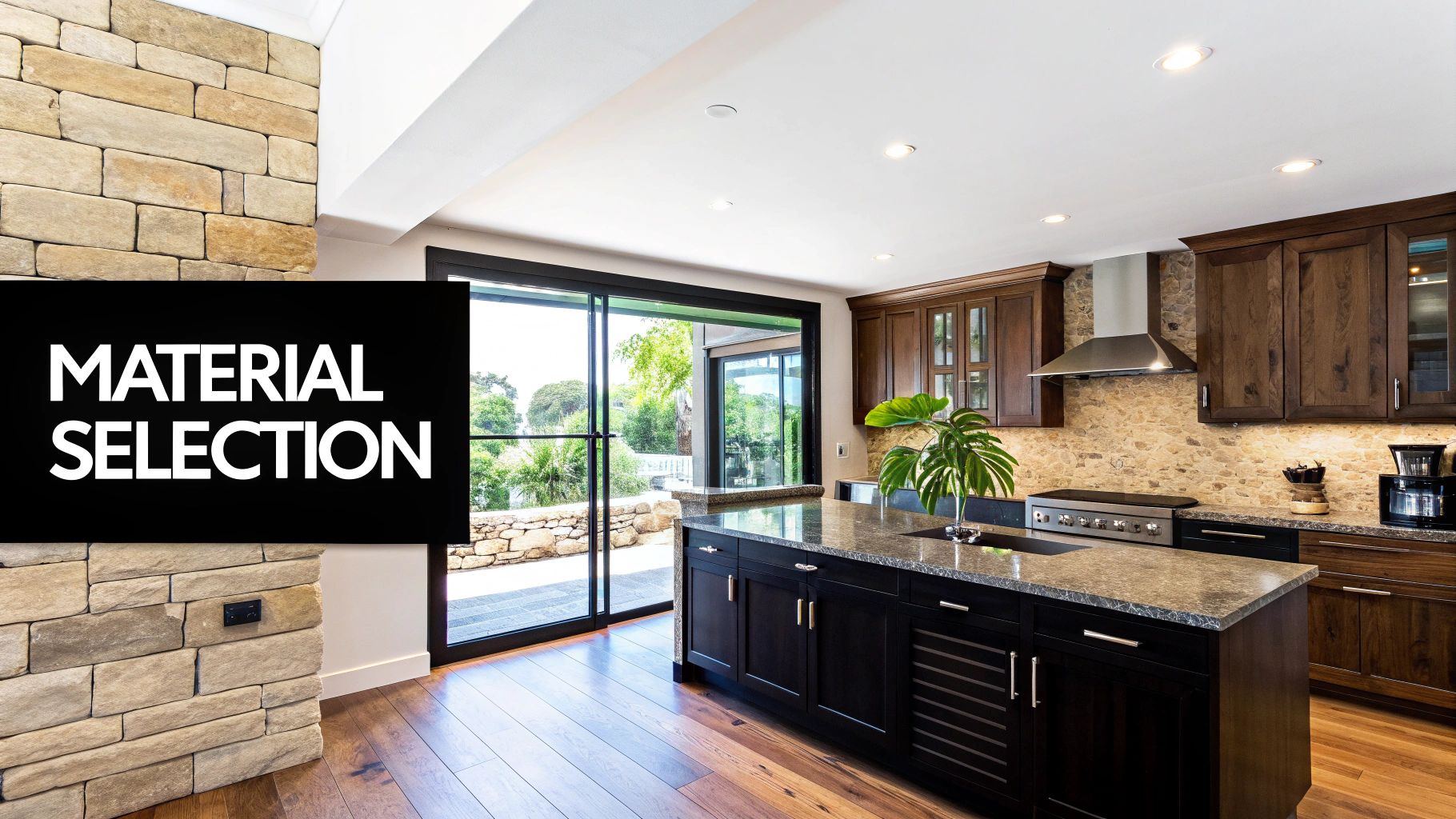
This is where the vision for your home starts to take real shape. Picking out your core materials—the wood, the stone, the foundational textures—is probably one of the most significant decisions you’ll make in the entire process. These choices create the canvas for everything else.
Think of these materials as the main characters in your home's story. They set the mood, whether that’s light and airy or dark and grounding. The right fit will always be at the intersection of your personal style, your budget, and how you actually live your life.
Selecting the Right Wood for Your Space
Wood is often the soul of a natural home, bringing a warmth and texture that nothing else can quite replicate. But the specific wood you choose has a huge impact on the final feeling of a room.
Light-toned woods like maple, white oak, and ash are absolute staples in Scandinavian and Japanese minimalist design. They have a wonderful ability to bounce light around, which can make a space feel much larger and more open. Imagine a wide-plank white oak floor paired with simple furniture—it instantly creates a sense of calm.
On the flip side, deeper woods like walnut or cherry can lend a room a sense of history and stability. Walnut, with its dramatic grain, is a mid-century modern favorite for a reason. It's perfect for a statement dining table or for cabinetry that needs to ground an open-concept kitchen.
My advice? Pay as much attention to the grain pattern as you do the color. A straight, tight grain feels modern and clean, while a swirling, varied grain introduces a bit more rustic character.
Understanding Stone’s Role and Resilience
Stone is the perfect counterbalance to the warmth of wood. It brings a cool, tactile quality and a sense of permanence, connecting your home right back to the earth. The trick is to match the type of stone to how it’s going to be used.
Marble is timeless and elegant, but it’s also a softer, more porous stone. This means it can stain or etch if you spill lemon juice or red wine on it. If you love that look but are worried about the upkeep, take a look at quartzite. It’s a natural stone that often has a similar aesthetic but is much, much tougher.
For a high-traffic area like an entryway, slate is a fantastic choice. It’s incredibly durable and its naturally rugged texture is great at hiding dirt. Tumbled limestone is another favorite of mine for floors; it brings a soft, old-world feel that seems to get better with age.
To help you decide, I've put together a quick comparison of some of the most popular options. This table breaks down common materials by their look, best uses, and what you can expect in terms of durability and care.
Comparing Popular Natural Materials for Your Home
| Material | Primary Aesthetic | Best For | Durability & Maintenance |
|---|---|---|---|
| White Oak | Light, airy, clean, minimalist | Flooring, cabinetry, modern furniture | Very durable; requires sealing. Easy to maintain with regular cleaning. |
| Walnut | Rich, warm, dramatic, luxurious | Statement furniture, accent walls, cabinetry | Durable but softer than oak. Can scratch; needs occasional oiling. |
| Maple | Pale, smooth, uniform, subtle | Flooring in high-traffic areas, butcher blocks | Extremely hard and durable. Resists dents well but can be tricky to stain evenly. |
| Marble | Elegant, classic, veined | Countertops (with caution), backsplashes, bathrooms | Porous and soft. Prone to staining/etching. Requires regular sealing. |
| Slate | Textured, earthy, rustic, dark | Floors (especially entryways), hearths, outdoor patios | Very durable and naturally slip-resistant. Low maintenance. |
| Limestone | Soft, muted, Old-World | Flooring, wall cladding, fireplace surrounds | Softer than granite. Can be porous; needs sealing to prevent stains. |
Choosing the right material is all about balancing the look you want with the life you lead. A material that wears beautifully in one home might be a constant source of stress in another.
Matching Materials to Your Lifestyle
At the end of the day, the best materials are the ones that work for you.
- For a busy family kitchen: You need workhorses. Think granite or quartzite countertops that can stand up to spills and frantic meal prep. For the floor, a tough wood like hickory or a resilient stone like slate is a smart bet.
- For a quiet, serene bedroom: This is where you can prioritize feel and aesthetics. A soft wool carpet or a smooth, pale maple floor can create that perfect retreat-like atmosphere.
- For a formal living area: Here's your chance to make a statement. A dramatic, book-matched marble fireplace or a stunning live-edge walnut coffee table can become an incredible focal point.
By making these foundational choices thoughtfully, you're doing more than just decorating. You're building a cohesive and beautiful base that will serve your home for years to come.
Adding Warmth and Depth with Natural Textiles
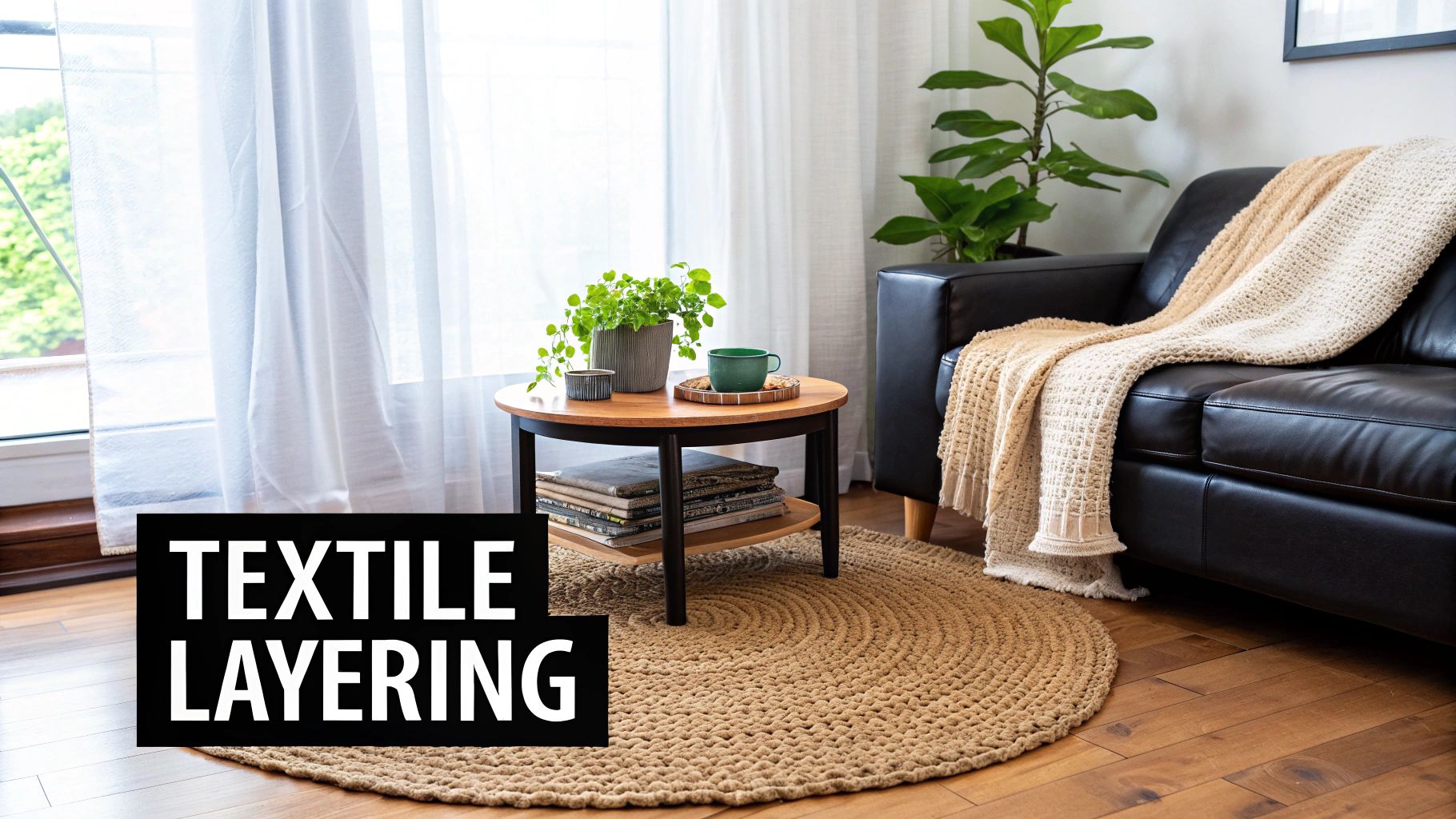
Once you've established the foundation with wood and stone, your space has its bones. But textiles are what give it a soul. This is where you layer in the softness that truly makes a house feel like a home. In natural materials interior design, fabrics are non-negotiable—they introduce touchable textures, absorb sound, and bring a crucial layer of comfort.
This step is the secret to keeping a minimalist space from feeling stark or clinical. The aim isn't to add clutter, but to create a rich, tactile experience that’s inviting and visually engaging. Think of textiles as the gentle counterpart to the harder surfaces in the room, working together to create balance and harmony.
Choosing Textiles with Texture in Mind
When it comes to layering fabrics, the magic is in the mix. The most common mistake I see is using materials that are all too similar, which can leave a room feeling one-dimensional and flat. Instead, you want to create a subtle contrast that engages the senses.
Picture a coarse, hand-woven jute rug beneath a smooth-grained wooden coffee table. Just that one pairing immediately grounds the entire seating area with an earthy, textural foundation. From there, you can build.
- Linen: My go-to for curtains. Linen diffuses sunlight in a way that casts a soft, ethereal glow across a room. Its naturally crumpled, imperfect texture is a perfect fit for Japanese aesthetics.
- Wool: A chunky wool throw casually draped over a sofa or armchair adds instant coziness. It's a visual cue, an invitation to slow down and get comfortable.
- Cotton: Wonderfully breathable and versatile, cotton works for everything from simple cushion covers to understated bedspreads. For that truly serene feel, look for organic cotton in undyed, natural tones.
The most successful natural interiors feel collected over time, not decorated in a day. It's about choosing textiles that tell a story—through their specific weave, their raw fiber, or the beautiful imperfections of a handmade piece.
Integrating Woven Elements for Dimension
Beyond soft fabrics, other woven materials like rattan, wicker, and hemp add another fascinating layer of natural texture. These pieces bring a sculptural quality into a room, breaking up the monotony of flat walls and smooth surfaces. And the best part? A little goes a long way.
A single rattan pendant light hanging over a dining table, for instance, can become a stunning focal point all on its own. A simple wicker basket tucked in a corner not only serves a practical purpose but adds a touch of rustic charm.
These elements introduce dimension and reinforce that connection to the natural world without ever overwhelming the space. By thoughtfully combining hard materials with a curated mix of soft and woven textiles, you create a balanced, multi-sensory environment that is both calming and full of life.
How to Source Sustainable and Quality Materials
Choosing natural materials for their beauty is one thing. Ensuring they come from a place of integrity—both in their quality and their impact on the planet—is where your design really begins to tell a story. Sourcing responsibly is about looking past the surface and truly understanding the journey of each material you welcome into your home.
This isn't just a niche concern anymore. The sustainable interior design market is expected to hit $25 billion by 2025, which tells you everything you need to know about where homeowners' priorities are shifting. We're all becoming more conscious consumers. Certifications like the ones from the Forest Stewardship Council (FSC) have become essential for finding that peace of mind. For a deeper dive into this shift, you can explore detailed business insights about interior design trends on Accio.
Look for Certifications and Transparency
When you're sourcing new materials, especially wood, certifications are your most reliable guide. They cut through the marketing noise and give you a clear, third-party verification of a company's claims.
Here are the big ones to watch for:
- FSC-Certified Wood: This is the gold standard. It means the wood was harvested from forests managed in a way that respects the environment, the local communities, and long-term economic viability.
- GREENGUARD Certification: This one is all about your health. It certifies that a product has low chemical emissions, which is vital for maintaining clean, non-toxic indoor air.
- Cradle to Cradle: Think of this as the most holistic seal of approval. It assesses a product's entire lifecycle, from its creation to its potential for being recycled or repurposed. It’s a huge indicator of a company’s commitment to a circular economy.
A great rule of thumb is to just ask direct questions. "Where was this stone quarried?" "Can you tell me about your forest management policies?" Any supplier worth their salt will be proud to tell you their story.
Embrace the Beauty of Reclaimed Materials
One of the most authentic ways to be sustainable is to use materials that are already part of the story. Reclaimed and salvaged pieces don't just reduce waste; they bring a sense of history and character into your home that you simply can't replicate with something brand new.
And it goes so far beyond barn wood. Local salvage yards are absolute goldmines. I've seen clients find old marble slabs from a demolished bank, weathered slate roof tiles that made for an incredible entryway floor, and antique terracotta tiles with a patina that took a century to perfect.
Vet Your Suppliers Carefully
Finding a great supplier is really about building a relationship founded on trust. It doesn't matter if you're browsing for specialty stone online or walking through a local lumberyard—do your homework.
A supplier you can count on will be completely open about where their materials come from. They should be able to point to where that slab of quartzite was mined or explain how their oak is harvested. If they're vague or can't give you a straight answer, consider that a red flag. Always read reviews, check out their previous projects, and never hesitate to ask for samples. Making the choice to invest in high-quality, sustainably sourced materials pays off for decades, not just in durability, but in the knowledge that you made a responsible choice.
Bringing Your Natural Design to Life

This is where the magic happens—pulling all your carefully chosen elements together. Styling a space filled with natural materials isn’t about cramming things in; it's an exercise in thoughtful curation. This final step is all about intentional placement, guided by principles that let the inherent beauty of each piece shine.
To get this right, we'll lean on two powerful Japanese concepts. The first is ‘Ma’ (間), which is all about the value of negative space. Don't think of it as emptiness. Instead, see it as an active, essential element in your design—the quiet pause that gives every object room to breathe and be truly seen.
The second is ‘Wabi-Sabi’ (侘寂), the art of finding beauty in imperfection. This idea is the very soul of natural materials interior design. It’s what allows us to celebrate the unique knots in a piece of wood or the organic veining in a slab of stone, rather than seeing them as flaws.
Curating Focal Points and Flow
Your most striking pieces deserve the spotlight. A beautiful live-edge dining table or a rugged stone fireplace shouldn't have to compete for attention. Your job is to arrange everything else around them to create a natural, intuitive flow that guides the eye right where you want it to go.
Think about the room's best features. If you have a large window that floods the space with light, don't block it with a sofa. Instead, position seating to frame the view, making that connection to the outdoors a central part of the room's experience. This approach ensures every single piece has a clear purpose. To see this in action, take a look at these inspiring Japandi home decor ideas that blend Scandinavian function with Japanese minimalism: https://japanwhisper.com/japandi-home-decor-ideas/.
The goal is to create a dialogue between the objects in your room and the space around them. Ask yourself, "Does this arrangement feel calm?" If the answer is no, it's time to edit.
Adding Life and Practicing Restraint
Plants are the final, living layer that brings a natural interior to life. They introduce organic shapes, a pop of vibrant color, and they literally clean the air you breathe.
- For vertical height: Consider a Fiddle Leaf Fig or a delicate bamboo palm. They can draw the eye upward and fill a corner without creating visual clutter.
- For soft texture: The trailing vines of a Pothos or the delicate fronds of a fern are perfect for softening the hard edges of a bookshelf or mantel.
Once your furniture and greenery are in place, the last step is to edit. Honestly, this can be the hardest part. Take a step back and challenge yourself to remove one or two items from the room. It feels counterintuitive, but by subtracting, you give the natural materials interior design—the wood grain, the linen texture, the cool slate—the space to truly stand out. This simple act of restraint is what will elevate your room from just being decorated into a personal, serene sanctuary.
A Few Common Questions About Natural Interior Design
When you start pulling natural materials into your home, some practical questions are bound to come up. It's one thing to love the look, but it's another to live with it every day. Durability, maintenance, and of course, cost, are all part of the equation. Let’s walk through a few of the questions I hear most often.
People often get hung up on maintenance. They see a beautiful slab of marble and immediately worry about stains and upkeep. And they're not wrong—some materials absolutely need more attention than others. But the real goal isn't to find a material that's zero-maintenance; it's about finding the right material for your lifestyle.
For instance, if you have a busy kitchen with kids, maybe a porous marble countertop isn't the best fit. But that doesn't mean you can't have that natural stone look. You could go for something like quartzite, which has a similar vibe but is much tougher against spills and scratches. It's all about making smart, practical swaps.
Is This Going to Be Expensive?
That’s the big one, isn't it? The short answer is, it really doesn't have to be. Sure, a rare cut of Calacatta marble will cost a small fortune, but many other natural options are incredibly budget-friendly. Slate, for example, is a fantastic, hard-wearing choice for floors and can often be found for a price comparable to mid-range porcelain tiles.
The trick is to shift your thinking from upfront cost to long-term value. A solid oak dining table will cost more than a flat-pack veneer version, no question. But that oak table will last a lifetime—maybe even longer—and will only look better as it ages. The veneer piece? You'll be lucky if it survives a move.
It's a "buy fewer, but better" mindset. You're moving away from disposable trends and investing in pieces with permanence. Over time, that's almost always the more economical choice.
How Do I Mix Different Woods Without It Looking Messy?
Mixing wood tones can feel intimidating, but there’s a simple way to approach it. First, find your anchor. This is your dominant wood tone, which is usually the largest surface—your floor or maybe a big dining table. Once that’s established, you can layer in one or two other woods as accents.
The secret sauce is to pay attention to the undertones. Look closely at your anchor wood. Does it have warm, yellow, or red undertones, or is it cooler with gray or ashy notes? Stick to that same undertone family for your other wood pieces. A cool-toned white oak floor, for example, pairs beautifully with a deep, cool-based walnut. This shared foundation makes everything feel cohesive, even if the colors are different.
To get the balance just right:
- Play with Grain: Don't be afraid to mix a wood with a very straight, quiet grain with something that has a bolder, more organic pattern. This contrast adds texture and interest.
- Find a Bridge: A large area rug is a designer’s best friend for this. It can act as a visual bridge, physically connecting different wood tones and making them feel like they belong together.
- Stick to a Limit: As a general rule, try to keep it to two or three wood types in a single room. Any more than that and things can start to feel a little chaotic.
At the end of the day, working with natural materials is about creating a home that feels grounded, authentic, and connected to the world outside. When you get the practical side sorted, you free yourself up to build a space that’s not just beautiful, but a true reflection of how you live.
Ready to bring more intention and calm into your home and life? Japan Whisper is a blog dedicated to exploring Japanese culture, design, and lifestyle principles. Discover practical guides for creating serene interiors and find inspiration for simpler, more mindful living.
Article created using Outrank