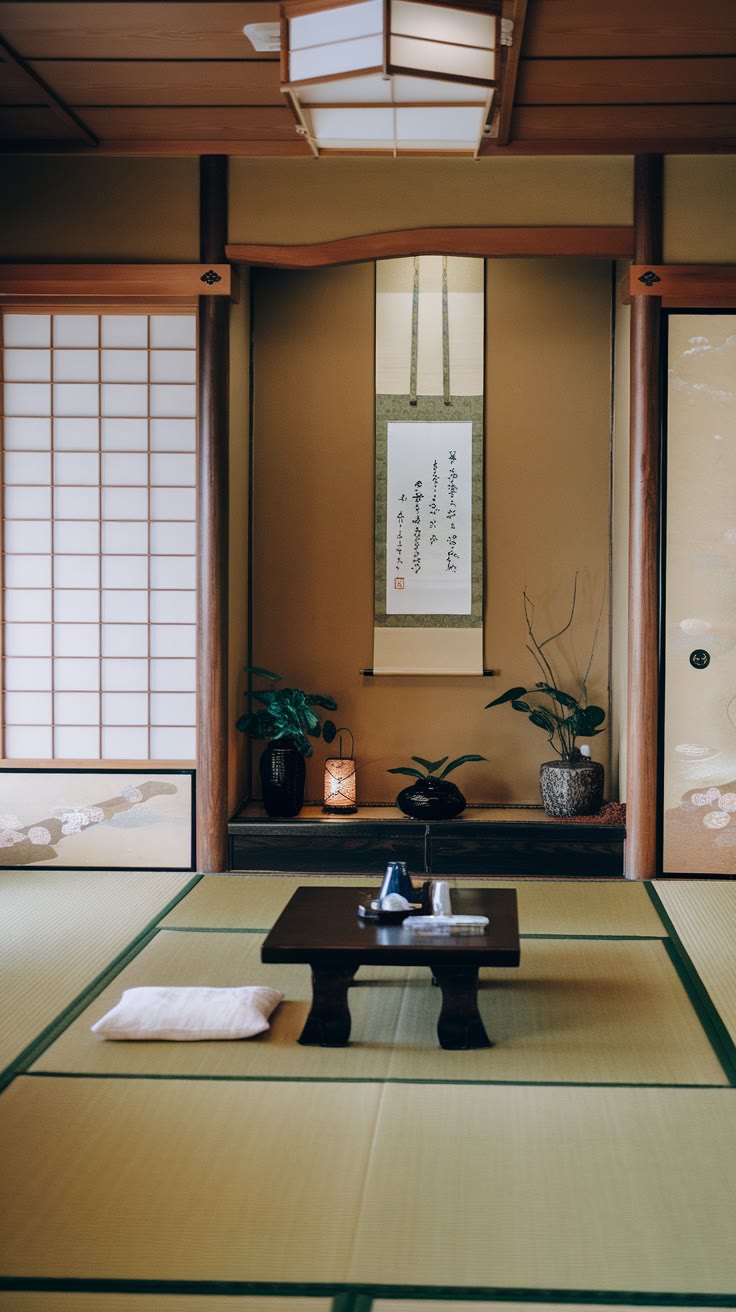
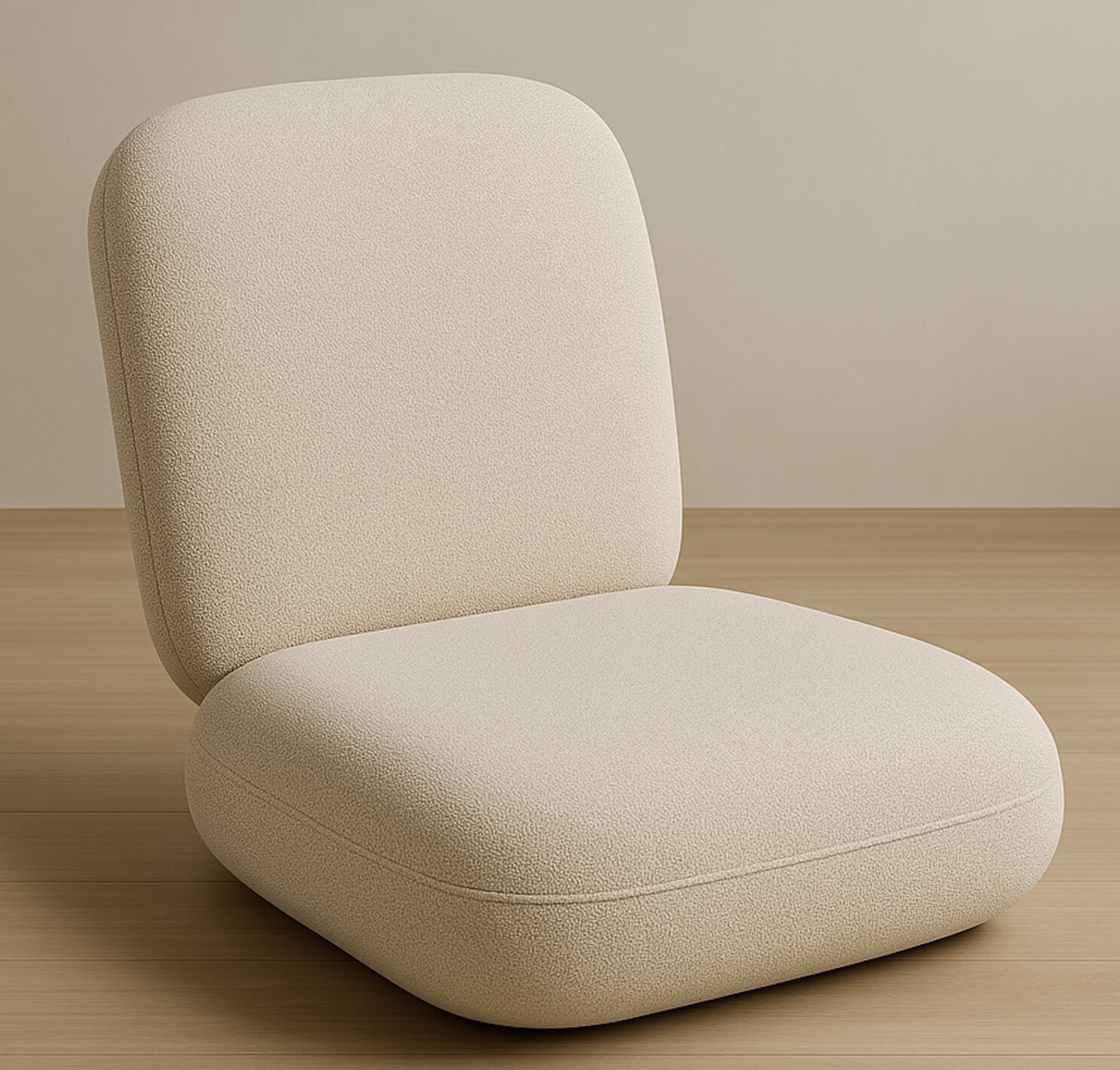
In a world of constant noise and clutter, the appeal of a calm, intentional home has never been stronger. Minimalist design is not merely about empty rooms; it is a philosophy of living with only what is beautiful, functional, and meaningful. This approach finds its purest expression in Japanese aesthetics, where concepts like ‘ma’ (valuing negative space) and ‘wabi-sabi’ (finding beauty in imperfection) create environments that are both serene and deeply personal.
This guide moves beyond the sterile stereotypes often associated with minimalism. We will explore 10 actionable minimalist home decor ideas that translate timeless Japanese wisdom into a practical framework for modern living. You will discover how to use a neutral color palette to create tranquility, embrace multi-functional furniture for efficiency, and appreciate the power of negative space to calm the mind. Each principle is designed to be both aspirational and achievable.
Get ready to transform your space into a sanctuary of calm, clarity, and intentionality. We will provide specific examples and practical implementation details for each idea, showing you how to curate a home that supports a more mindful and focused life, one thoughtful choice at a time.
1. Embrace a Calm, Neutral Color Palette
The foundation of any serene, minimalist space is a carefully considered neutral color palette. This Japanese-inspired approach focuses on whites, beiges, grays, and soft earth tones to eliminate visual noise and create a calm, cohesive environment. Rather than being sterile, this strategy allows architectural features and select furnishings to become focal points against a tranquil backdrop. A key principle is to build your room around 2-3 primary neutral shades, using subtle variations in tone and texture to add depth and warmth.

This method, popularized by brands like Muji and designers like Axel Vervoordt, enhances natural light and creates a feeling of spaciousness. One of the most effective minimalist home decor ideas is to use color harmony to promote tranquility and mindfulness in your living space.
How to Implement a Neutral Palette
To achieve this look, start by identifying a core neutral for your walls, such as a soft off-white or a warm light gray. Next, introduce a second complementary neutral through larger furniture pieces like a sofa or area rug. Finally, add a third accent neutral in smaller doses through textiles and decor.
- Layer Tones: Combine different shades of the same neutral, like cream, beige, and taupe, for sophisticated depth.
- Incorporate Texture: Use natural materials like light wood, bamboo, and linen to introduce organic warmth and prevent the space from feeling flat.
- Play with Light: Position lighting to create soft shadows and highlight different textures, adding dimension to the room.
- Add Muted Accents: If you desire a hint of color, choose one or two muted shades from nature, such as sage green or dusty blue, for throw pillows or a single piece of art.
2. Opt for Multi-Functional Furniture
A cornerstone of minimalist living is maximizing utility while minimizing physical presence, and multi-functional furniture is the key to achieving this balance. This approach involves selecting pieces that serve two or more purposes, which drastically reduces the number of items needed in a room. By choosing furniture that adapts to your needs, you can maintain clean lines, save valuable space, and create a highly efficient, uncluttered environment.
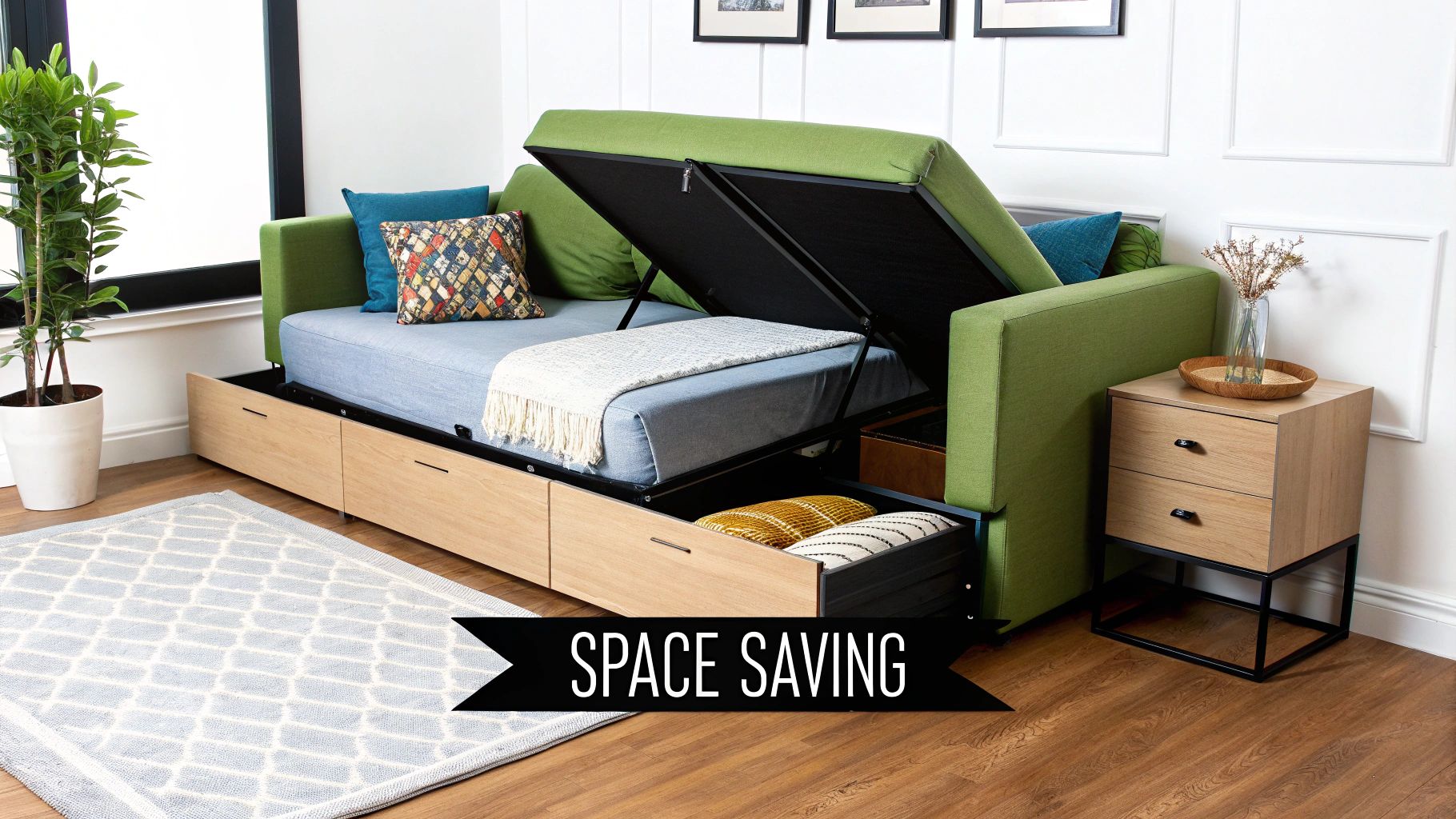
Pioneered by innovative brands like Resource Furniture and Clei, this design philosophy transforms static spaces into dynamic, adaptable living areas. One of the most impactful minimalist home decor ideas is to invest in furniture that works smarter, not harder, allowing a single room to serve as a living room, office, and guest room without feeling crowded.
How to Implement Multi-Functional Furniture
Begin by assessing your daily routines and identifying areas where a single piece could solve multiple problems. For instance, if you work from home but lack a dedicated office, a coffee table with a lift-top can double as a desk. The goal is to choose pieces that integrate seamlessly into your lifestyle.
- Prioritize Daily Needs: Select furniture based on your most frequent activities. A Murphy bed that folds into a wall unit is perfect for studio apartments, while an expandable dining table suits those who entertain occasionally.
- Invest in Quality Mechanisms: For pieces that transform, like sofa beds or lift-top tables, durable and smooth mechanisms are crucial for longevity and ease of use.
- Test Functionality: Whenever possible, try out the furniture in person. Ensure it is easy to convert and that it feels stable and comfortable in all its configurations.
- Maintain Aesthetic Cohesion: Choose multi-functional items that align with your neutral color palette and overall minimalist aesthetic, ensuring the piece looks intentional and stylish whether it’s extended, folded, or open.
3. Strategic Open Shelving
Strategic open shelving replaces bulky, closed cabinetry with exposed shelves that display a carefully curated selection of items, creating an airy and accessible aesthetic. In minimalist design, this concept is about displaying less, not more. It champions the idea of showcasing only beautiful, functional, or meaningful objects while intentionally maintaining negative space. This approach requires discipline but rewards with visual lightness, easy access to essentials, and a personalized, gallery-like feel.
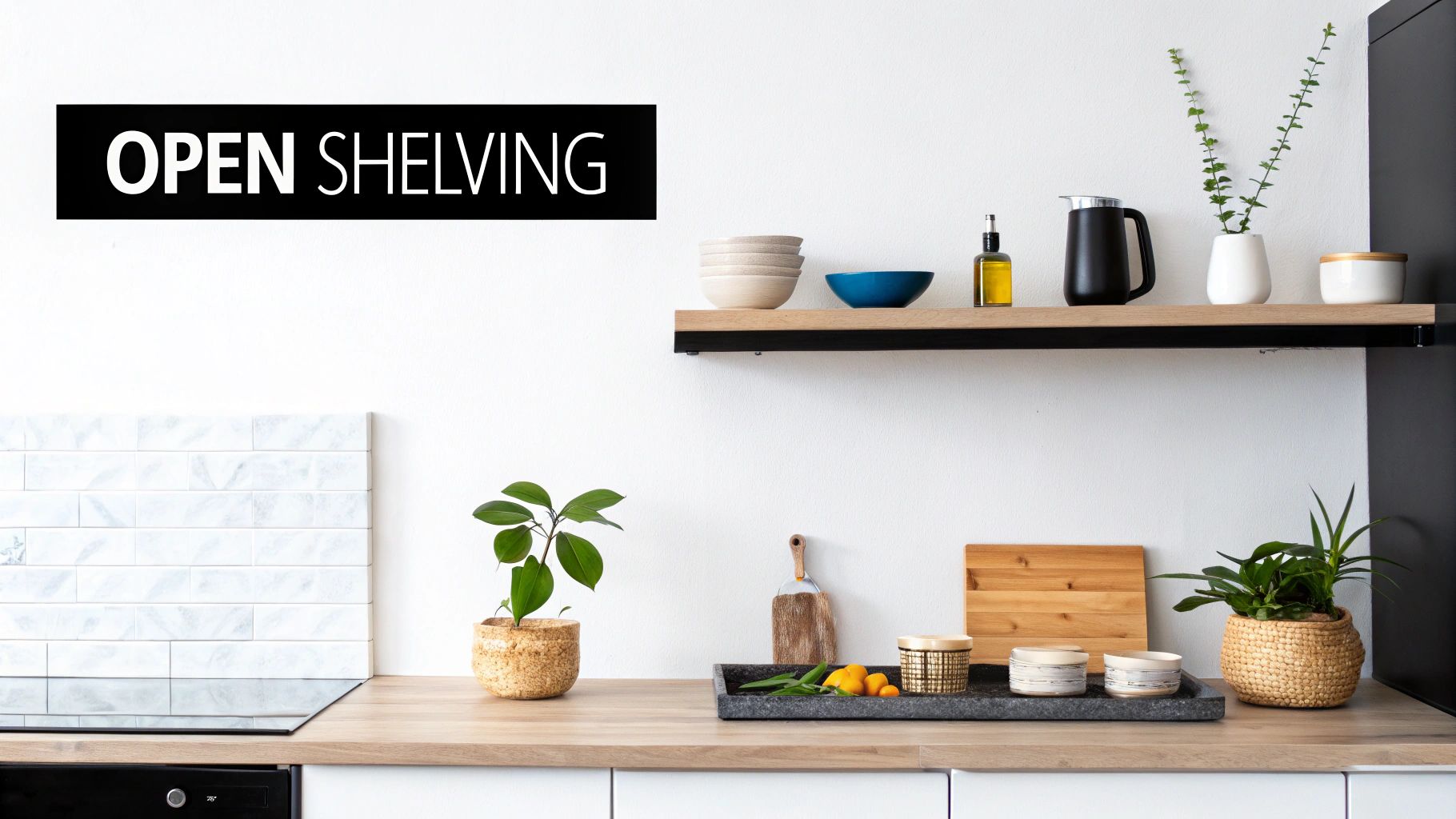
This method, often seen in designs by Studio McGee and popularized in kitchens by Joanna Gaines, turns everyday items into decor. It’s one of the most transformative minimalist home decor ideas because it forces you to be intentional about what you own and display, merging storage with style and promoting a clutter-free mindset.
How to Implement Strategic Open Shelving
The key is curation and organization. Start by decluttering, keeping only the items that fit your aesthetic and functional needs. Aim for a look that feels intentionally styled rather than simply stored. For example, use floating shelves in a living room to showcase art books and a single plant, or in a kitchen to display uniform white dishes and glassware.
- Follow the ‘Rule of Three’: Group items in odd numbers, like three small vases or books, to create a visually appealing arrangement.
- Embrace Negative Space: Leave at least 50% of your shelf space empty to avoid a cluttered look and allow each item to stand out.
- Create Cohesion: Use matching or complementary containers and stick to a consistent color palette for all displayed items to ensure a unified, calm appearance.
- Vary Height and Scale: Arrange items of different heights and visual weights to create a dynamic but balanced composition.
4. Statement Lighting as Focal Point
In minimalist design, every element must be intentional and impactful. Statement lighting perfectly embodies this principle, serving as both a functional necessity and a striking sculptural focal point. This approach concentrates visual interest on a single, well-chosen fixture, allowing it to define the room’s character without introducing clutter. It’s a prime example of the minimalist mantra ‘less but better,’ where one significant piece replaces the need for numerous smaller decorative items.

This strategy, championed by designers like Tom Dixon and brands such as Flos, turns illumination into an art form. Using a single, dramatic fixture like an oversized globe pendant over a dining table or a sculptural arc floor lamp in a living room corner is one of the most effective minimalist home decor ideas for adding personality while maintaining an uncluttered aesthetic.
How to Implement Statement Lighting
To make a light fixture the star, first consider its role and scale within the space. A well-placed statement piece should draw the eye and complement the room’s architecture without overwhelming it. Choose a design that reflects your personal style while adhering to minimalist principles of clean lines and simple forms.
- Select for Impact: Opt for a large-scale pendant, a dramatic arc lamp, or a cluster of simple pendants at varying heights to create a central focus.
- Balance Scale: As a general rule, a fixture over a table should be about 1/2 to 2/3 the width of the table itself to ensure a balanced look.
- Control the Mood: Install dimmer switches to adjust the light’s intensity, allowing you to transition from bright, functional lighting to a soft, ambient glow.
- Complement with Subtlety: Pair your main fixture with discreet, recessed, or hidden task lighting to ensure the room is well-lit without competing for attention.
5. Natural Materials and Textures
Incorporating natural materials is essential for adding warmth and tactile interest to a minimalist space, preventing the design from feeling cold or sterile. This approach grounds the aesthetic in organic authenticity by celebrating the inherent textures of wood, stone, linen, and wool. Instead of visual clutter, the focus is on the quality of the materials themselves, allowing their natural state and imperfections to become part of the decor.
This method, championed by firms like Norm Architects and popularized through the accessible collections of brands like Zara Home, creates a rich sensory experience. Using natural elements is one of the most effective minimalist home decor ideas for building a connection to nature and infusing a room with subtle, sophisticated character.
How to Implement Natural Materials
Start by choosing a primary material, like a live-edge wood dining table, to act as a centerpiece. Then, introduce complementary textures through textiles and smaller objects to create a layered, inviting environment. The goal is to balance different surfaces for a harmonious effect.
- Mix Various Textures: Aim to combine three to five different textures in each room, such as a smooth leather chair, a chunky knit wool throw, and a rough jute rug.
- Contrast Surfaces: Juxtapose smooth and rough textures for dynamic contrast. For example, pair sleek marble countertops with unglazed ceramic pottery.
- Layer Textiles: Add depth by layering different fabrics. Place a linen throw on a cotton sofa or use multiple wool and cotton cushions together.
- Embrace Natural Tones: Allow materials to retain their natural colors rather than using heavy stains or paints. Let a leather accent chair develop a rich patina over time.
6. Indoor Plants as Living Decor
Introducing indoor plants is a powerful way to infuse life and organic texture into a minimalist space without adding clutter. This approach treats plants as living sculptures, using their natural forms and colors to provide a gentle contrast to the clean lines and neutral tones of minimalist design. Instead of overwhelming a room with numerous small plants, the focus is on quality over quantity: a single statement plant or a thoughtfully curated grouping can serve as a dynamic focal point.
This concept, popularized by plant stylists like Hilton Carter and brands such as The Sill, aligns perfectly with the Japanese principle of appreciating nature (shizen). Using greenery is one of the most effective minimalist home decor ideas because it enhances air quality, reduces stress, and connects the indoor environment to the natural world in a controlled, intentional way.
How to Implement Plants as Decor
Start by selecting one or two key locations for your plants, such as an empty corner or beside a primary piece of furniture. Choose plants whose size and shape complement the space. A tall, architectural plant like a Fiddle Leaf Fig can add verticality, while a trailing Pothos can soften a hard-edged shelf.
- Select Simple Planters: Opt for pots in neutral colors like white, black, gray, or terracotta. The container should complement the plant, not compete with it.
- Create Groupings: When using smaller plants like succulents or snake plants, group them in odd numbers (three or five) for a more natural and visually appealing arrangement.
- Vary Height and Form: Combine plants with different heights and leaf shapes to create visual interest. For instance, pair an upright snake plant with a softer, feathery fern.
- Mind Your Light: Choose plants that will thrive in the specific light conditions of your home. A beautiful plant that is not healthy will detract from a serene aesthetic.
7. Hidden Storage Solutions
A core principle of minimalist living is ensuring that possessions exist without creating visual clutter. Hidden storage solutions are fundamental to achieving this, integrating storage seamlessly into your home’s architecture and furniture. This approach, where “everything has a place,” relies on built-in cabinets, under-bed drawers, and recessed shelving to maintain clean sight lines and uncluttered surfaces. The goal is to make storage invisible, allowing the serene design to remain the focus.
This method, championed by custom solutions like California Closets and the organizational philosophy of Marie Kondo, is one of the most impactful minimalist home decor ideas for creating a tranquil, orderly home. By concealing belongings behind clean, handleless surfaces, you achieve functionality without sacrificing aesthetics. For deeper insights into this practice, explore these Japanese organization hacks.
How to Implement Hidden Storage
Begin by identifying high-traffic or clutter-prone areas and envisioning how storage could be built directly into the space. Think vertically and utilize often-overlooked areas. Consider a platform bed with hydraulic lift storage in the bedroom or a sleek window seat with a hinged lid in the living room.
- Go Seamless: Paint built-in cabinets the same color as the walls to make them visually disappear.
- Utilize Vertical Space: Install floor-to-ceiling, handleless cabinetry to maximize storage while maintaining a monolithic, clean look.
- Think Multi-Function: Choose furniture that serves a dual purpose, such as a hollowed-out ottoman or a staircase with pull-out drawer steps.
- Organize Internally: Use dividers, labels, and organizers within hidden compartments to ensure stored items are easy to find and access.
8. Quality Over Quantity Philosophy
The core of minimalist living is the principle of prioritizing well-crafted, meaningful items over a collection of disposable ones. This philosophy, championed by designers like Dieter Rams with his “less but better” mantra, encourages investing in fewer, higher-quality pieces that are functional, beautiful, and built to last. Each object in your home should be a deliberate choice, selected for its purpose or the joy it brings, creating a space that feels curated and intentional.
This approach, echoed in Marie Kondo’s “spark joy” criterion, transforms your environment from a place of mere accumulation into a sanctuary of cherished possessions. One of the most impactful minimalist home decor ideas is to invest in pieces that you will love and use for decades, such as a timeless Herman Miller Eames lounge chair or a handcrafted solid wood dining table.
How to Implement a Quality-First Approach
Adopting this mindset requires shifting from impulse buying to thoughtful acquisition. It’s about long-term value rather than short-term trends. Instead of filling your space quickly, take your time to find items that truly resonate with your lifestyle and aesthetic.
- Invest Strategically: Focus your budget on items you use daily, such as a high-quality sofa, a comfortable bed, or durable cookware.
- Research and Save: Identify the key pieces you want to own and save for them. This delayed gratification makes the final purchase more meaningful.
- Consider Cost-Per-Use: A more expensive, durable item often costs less over its lifetime than a cheap alternative that needs frequent replacement.
- Explore Secondhand: Seek out vintage or pre-owned high-quality furniture, which often offers superior craftsmanship at a more accessible price point.
9. Negative Space Appreciation
Negative space refers to the empty areas within a room, such as bare walls, clear surfaces, and open floors. In minimalist design, this is not wasted space but an active element that allows the eye to rest, enhances the feeling of spaciousness, and gives significance to the objects that are present. This concept, known as “ma” in Japanese aesthetics, values the emptiness as much as the fullness, creating a balanced and intentional environment.
This approach, championed by minimalist architects like John Pawson and Tadao Ando, treats emptiness as a luxury. Leveraging negative space is one of the most powerful minimalist home decor ideas because it shifts the focus from accumulating objects to appreciating the room’s architecture and the selected few items within it.
How to Implement Negative Space
To cultivate negative space, focus on subtraction rather than addition. Start by identifying what you can remove to let the remaining elements breathe. The goal is to create visual pauses that direct attention to a focal point, like a window with a view or a single piece of art.
- Follow the ‘Less is More’ Rule: Resist the urge to fill every empty corner or surface. Aim to keep at least 30% of your wall space free of decoration.
- Create Clear Pathways: Arrange furniture to establish wide, unobstructed pathways, which enhances flow and the perception of space.
- Group and Isolate: Cluster furniture away from the walls to create a defined zone, allowing the surrounding emptiness to frame the arrangement.
- Edit Surfaces: Keep countertops and tables mostly clear. Allow a single plant or a well-chosen vessel to stand alone, amplifying its impact.
10. Monochromatic or Limited Art Display
Minimalist design redefines the role of art, transforming it from a decorative element into a deliberate focal point. Instead of cluttered gallery walls, this approach champions the display of one or two significant pieces. The philosophy emphasizes scale, placement, and ample negative space, allowing each artwork to be fully appreciated without competing for attention. This method elevates art from background noise to a powerful statement piece that defines the room’s character.
This selective approach, often seen in galleries and modern homes, is one of the most impactful minimalist home decor ideas for adding sophistication. By choosing pieces that are abstract, photographic, or feature simple line work, you maintain visual serenity while introducing a layer of thoughtful interest.
How to Implement a Limited Art Display
To adopt this strategy, select artwork that complements your room’s existing palette and mood. The goal is intentionality. Consider a single oversized black and white photograph above a sofa or a large, abstract painting in neutral tones as the room’s anchor.
- Mind the Scale: Ensure the artwork is proportional to the furniture it hangs above, typically two-thirds to three-quarters the width.
- Give It Space: Leave significant “breathing room” around the frame to prevent the wall from feeling crowded and to draw the eye inward.
- Hang at Eye Level: Position the center of the artwork approximately 57-60 inches from the floor for optimal viewing.
- Lean, Don’t Hang: For a relaxed, modern feel, lean a large-scale canvas against a wall on the floor or atop a console table.
Minimalist Home Decor Ideas Comparison
| Item | Implementation Complexity 🔄 | Resource Requirements ⚡ | Expected Outcomes 📊 | Ideal Use Cases 💡 | Key Advantages ⭐ |
|---|---|---|---|---|---|
| Neutral Color Palette | Low – basic color selection | Low – paint, fabrics | Calm, cohesive, timeless spaces | Foundation for flexible decor updates | Creates spaciousness; timeless; easy updates |
| Multi-Functional Furniture | Medium – engineering/design | Medium to high – quality parts | Space-saving, flexible functionality | Small spaces, studios, multi-use rooms | Maximizes function; reduces clutter |
| Strategic Open Shelving | Medium – styling discipline | Low to medium – shelving | Visual lightness, easy access | Kitchens, bathrooms, living spaces | Opens spaces; less costly than cabinetry |
| Statement Lighting as Focal Point | Medium – design and installation | Medium to high – designer pieces | Adds personality and visual hierarchy | Minimalist rooms needing focal element | Functional art; elevates room character |
| Natural Materials and Textures | Low to medium – sourcing materials | Medium to high – natural quality | Warmth, tactile richness, organic authenticity | Adding depth and warmth without clutter | Adds sensory interest; timeless and sustainable |
| Indoor Plants as Living Decor | Low – plant selection & care | Low – plants and planters | Life, color, air purification | Adding natural forms and freshness in minimal spaces | Improves air; adds organic movement |
| Hidden Storage Solutions | High – built-in or custom design | Medium to high – installation | Clutter-free, maximized space efficiency | Limited space needing organized storage | Seamless look; protects possessions |
| Quality Over Quantity Philosophy | Medium – selective sourcing | High – investing in few items | Durable, cohesive, intentional environment | Long-term, sustainable minimalism | Longevity; reduces waste; satisfaction |
| Negative Space Appreciation | Low – arranging existing elements | Low – design mindset | Spaciousness, calm, emphasis on essentials | Creating breathing room and visual simplicity | Makes space feel larger; reduces visual stress |
| Monochromatic or Limited Art Display | Low to medium – art selection | Medium – quality art pieces | Strong, uncluttered focal points | Enhancing minimal decor with refined art | Bold statement; easy to maintain |
Your Path to an Intentional Home
Embarking on the journey of minimalist design is less about stripping your home bare and more about filling it with intention. The ten minimalist home decor ideas we’ve explored are not rigid rules but guiding principles, rooted in the serene and functional aesthetics of Japanese design. They are invitations to consciously curate a living space that serves you, rather than a space you simply exist in.
From the foundational choice of a neutral color palette that calms the mind to the practical wisdom of investing in quality over quantity, each concept works in harmony. Mastering these approaches is valuable because it transforms your relationship with your environment. Your home shifts from a mere container for possessions into an active partner in your pursuit of a calmer, more focused, and meaningful life. It becomes a sanctuary that nurtures well-being.
Key Takeaways for Your Minimalist Journey
The core philosophy is simple: every item should have a purpose or bring you joy. This principle is the thread connecting all the ideas, from using multi-functional furniture to save space to appreciating negative space as a crucial design element. It’s about creating visual and mental clarity.
Remember these central pillars:
- Intention over Impulse: Choose pieces deliberately. Ask yourself if an item is functional, beautiful, or meaningful before bringing it into your home. This mindset underpins the entire philosophy of minimalist decor.
- Functionality is Beautiful: Ideas like hidden storage solutions and strategic open shelving prove that practicality does not have to be plain. An organized space is inherently a more peaceful space.
- Connection to Nature: Incorporating natural materials and textures or adding indoor plants as living decor grounds your home, creating a vital link to the outside world and enhancing the sense of tranquility.
Your Actionable Next Steps
Feeling inspired but unsure where to begin? Don’t try to overhaul everything at once. True, lasting change happens incrementally.
- Start with a Single Space: Choose one room, or even just one corner, to transform. Perhaps it’s clearing your entryway or reorganizing your living room bookshelf using the principles of limited art display.
- Focus on One Principle: Select the idea that resonates most deeply with you. If clutter is your main challenge, focus on implementing hidden storage. If your space feels cold, start by introducing natural wood and linen textures.
- Perform a ‘Purpose Audit’: Pick up five items in your main living area. For each one, ask: “Does this serve a function, or do I truly love it?” This simple exercise will begin to sharpen your curatorial eye.
By embracing these minimalist home decor ideas, you are not just redecorating; you are redesigning your daily experience. You are crafting a backdrop for a life of greater clarity, peace, and purpose. This is the ultimate gift of a well-considered, intentional home, a sanctuary built not on what you can add, but on the profound value of what you choose to keep.
For a deeper dive into the art of intentional living and to discover more about the culture that inspired these design principles, explore Japan Whisper. Our platform is dedicated to sharing the soul of Japanese aesthetics, from serene interiors to mindful daily practices. Find your inspiration at Japan Whisper.