Sometimes, the most powerful transformation begins with a broom in your hand and a quiet breath in your chest.
Japanese mindful cleaning — rooted in simplicity, presence, and respect — isn’t just about tidying your home.
It’s about clearing your mind, honoring your space, and finding peace in the small, intentional acts of care.
Let’s explore how this beautiful practice can bring more calm and clarity into your everyday life.
🧹 Start with Gratitude, Not Guilt
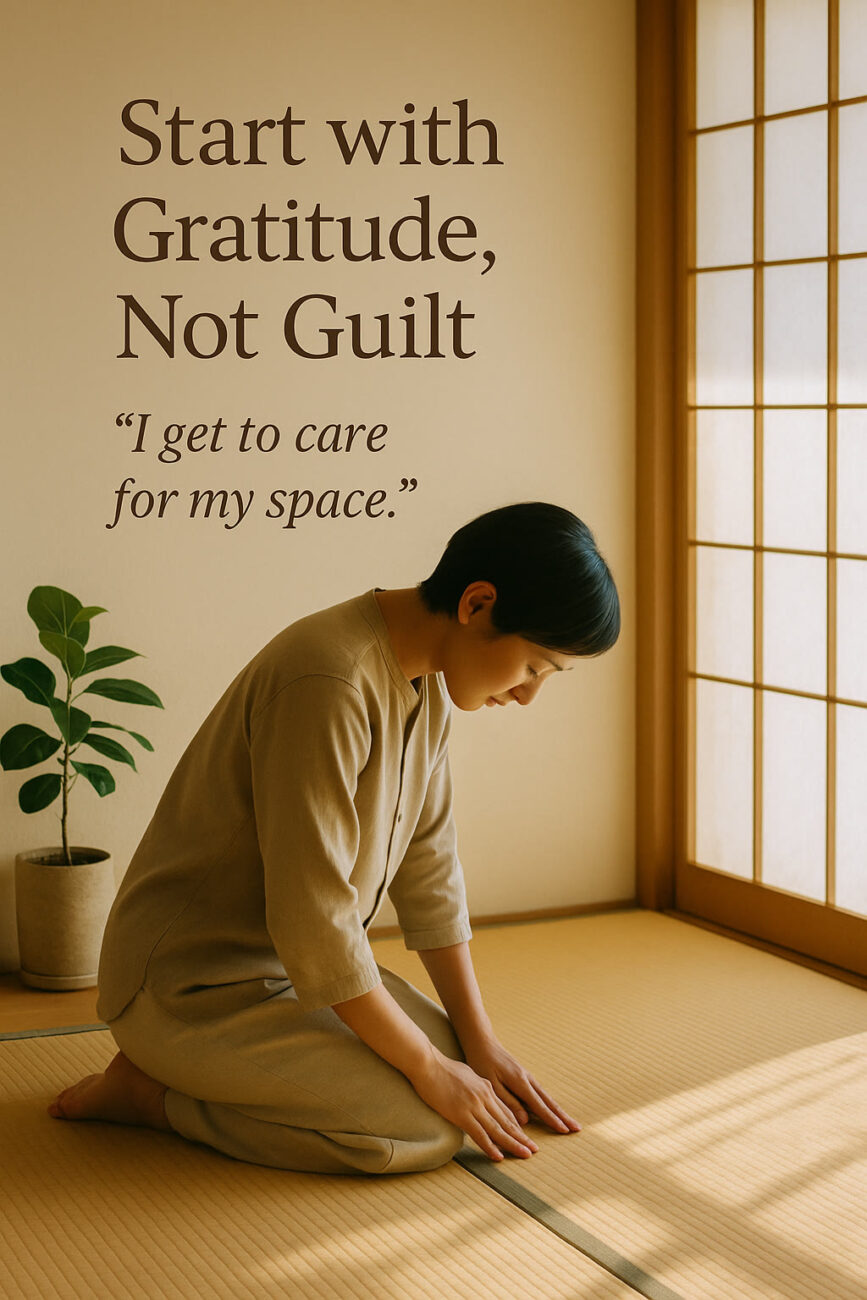
Before you pick up the sponge or the vacuum, pause.
Instead of thinking, “I have to clean,” shift to “I get to care for my space.”
In Japanese culture, cleaning is often a way to express appreciation — to the objects you use, the home that shelters you, and even the floor that carries your steps.
Try it: Before you begin, say a soft thank you to your space. This simple ritual changes the energy completely.
✨ Clean One Thing at a Time
Forget multitasking. Mindful cleaning is slow and focused.
Choose one task: wipe a table, sweep a corner, polish the sink.
Do it gently, without rushing. Let your hands move with care.
This focused approach turns cleaning into meditation.
You begin to notice the textures, the light, even the quiet creaks of your home.
🍃 Use Natural, Minimal Tools
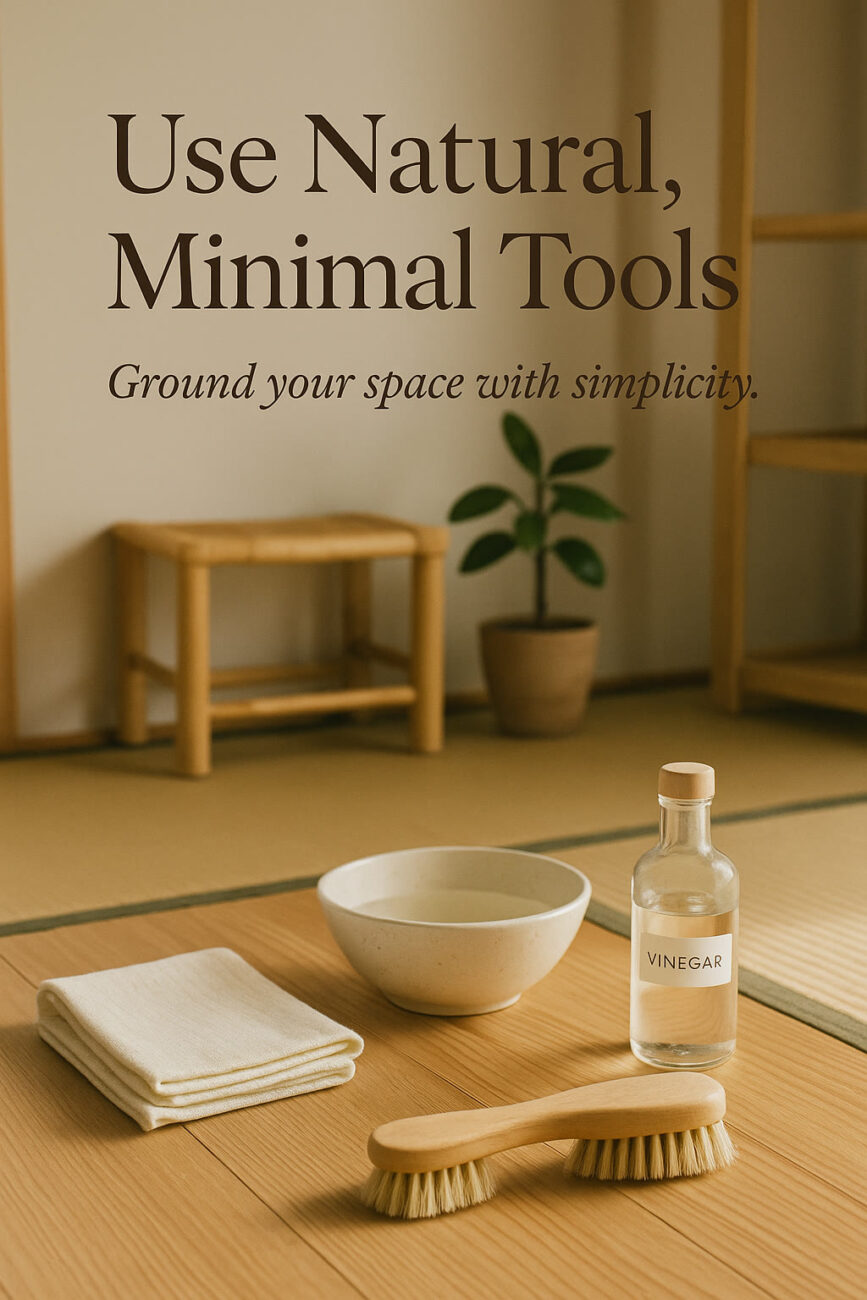
In Japanese homes, cleaning is often done with simple cloths, water, and wooden brushes.
No fancy sprays or complicated gadgets — just humble, reliable tools.
Choose natural materials when you can: cotton rags, vinegar solutions, soft-bristled brooms.
It brings you closer to the elements and keeps your cleaning practice grounded.
🪑 Respect Every Object
From your kitchen knife to your teacup, treat each item with care.
In the Japanese mindset, objects carry spirit — or at least, a kind of presence.
By cleaning and handling them mindfully, you honor the role they play in your life.
Wipe your shoes gently. Fold your clothes with intention.
It’s not about perfection, but about presence.
🌸 Embrace Seasonal Cleaning
Rather than daily tidying only, Japanese tradition includes osoji — big seasonal cleanings, especially at year’s end.
These deeper cleanings are symbolic: they clear out the past and invite fresh energy.
You can bring this into your life by aligning your cleaning with seasonal shifts — a spring refresh, an autumn reset.
Make it a gentle ritual, not a chore.
🍵 Create a Moment of Stillness After
After cleaning, don’t rush into the next thing.
Sit. Breathe. Pour tea.
Feel the difference in the space — the lighter air, the soft clarity.
Soak it in. Let your nervous system register the shift.
This pause is part of the magic.
🕯️ Let Cleaning Be a Form of Self-Compassion
Your space reflects how you care for yourself.
When you clean with gentleness, you’re not just washing windows — you’re softening your inner world.
Let go of the pressure to be perfect.
Focus instead on rhythm, presence, and the quiet joy of doing one small thing well.
🌧️ Clean with the Weather
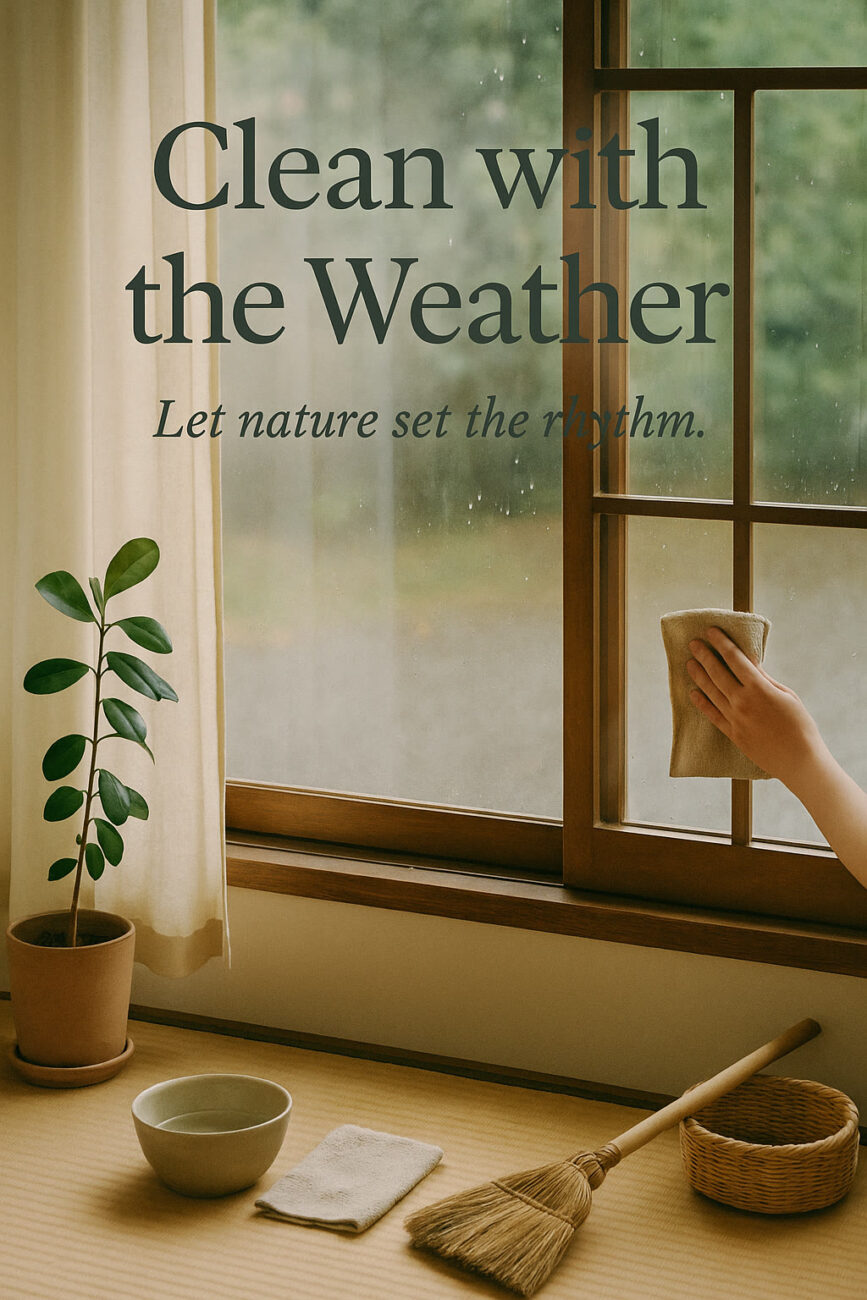
Pay attention to the weather outside — and let it guide your tasks.
Rainy day? Wipe down indoor windows or polish wooden surfaces while the world feels hushed.
Sunny morning? Open the windows wide and sweep, letting the light and fresh air move through the room.
Japanese tradition often honors the seasons and nature’s rhythms.
When you clean with the weather, your routine becomes more connected to the world around you.
🧺 Make Storage Beautiful and Intentional
Storage isn’t just functional — it can be calming.
Instead of stuffing things out of sight, choose baskets, boxes, or folded fabrics that feel peaceful to look at.
Give everything a gentle home.
This idea comes from the Japanese concept of danshari — letting go of excess and organizing with mindfulness.
It invites you to ask: “Do I use this? Does it bring ease or joy?”
And then arrange your space in a way that feels light and alive.
Your home doesn’t need to be spotless to feel sacred.
Just a little more cared for. A little more peaceful.
And in return, it will care for you, too.