Sometimes, healing doesn’t mean hiding the cracks.
It means highlighting them—in gold.
Kintsugi (金継ぎ) is the ancient Japanese art of mending broken pottery with lacquer dusted in powdered gold. Instead of disguising the damage, it celebrates it—making the piece more beautiful, not less.
This philosophy holds deep wisdom for our lives, too.
What if your fractures were not flaws, but invitations?
Here are 7 soulful ways to apply Kintsugi to your own healing journey.
🥣 1. Acknowledge What Broke
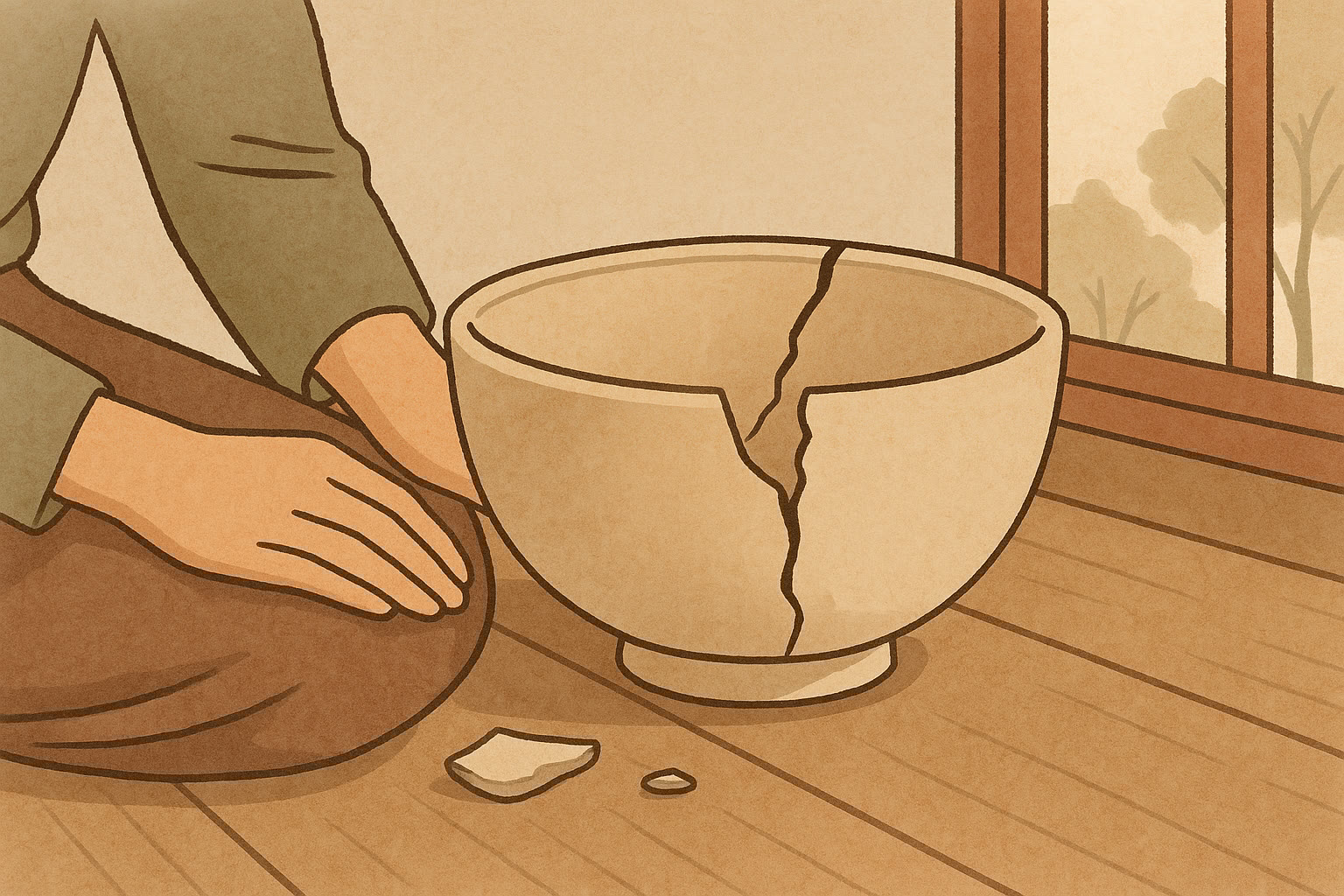
The first step in Kintsugi? Looking at the break.
In life, too, healing starts with honesty. You don’t have to rush into fixing. You just have to see the truth of what happened.
Try this: Name what hurts. Not with judgment—but with kindness.
🌿 2. Let Time Do Its Work
Before repair, there is stillness.
Kintsugi isn’t instant. The lacquer needs to dry. The gold needs to settle.
Reminder: You’re allowed to take your time. Let grief, rest, or silence be part of your healing.
Healing isn’t linear—it’s seasonal.
🖌️ 3. Honor the Scars
The most iconic part of Kintsugi is the visible gold lines where the cracks once were.
Imagine if we did the same with emotional wounds—marking them not with shame, but reverence.
Mindset shift: You are not damaged. You are changed—and that is sacred.
✨ 4. Choose Beauty in the Mending
Kintsugi doesn’t just fix—it beautifies.
It’s a choice to add gold, not glue. To make the broken places radiant.
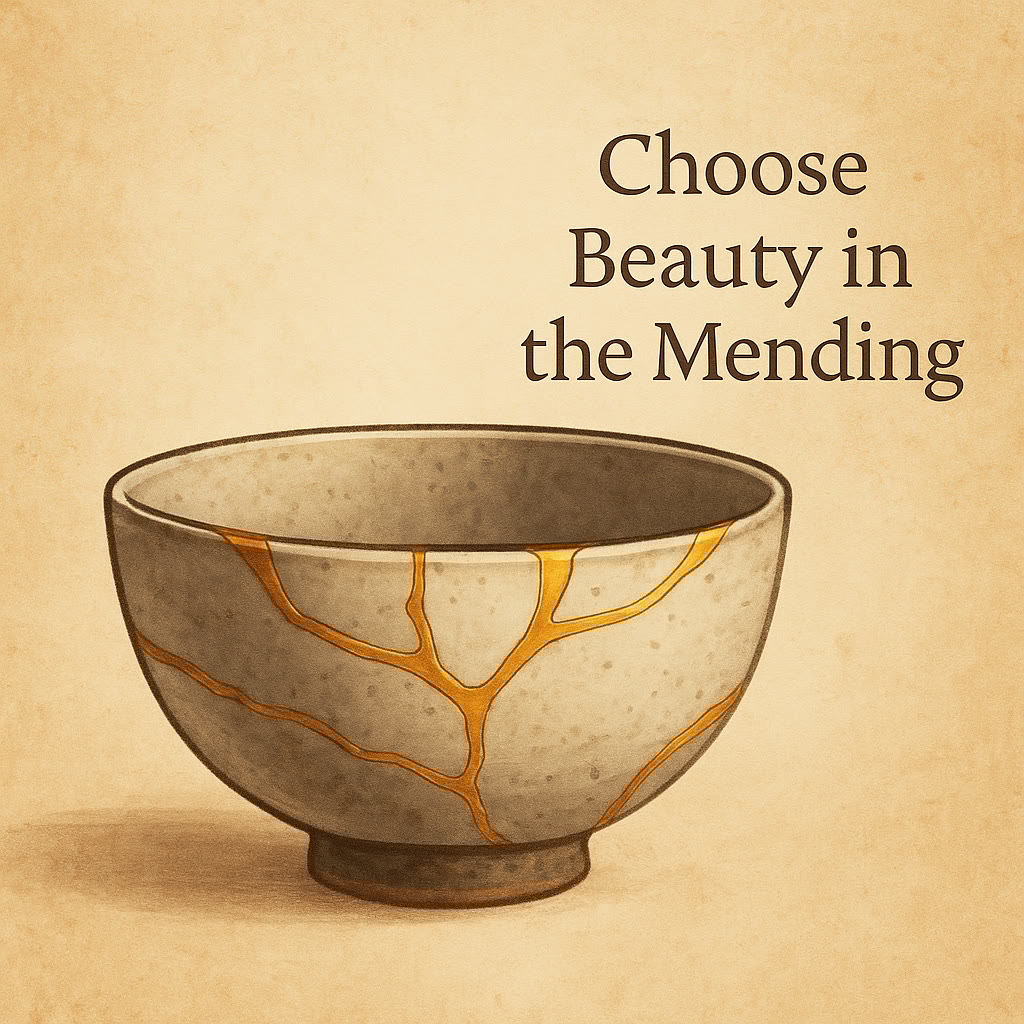
Practice: As you heal, ask what could add beauty to this chapter. Is it new boundaries? Deeper connection? A creative outlet?
🍂 5. Accept That You’re Different Now
The bowl will never be exactly the same. But it can still hold. It can still shine.
So can you.
Gentle truth: Healing doesn’t mean returning to who you were. It means becoming someone more whole—with new strength, wisdom, and softness.
🪷 6. Share Your Story
Kintsugi pieces are often displayed proudly. Their history becomes their strength.
Telling your story—when you’re ready—can be an offering to others.
Try this: Journal, create, speak, or simply hold space for others to share their gold-lined stories too.
🌕 7. Trust That Wholeness Looks Different
There is no one way to be whole.
Sometimes wholeness includes cracks, tender places, and gleaming lines of gold.
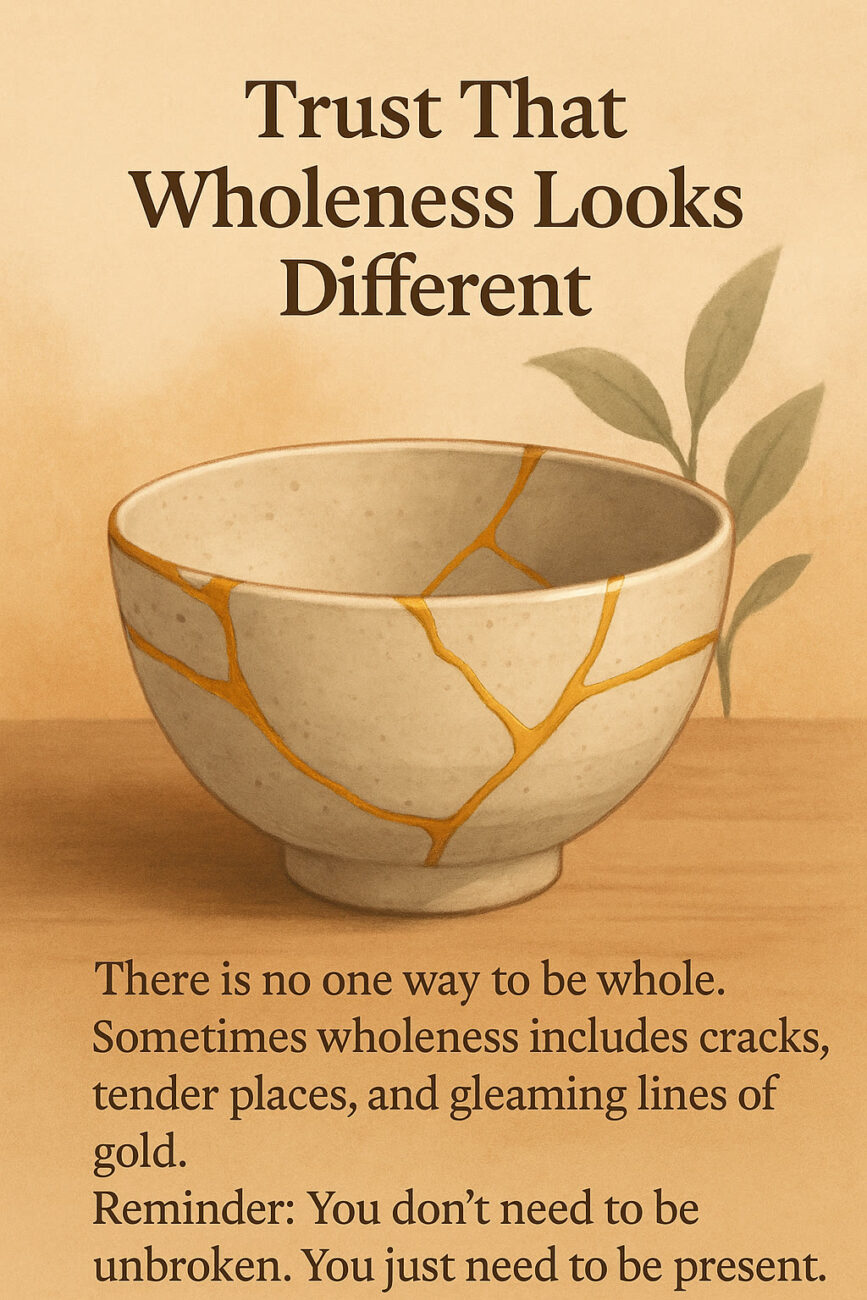
Reminder: You don’t need to be unbroken. You just need to be present.
🌸 Final Thought
Kintsugi teaches us that breakage isn’t the end of the story.
It’s the beginning of something more honest. More luminous.
You’re not meant to be flawless.
You’re meant to be real. And that is a kind of beauty gold could only hope to match.