In Japan, washing hair is often seen as more than just a hygiene routine — it’s a small act of care, relaxation, and mindfulness. Whether at home or in a salon, the process tends to be gentle, thorough, and intentional.
Here’s how many Japanese people approach hair washing, especially the traditional or salon-inspired way:
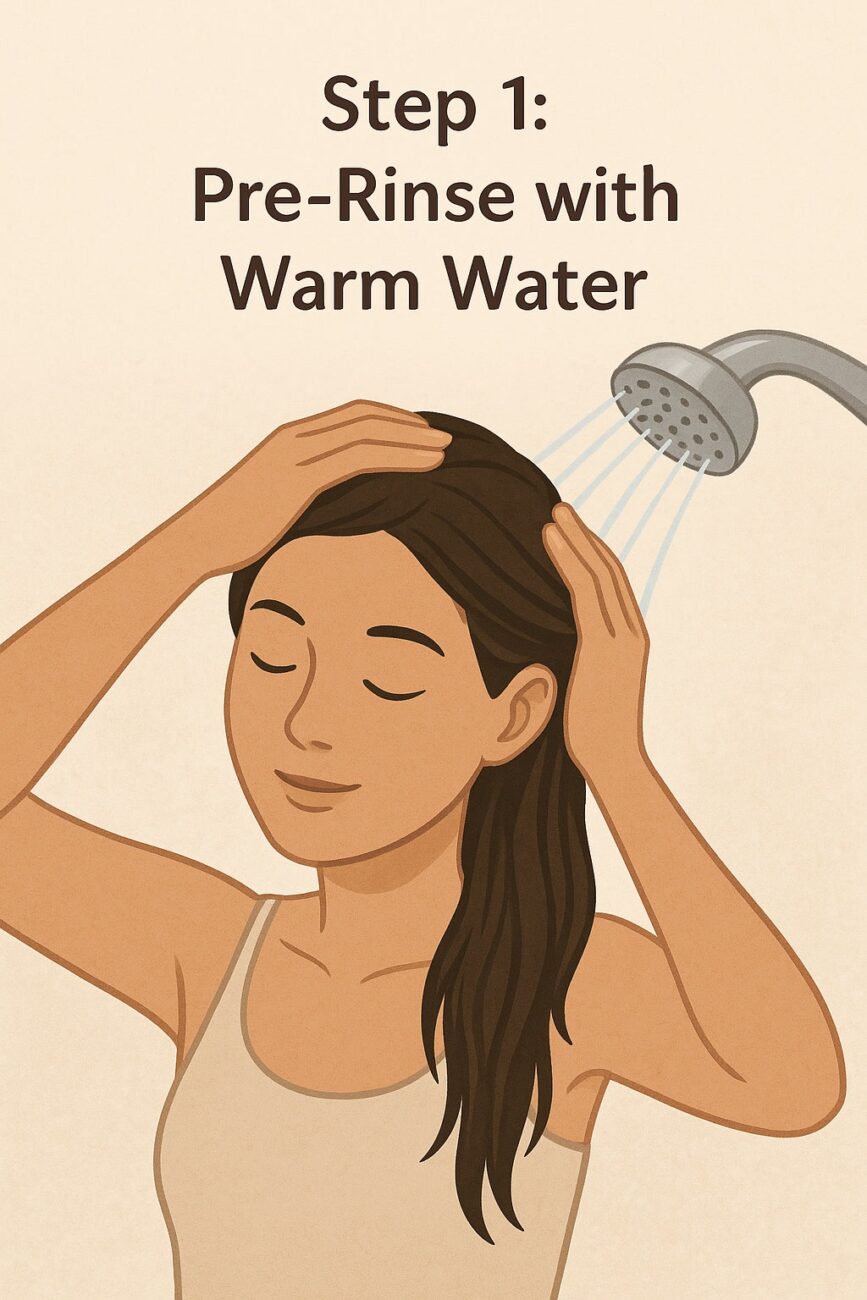
🧴 Step 1: Pre-rinse with warm water
Before applying shampoo, hair is rinsed thoroughly with warm water for about 1–2 minutes.
This helps to:
- Remove surface dirt and oil
- Loosen buildup
- Prepare the scalp for a better clean
It also softens the hair, making the shampoo spread more easily.
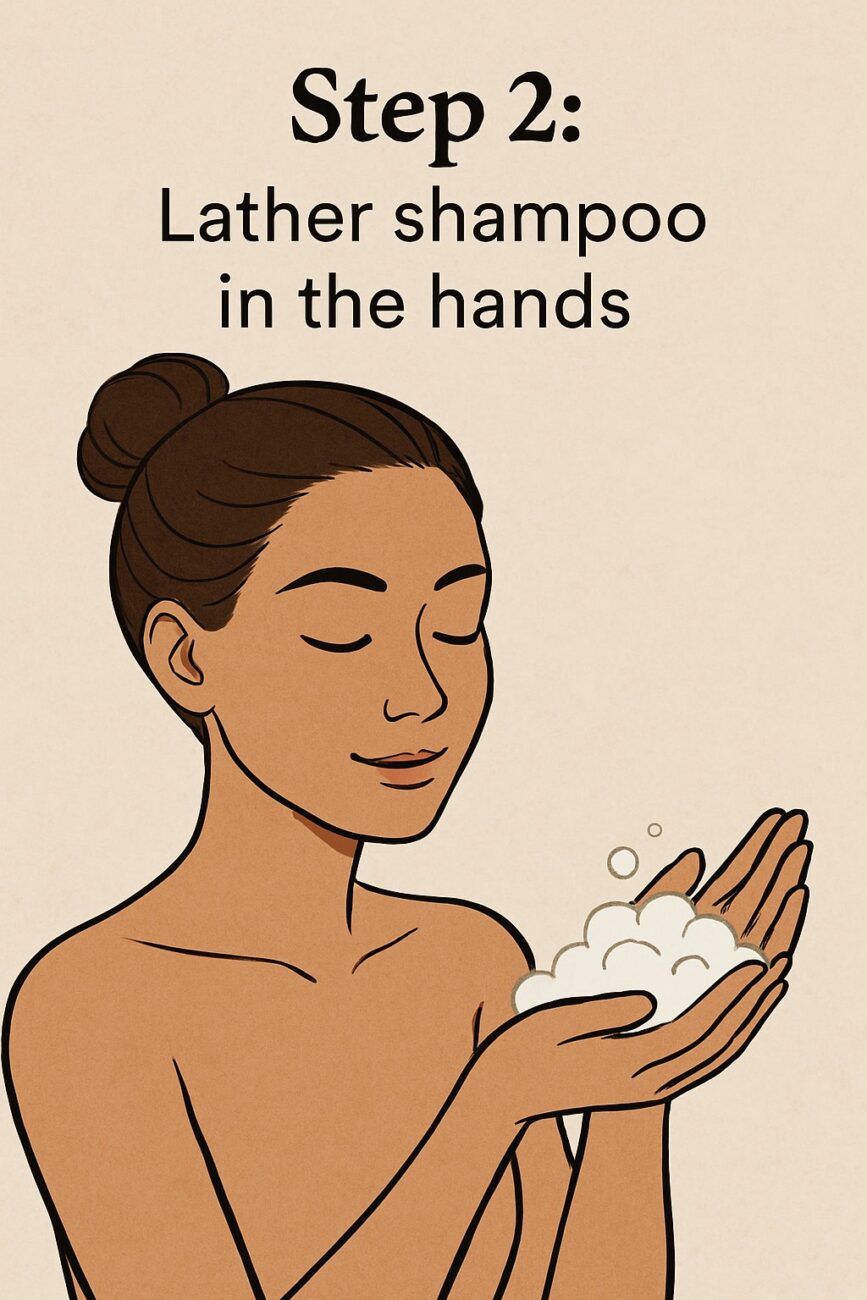
🌸 Step 2: Lather shampoo in the hands
Instead of applying shampoo directly to the scalp, many Japanese people lather it in their hands first.
This creates a soft foam and prevents harsh rubbing.
It’s not about scrubbing hard — it’s about using a soft, foamy texture that can glide across the scalp.
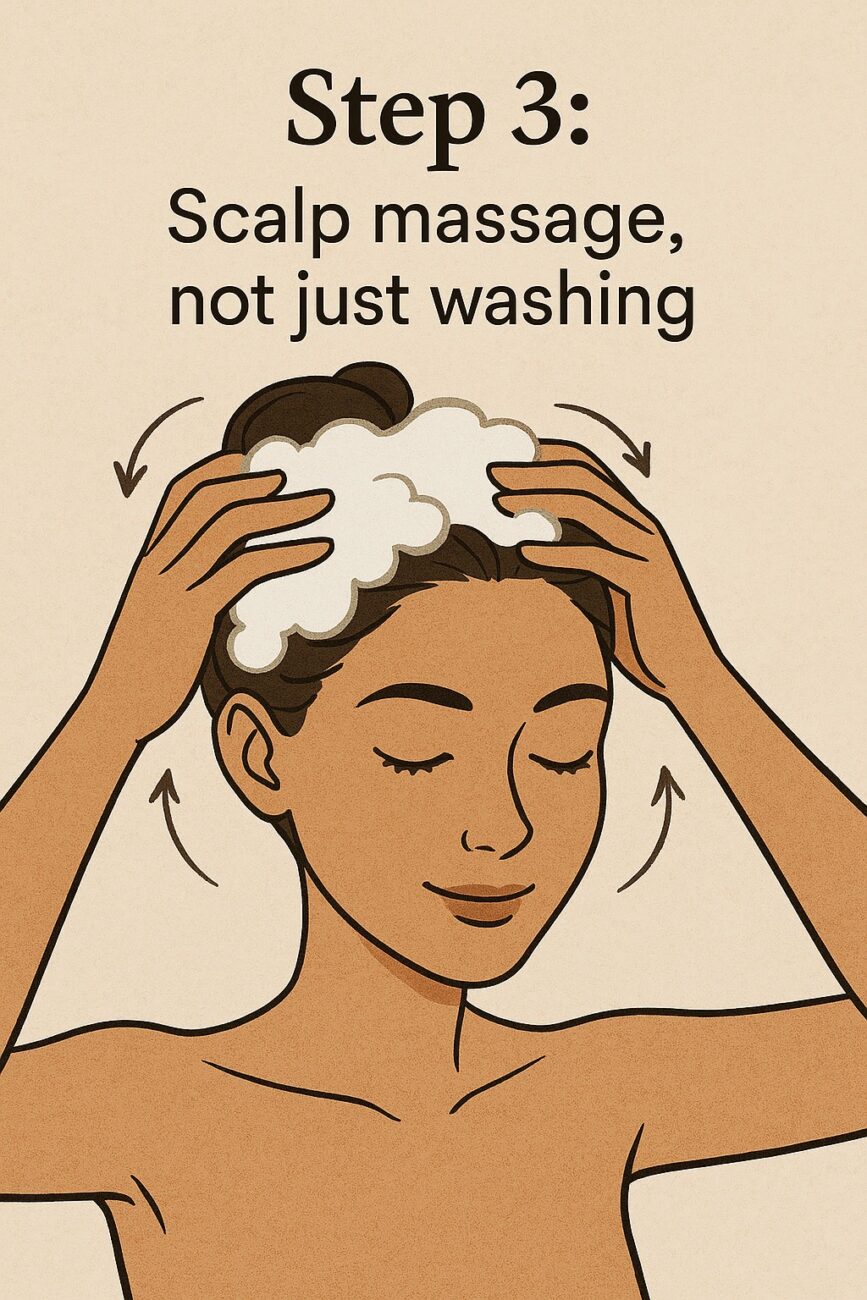
💆♀️ Step 3: Scalp massage, not just washing
A gentle scalp massage is an important part of the process.
Using fingertips (not nails!), the scalp is massaged in small circular motions to:
- Stimulate blood circulation
- Encourage hair growth
- Relieve tension
At salons, this is often the most relaxing part, with slow, rhythmic movements and warm water rinses.
🍵 Step 4: Double shampoo (optional)
In some cases — especially if there’s heavy styling product or oil — people will shampoo twice.
The first round removes dirt and buildup.
The second round cleanses more deeply and lets the product’s ingredients work better.
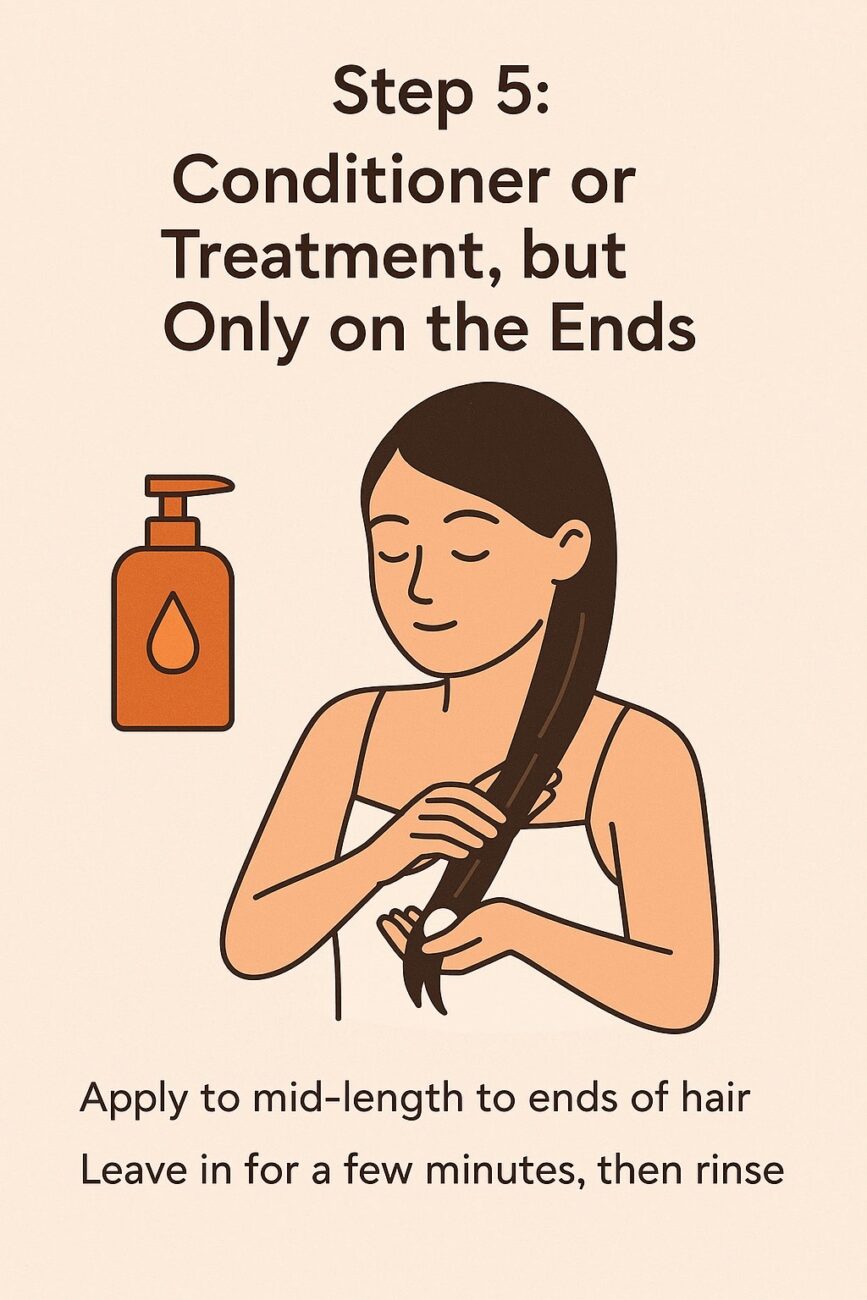
🥣 Step 5: Conditioner or treatment, but only on the ends
Conditioner is typically applied only to the mid-length to ends — never the scalp.
It’s left in for a few minutes, then rinsed thoroughly.
Deep treatments (like hair masks) are popular once a week, especially in winter.
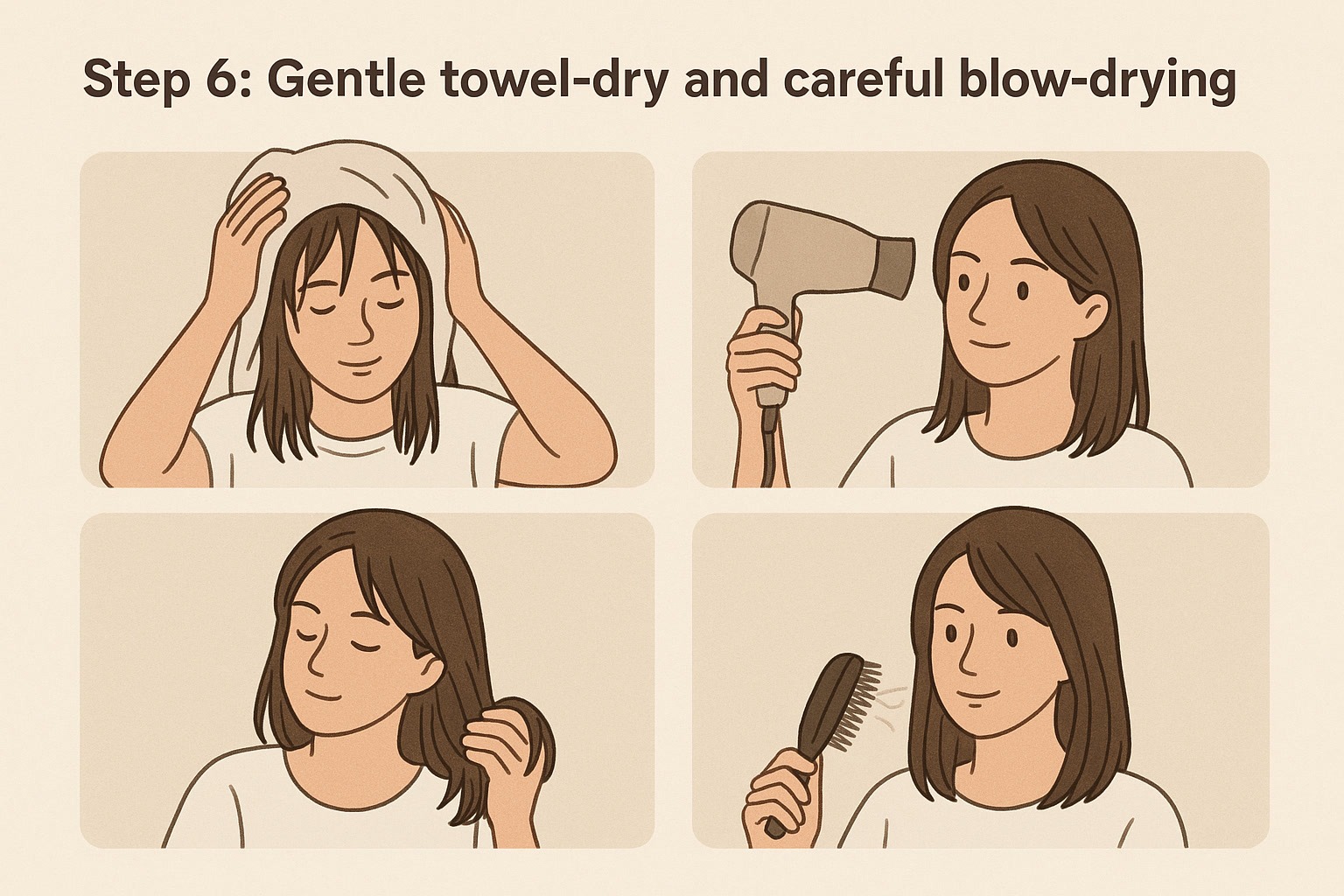
🌬️ Step 6: Gentle towel-dry and careful blow-drying
Hair is blotted softly with a towel (no vigorous rubbing). Then, it’s blow-dried with care — often using a low-heat setting and a brush to prevent damage.
In Japanese salons, the drying step is as precise and thoughtful as the wash itself.
🧖♀️ A mindset of care
Washing hair in Japan isn’t rushed. It’s part of a broader self-care culture — quiet, consistent, and kind to the body.
Even at home, the goal isn’t just “clean hair,” but a soothed scalp, relaxed mind, and refreshed feeling.
Next time you wash your hair, try slowing down a little.
Foam the shampoo gently. Massage your scalp like a ritual.
You might just turn a daily task into a small moment of calm.