A clean kitchen is more than just tidy counters and sparkling dishes.
In Japanese culture, it’s a reflection of harmony, mindfulness, and respect for the home. Every sweep, every wipe, becomes a small ritual — not just a chore.
By bringing these traditions into your own space, you can create a kitchen that feels calm, light, and welcoming. A place where cooking becomes joyful and cleaning feels almost meditative.
Here are some timeless Japanese kitchen cleaning secrets you can start practicing today.
🍵 Start with a “Reset” Mindset
In Japan, cleaning isn’t seen as punishment or duty — it’s about renewal.
Before picking up a cloth or broom, pause for a moment. Take a deep breath and think: “I’m pressing reset. I’m creating calm.”
This simple shift changes the way cleaning feels. Instead of rushing through, you slow down. Each movement becomes gentle and intentional.
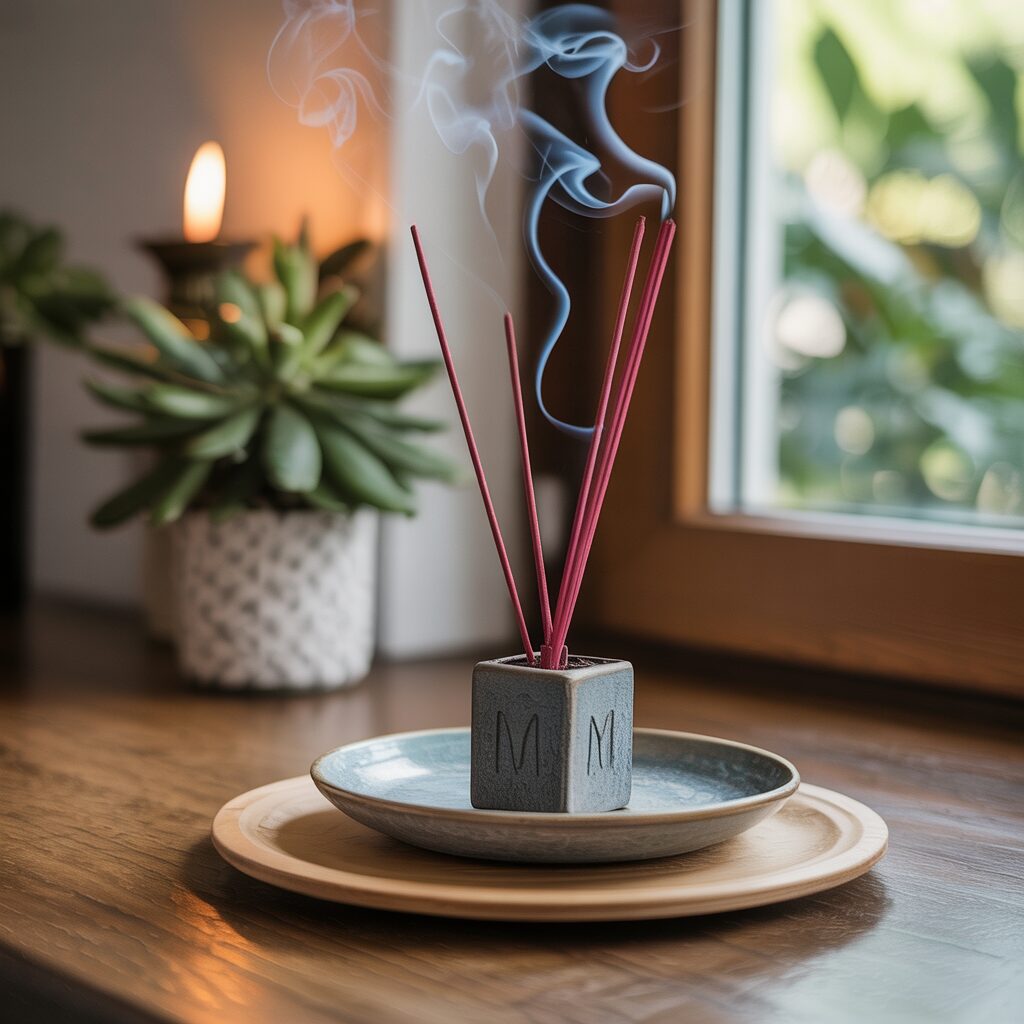
Practical example: Light a stick of incense or open a window before you begin. This signals to your mind and body that you’re entering a moment of refreshment, not just ticking off a task.
✨ The Power of Minimalism
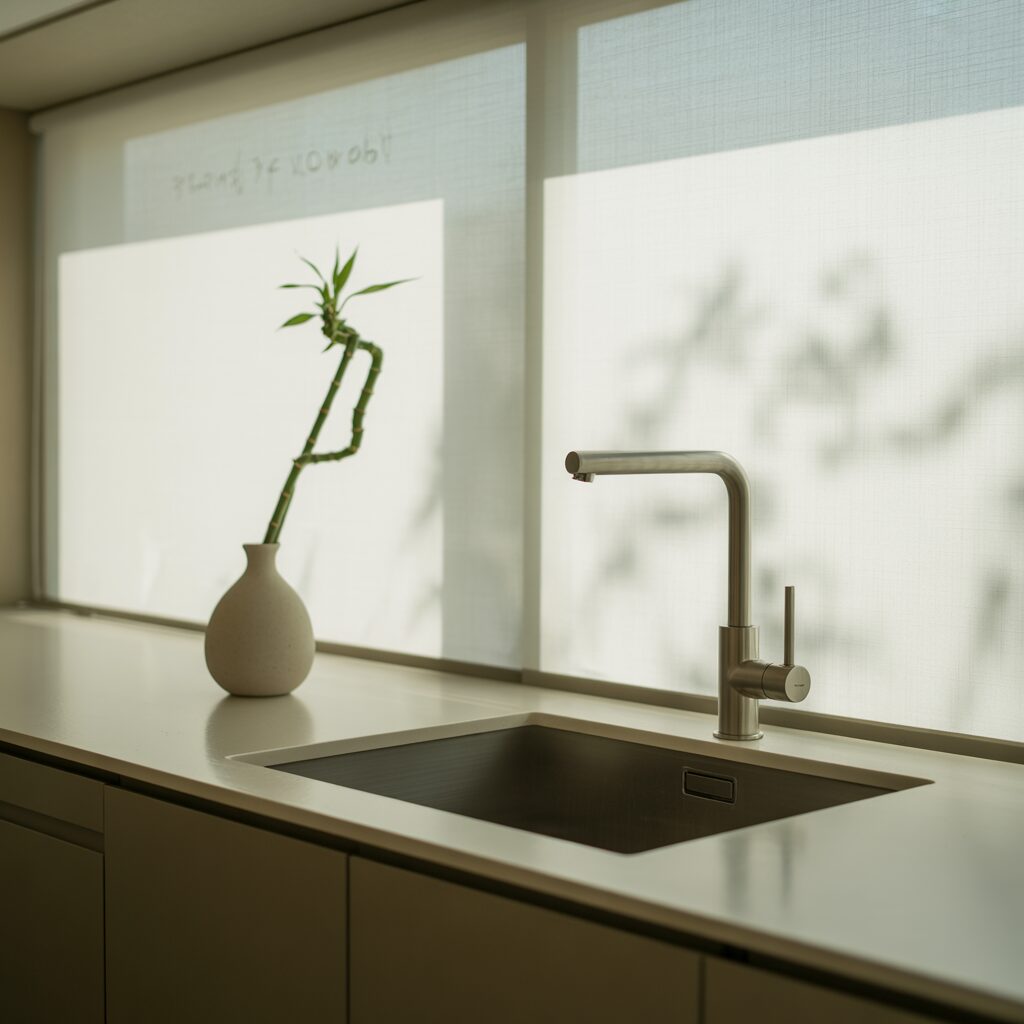
Japanese kitchens are famously uncluttered. The less you see, the less you have to clean.
Countertops are often left nearly bare, with only a kettle, tea set, or a small plant. Storage is maximized through clever organization: stackable containers, baskets, and deep drawers.
Try this: Remove everything from your counter and only put back what you use daily. Notice how much lighter the space feels. Cleaning then becomes as easy as one swipe.
Think of it like breathing room for your kitchen.
🧽 Natural Cleaning Tools
Instead of disposable products, Japanese homes rely on natural, long-lasting tools.
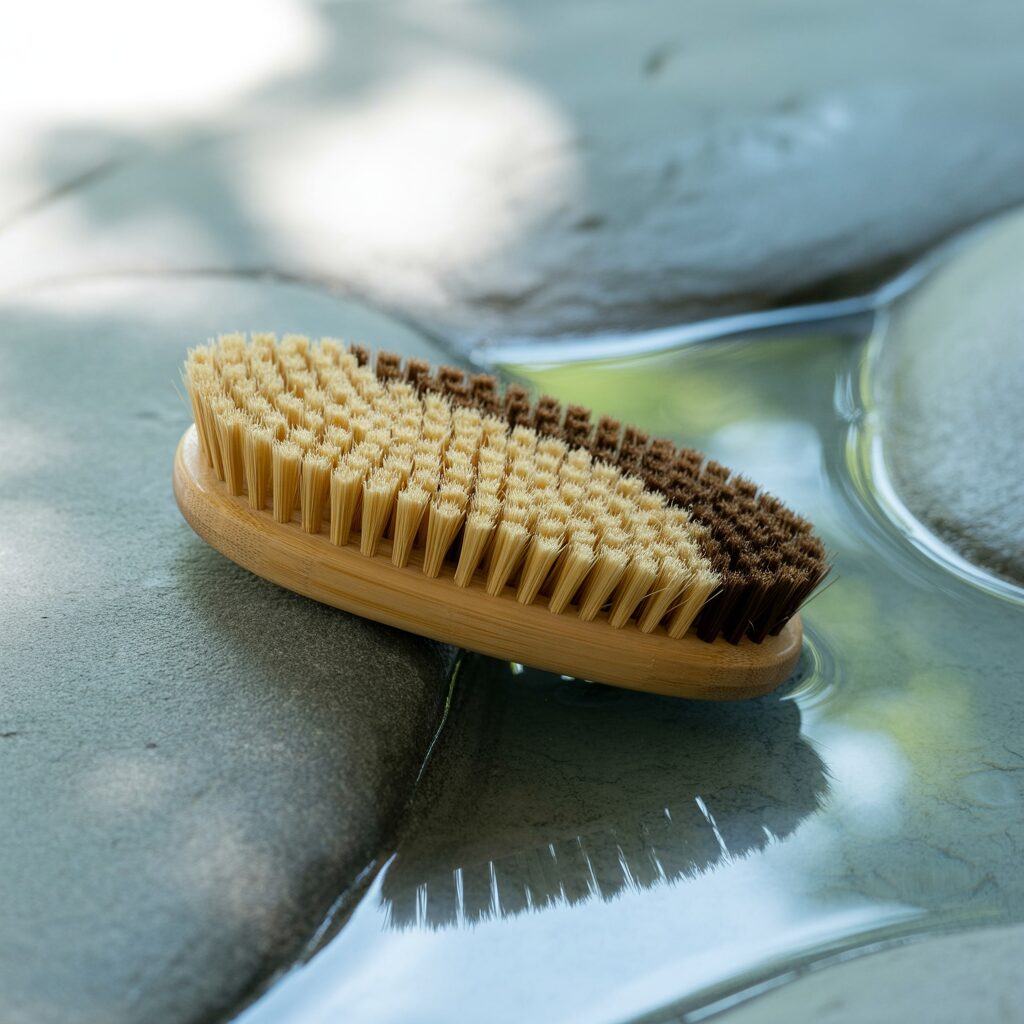
- Fukin (布巾): Simple cotton cloths used for wiping surfaces and drying dishes. They are washed, dried in sunlight, and reused again and again.
- Bamboo brushes: Perfect for scrubbing pans or cutting boards without scratching them.
- Hemp or cotton cloths: Gentle enough for delicate cups and bowls.
Swap paper towels for reusable cloths in your kitchen. Not only will you save money and reduce waste, but you’ll also feel more connected to the act of cleaning itself.
It’s a subtle mindset shift — from “throw away” to “care and reuse.”
🌿 Rice Water Magic
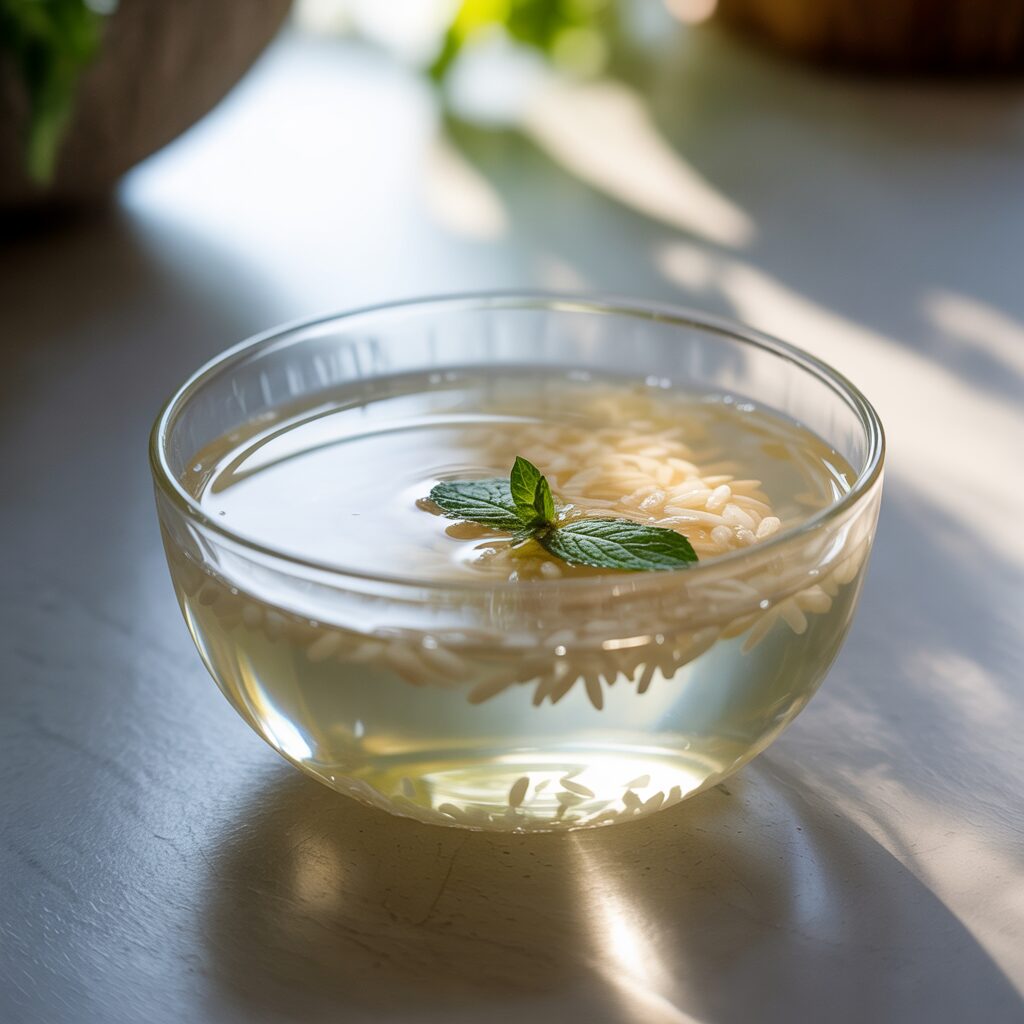
Here’s a beautiful secret: the milky water left after rinsing rice (togi-jiru) isn’t waste.
In Japan, it’s often saved and used as a gentle cleanser. The starches in the water help cut through grease and leave pots and pans shinier.
Ways to use rice water:
- Soak greasy pans in it before scrubbing.
- Dip a cloth in it and wipe down counters.
- Use it to rinse kitchen towels, leaving them softer.
Next time you rinse rice, pause before pouring it down the sink. Save a bowl of it and see the difference it makes.
🍋 Citrus Freshness
Citrus plays a quiet but powerful role in Japanese cleaning traditions. Fruits like yuzu or lemon are used not just for fragrance, but also for their natural antibacterial properties.
Simple ways to use citrus in your kitchen:
- Rub a lemon slice on cutting boards to remove odors from garlic or fish.
- Boil citrus peels in water for a homemade air freshener.
- Mix citrus peel water with vinegar for a natural all-purpose spray.
The fresh, uplifting scent also shifts the mood of the kitchen — making it feel cleaner before you’ve even finished.
🔥 Daily Small Rituals
In Japanese homes, cleaning isn’t left for weekends or “deep clean days.” Instead, it’s woven into daily life as osouji — small acts of tidying that prevent mess from ever piling up.
Examples of tiny rituals:
- Wipe the stove after every meal.
- Sweep or vacuum the floor at night.
- Wash dishes immediately after eating.
These tasks take less than five minutes but keep the kitchen feeling light and fresh.
It’s the same philosophy as tending a garden — a little daily care keeps everything thriving.
💧 Respect for Water
Water holds deep meaning in Japanese culture — seen as purifying, cleansing, and even sacred.
When cleaning, water is used mindfully. Cloths are rinsed slowly, bowls are filled just enough, and waste is minimized.
Try this: Instead of running the tap endlessly, fill a small basin with water for rinsing your cloth. Move thoughtfully, noticing the coolness and clarity.
Even this simple act can feel meditative.
🏮 Create a Seasonal Rhythm
One of the most beautiful traditions is Oosouji — the “big clean” at the end of the year. Families scrub every corner of the home to clear away the old and welcome the new.
You can bring this rhythm into your kitchen by choosing one day each season for a deeper reset.
Ideas for seasonal cleaning:
- Spring: Declutter and refresh storage.
- Summer: Deep clean the fridge and freezer.
- Autumn: Polish cookware and organize pantry items.
- Winter: Scrub corners and prepare the kitchen for warm meals.
This seasonal flow keeps the kitchen aligned with the natural cycle of renewal.
🍵 The Kitchen as Sacred Space
In Japanese homes, the kitchen is not just functional — it’s sacred. It’s the heart of nourishment, where food becomes energy and care for loved ones begins.
Cleaning, then, is not only about removing crumbs or grease. It’s a way of honoring the space that sustains you.
When you wipe the counter, you’re creating a place of health. When you sweep the floor, you’re inviting calm.
Every act of care becomes a quiet offering to your home.
A Japanese approach to cleaning reminds us that tidying isn’t about perfection — it’s about peace.
By treating each task as a gentle ritual, your kitchen becomes more than a workspace. It becomes a sanctuary of calm, clarity, and warmth.
Even the smallest action, done with intention, can transform your space.