In the heart of Japanese culture lies a quiet strength — a way of life shaped by discipline, intention, and respect for the everyday.
Far from rigid or cold, Japanese discipline is rooted in mindfulness, humility, and a deep connection to both self and surroundings. It’s not about perfection — it’s about presence.
Here’s a gentle dive into the timeless philosophy of Japanese discipline, and how you can bring its calming wisdom into your life 🌿
🧹 1. Kaizen (改善) — Small Steps Toward Big Change
Kaizen means “continuous improvement.”
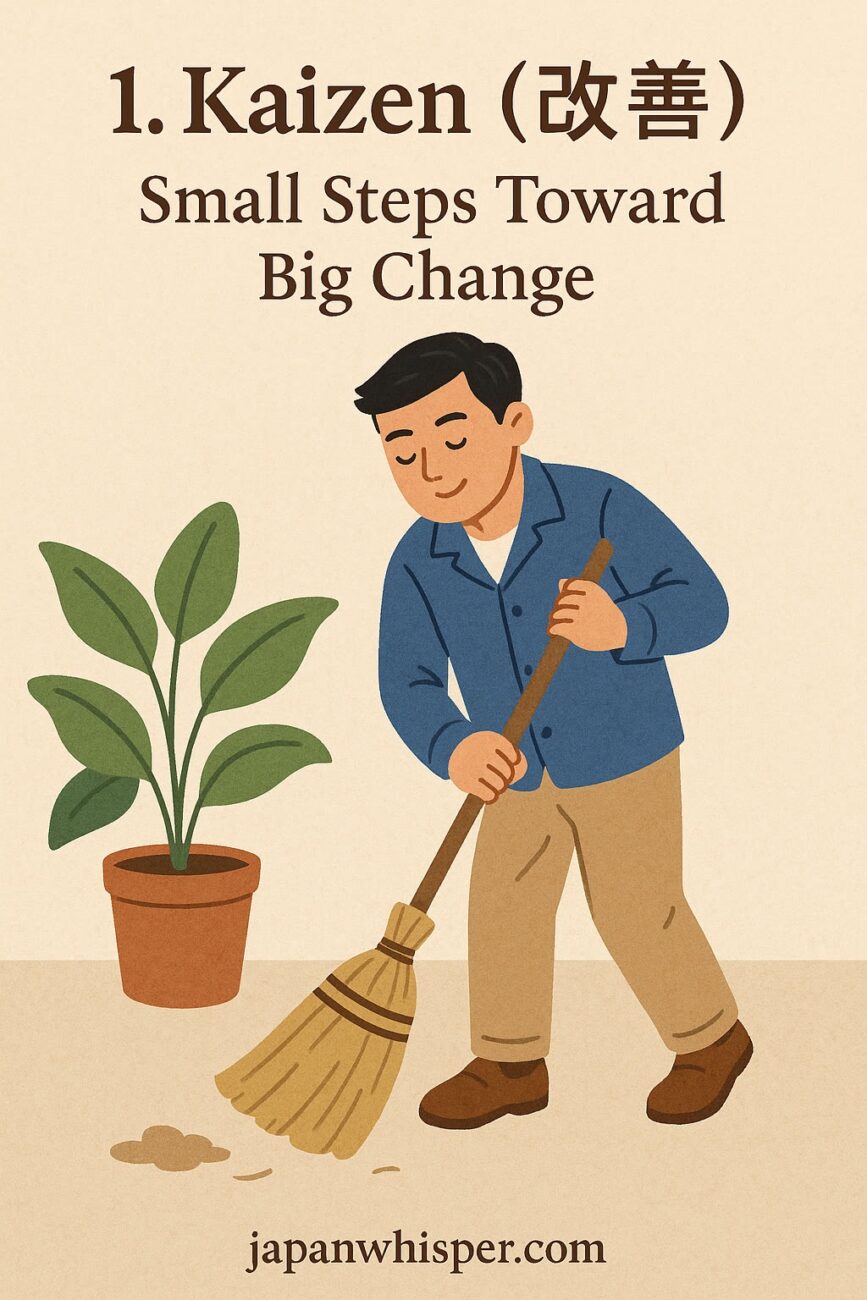
Rather than chasing massive transformation, it’s about making small, consistent changes — day by day.
Whether it’s tidying your desk, refining your craft, or being kinder to your body, Kaizen is about choosing better little by little.
Try this: Choose one 1-minute habit today. Do it again tomorrow.
⏳ 2. Shitsuke (躾) — Cultivating Inner Discipline
In Japanese, shitsuke refers to self-discipline that’s lovingly taught — like tending a bonsai tree.
It’s not about punishment, but about nurturing responsibility, awareness, and follow-through.
Mindset shift: Discipline isn’t harsh. It’s a quiet gift we give ourselves to grow.
🍵 3. Rei (礼) — Respect in Every Action
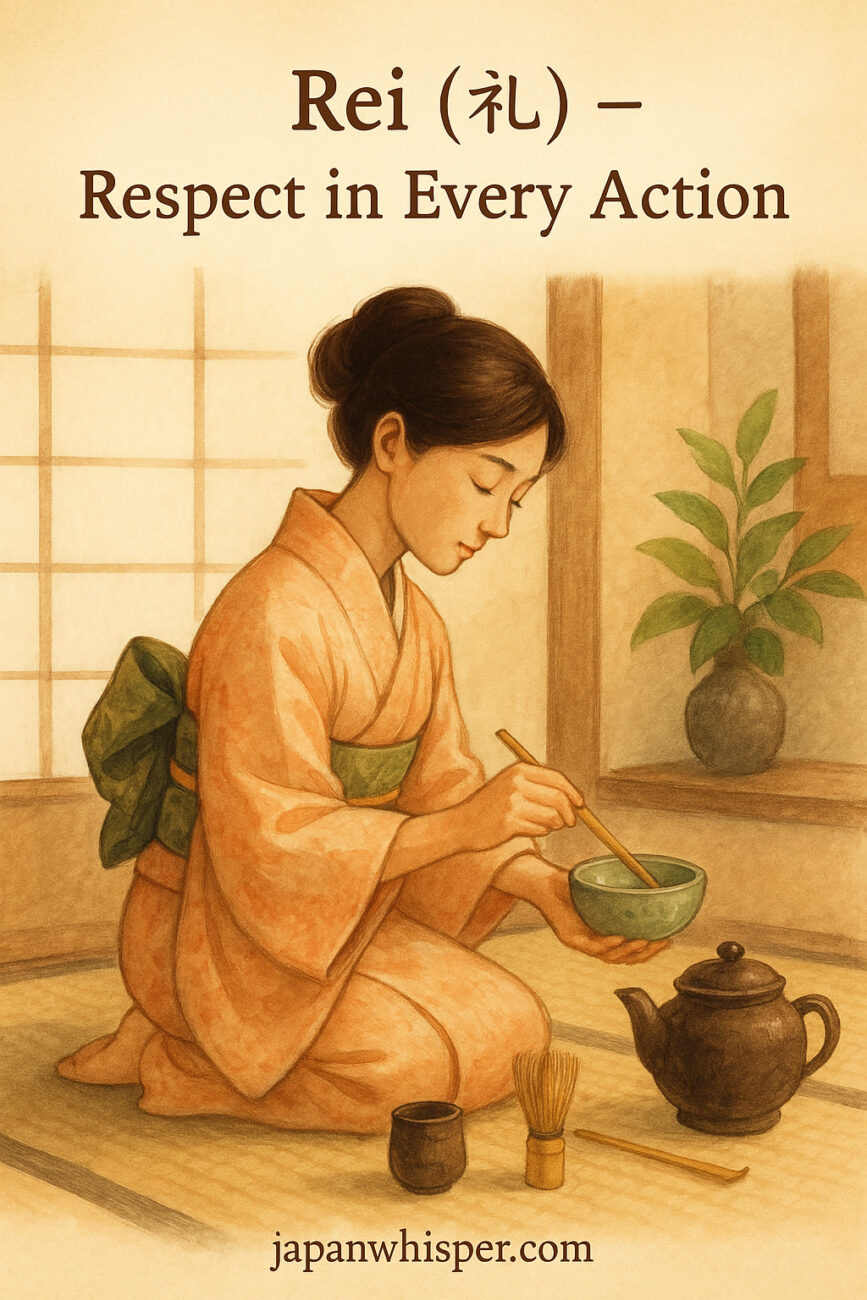
Rei means “courtesy,” and it flows through Japanese life like a steady stream.
Bowing. Handing something with both hands. Cleaning a shared space.
These aren’t just habits — they’re moments of discipline that reflect care for others.
Takeaway: True discipline includes kindness. Start with a bow, even if it’s just in your heart.
📦 4. Danshari (断捨離) — Letting Go of Excess
Rooted in Zen and minimalism, danshari is the practice of releasing what you don’t need — physically and emotionally.
Discipline isn’t just about adding structure. It’s also about clearing space.
Practice: Let go of one item, task, or worry that’s weighing you down.
🧘 5. Zanshin (残心) — The Lingering Mind
In martial arts and daily life, zanshin is the state of relaxed alertness after an action is complete.
It means staying present. Not rushing. Honoring the moment, even when the task is done.
Visualize this: After closing your laptop, take a breath. Let your energy settle before moving on.
🛖 6. Gaman (我慢) — Inner Fortitude
Gaman is the ability to endure with dignity.
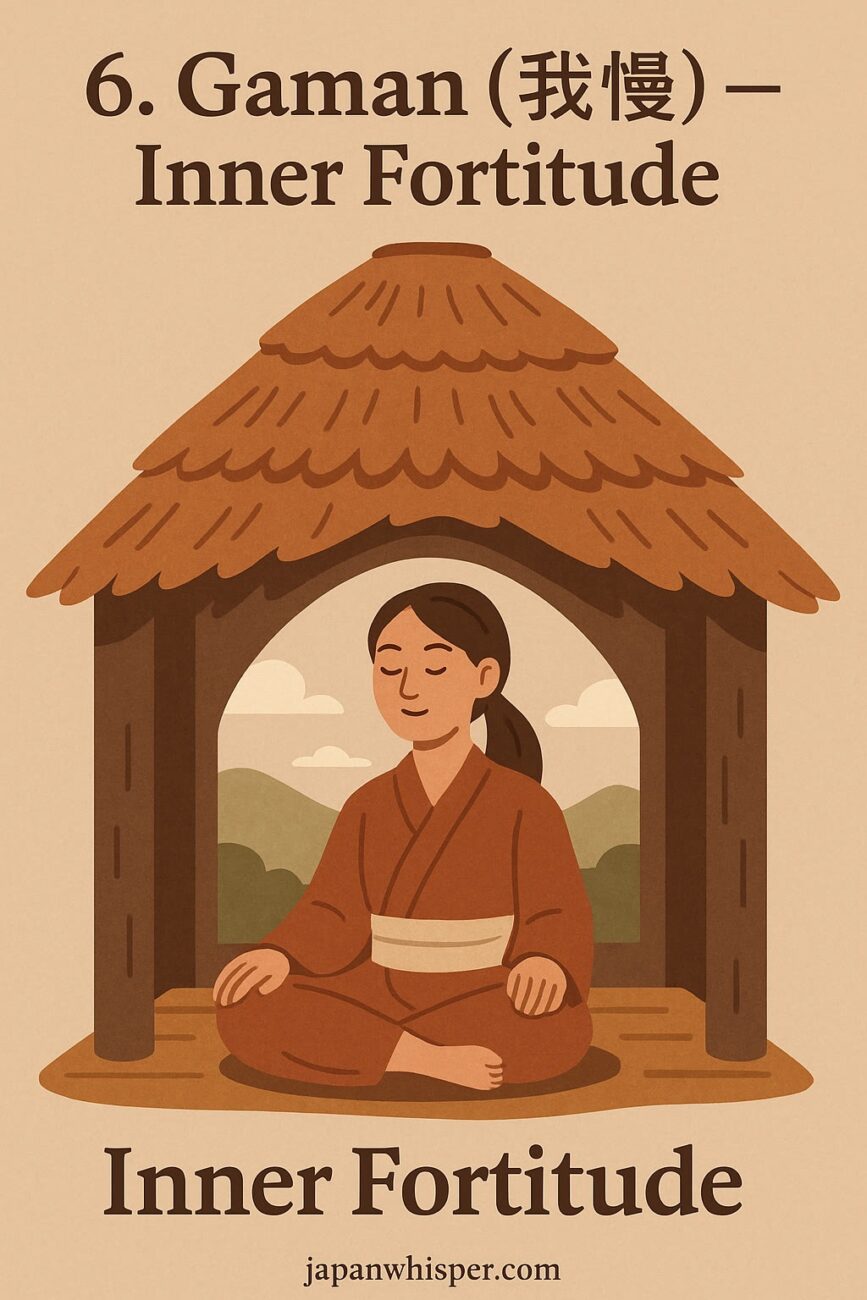
It’s about patience in discomfort. Resilience without complaint.
A quiet strength that doesn’t need to shout.
Gentle reminder: You can stay steady — not because life is easy, but because you’ve rooted yourself deeply.
🕊 7. Seiketsu (清潔) — Purity in Surroundings
Cleanliness in Japanese culture isn’t about image — it’s about clarity and respect.
When your space is calm, your mind follows.
Try this: Make your morning routine a little ritual. Fold the towel slowly. Open a window. Reset the tone of your day.
Japanese discipline is not about control — it’s about care.
Care for your time. Your energy. Your environment.
And most of all, for the person you are becoming.
Slow down. Begin gently.
And let discipline be your quiet path home 🍂