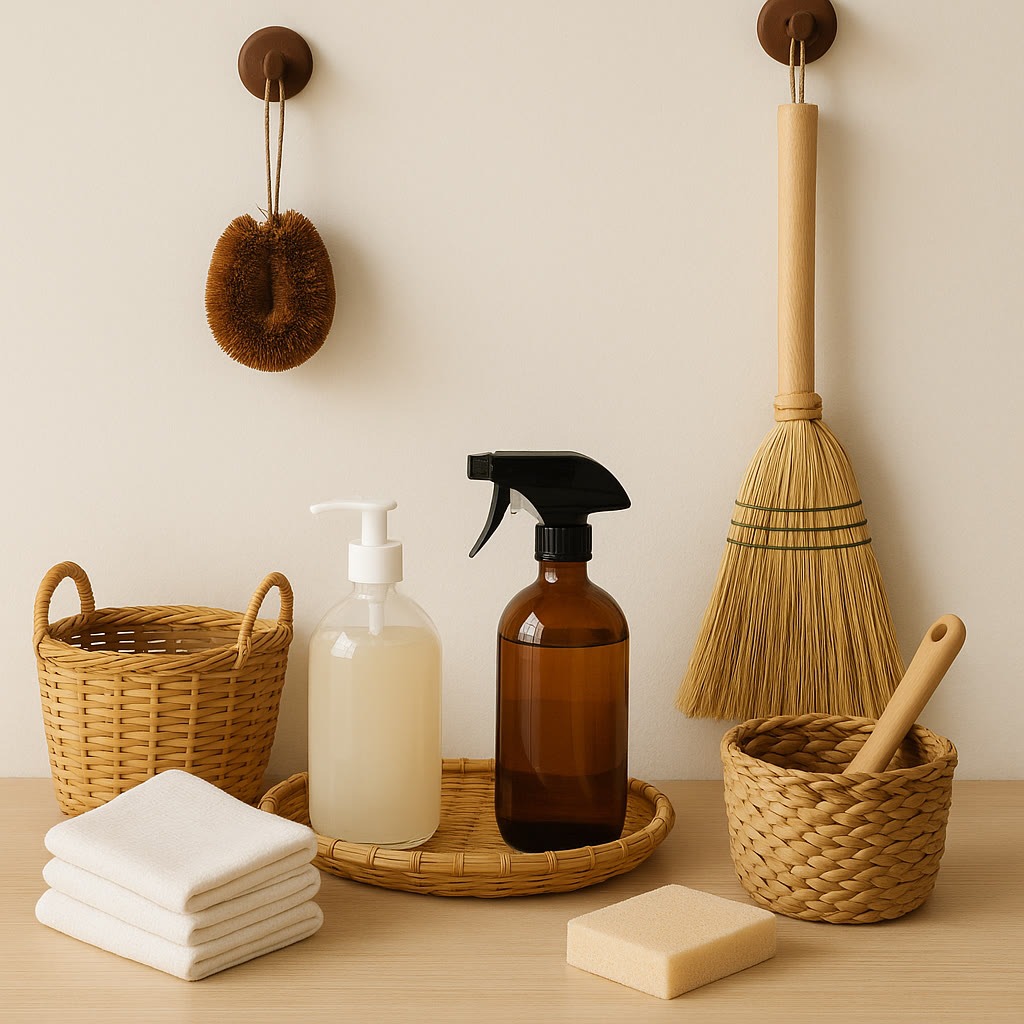
Soft light spills through a freshly opened window. The scent of citrus peels and warm rice water lingers in the air.
There’s something deeply calming about Japanese cleaning traditions — rooted in respect, mindfulness, and connection with nature.
If you’re looking to clean more sustainably and simply, these gentle yet effective habits may become your favorite new rituals.
Here are seven beautiful, earth-friendly tips inspired by Japanese culture 🌱
🍵 1. Clean as a Daily Ritual, Not a Chore
In Japan, cleaning isn’t just about removing dirt — it’s about resetting the energy of a space.
Instead of letting mess build up, light daily cleaning becomes a quiet, meditative act.
Try this: Start each morning by sweeping the entrance or wiping down your workspace. Just five minutes can shift your mindset for the day.
🥢 2. Use Rice Water as a Natural Cleaner
Don’t pour out that starchy water after rinsing your rice!
Known as tōmi-zuyu, this water has mild cleaning power thanks to its enzymes and gentle abrasiveness.
How to use it:
Wipe down wood floors, clean kitchen counters, or soak cloudy glassware for a natural shine — no chemicals needed.
🍋 3. Freshen with Citrus Peels
In many Japanese homes, orange and yuzu peels aren’t tossed — they’re reused.
How to use them:
Add citrus peels to vinegar to make a powerful, natural all-purpose spray. Or dry them and toss into the bath for a fragrant soak after a good cleaning session.
It’s a small way to honor the full life of a fruit.
🧹 4. Embrace the Power of the Broom
Instead of always reaching for the vacuum, traditional Japanese homes often rely on hōki (brooms made of bound grass or sorghum).
They’re gentle on tatami and wooden floors — and they reconnect you to the rhythm of movement.
Tip: Sweep slowly, barefoot if you can. Notice the quiet swish and the feel of the floor under your feet.
🍃 5. Clean with Water and Gratitude
In temples, cleaning is done with simple tools — often just water, cloth, and a deep sense of presence.
The focus isn’t on perfection, but on care.
What to try:
Wipe surfaces with warm water and a soft cloth. As you clean, pause to appreciate the objects and spaces you’re tending to.
🪑 6. Practice Danshari — Letting Go
Danshari is the philosophy of refusing, disposing, and separating from what no longer serves you.
It’s more than decluttering — it’s choosing space and simplicity over excess.
Start small: Clear one drawer or surface. Ask: Does this bring me calm or clutter?
Each item released lightens your space and your spirit.
🌿 7. Choose Natural Materials
Japanese cleaning tools are often handmade from natural materials: cotton cloths, bamboo scrub brushes, wooden buckets.
They’re kind to the planet, long-lasting, and quietly beautiful.
Consider replacing:
Plastic sponges with biodegradable brushes, paper towels with tenugui (light cotton cloths), and chemical sprays with homemade cleaners.
It’s not about perfection — it’s about small steps that feel good.
🍂 A Gentle Way to Clean
Japanese cleaning traditions invite us to slow down and care deeply for our spaces.
They remind us that cleanliness isn’t about harsh scrubbing or sterile smells — it’s about intention, respect, and connection.
One quiet act at a time.