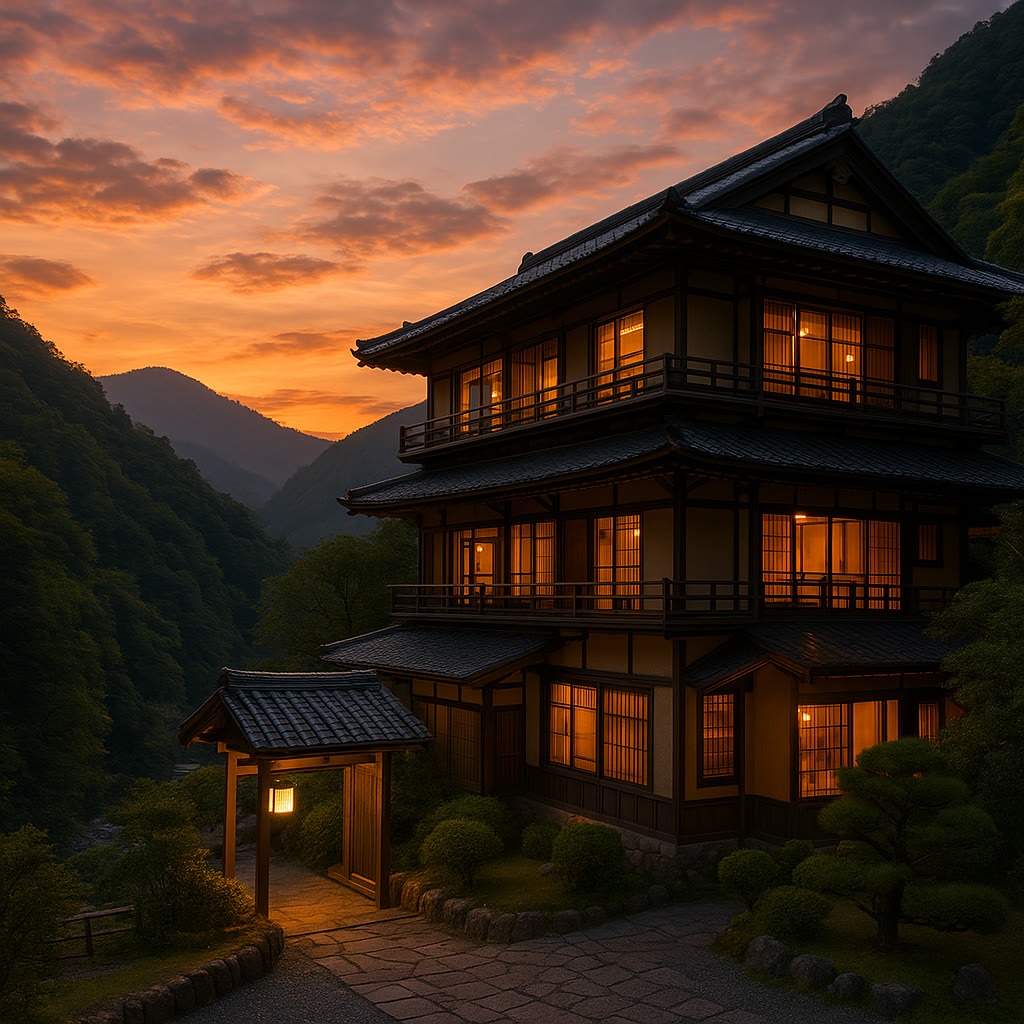
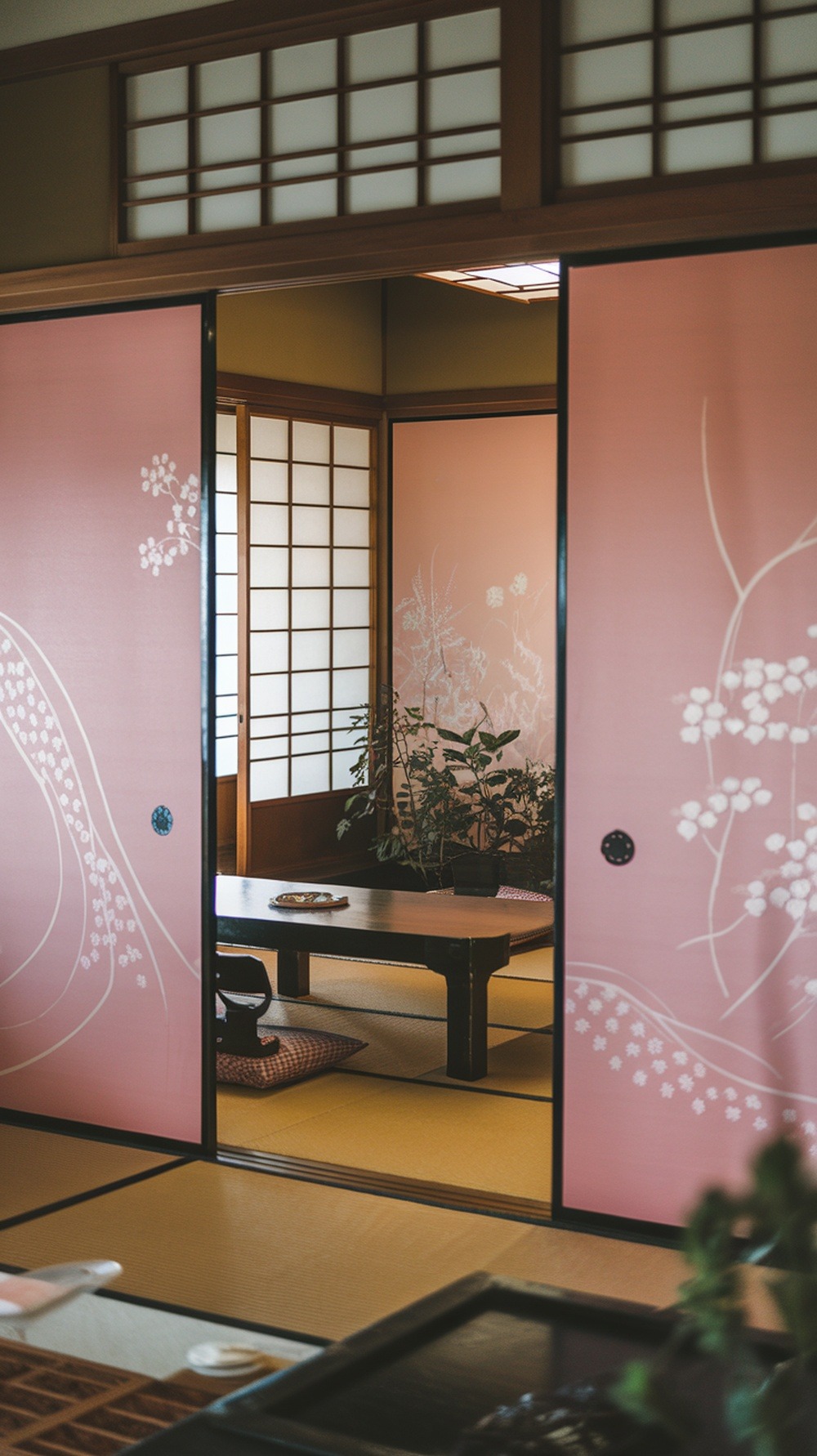
A Japanese tea room is a serene space designed for the traditional practice of tea ceremonies, where simplicity and elegance come together.
It’s a place to appreciate the art of tea preparation, surrounded by natural materials and calming decor.
Whether you’re a seasoned tea enthusiast or just curious, stepping inside offers a peaceful escape to enjoy the ritual of tea in a warm, inviting atmosphere.
Chabana: The Art of Tea Arrangement
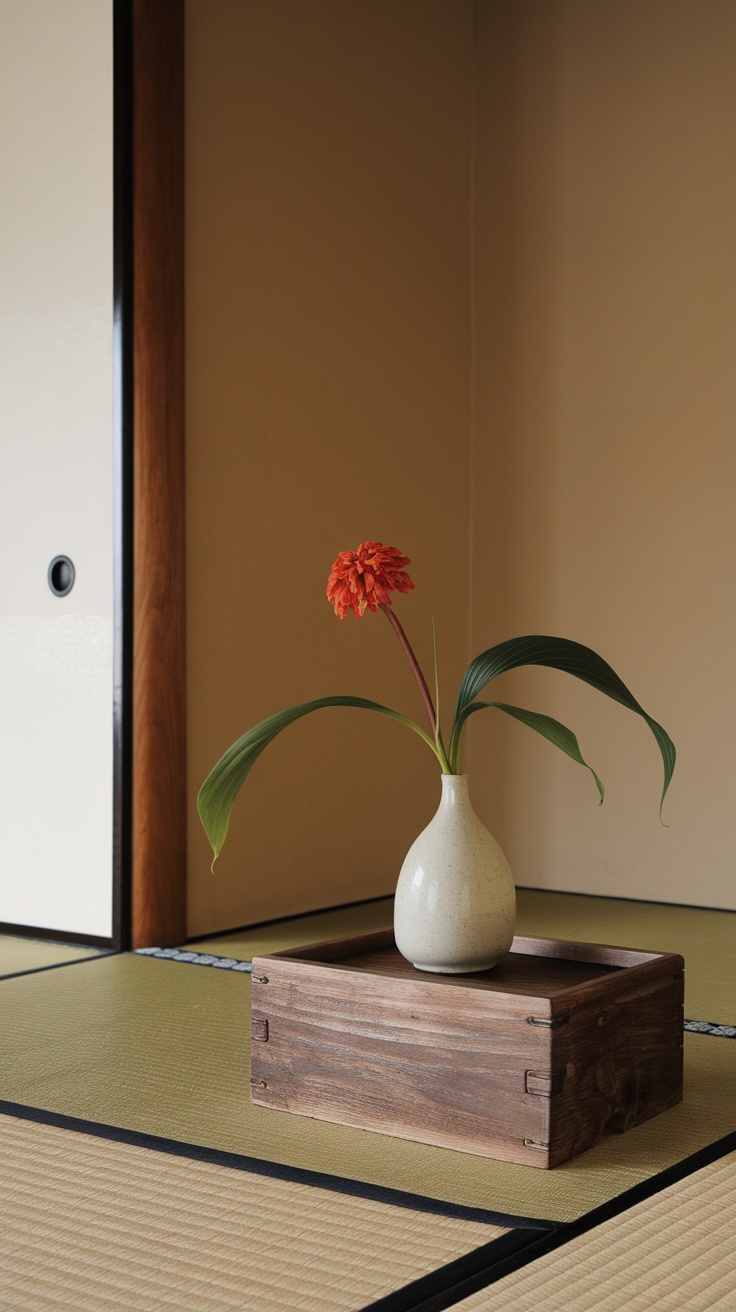
Chabana is all about simplicity and beauty in tea arrangements. A single flower, like the vibrant one seen in the tea room, can bring life to the space without overwhelming it. This art form encourages a deep appreciation for nature and the moment, making tea time even more special.
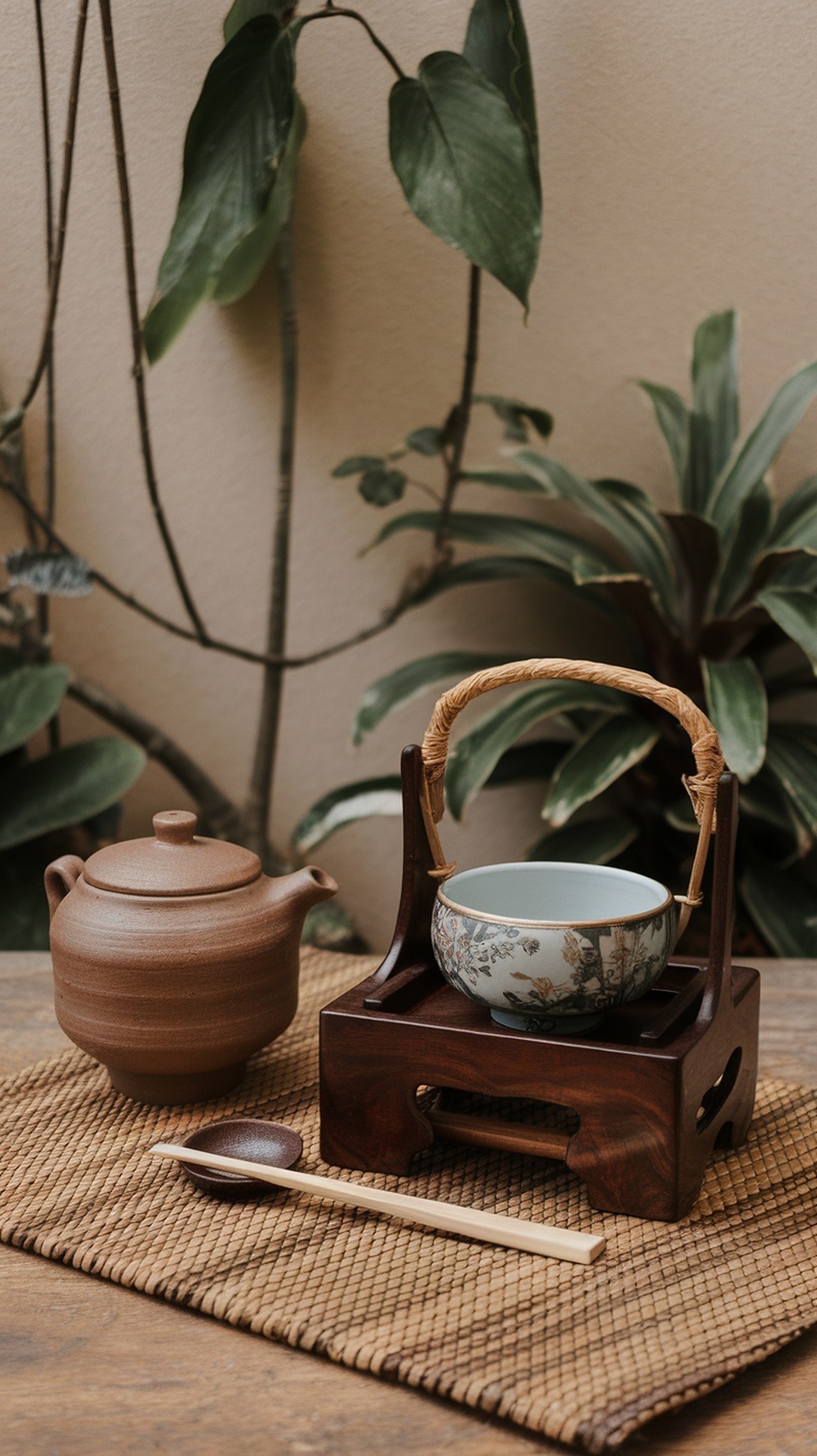
Ceremonial Utensils and Their Significance
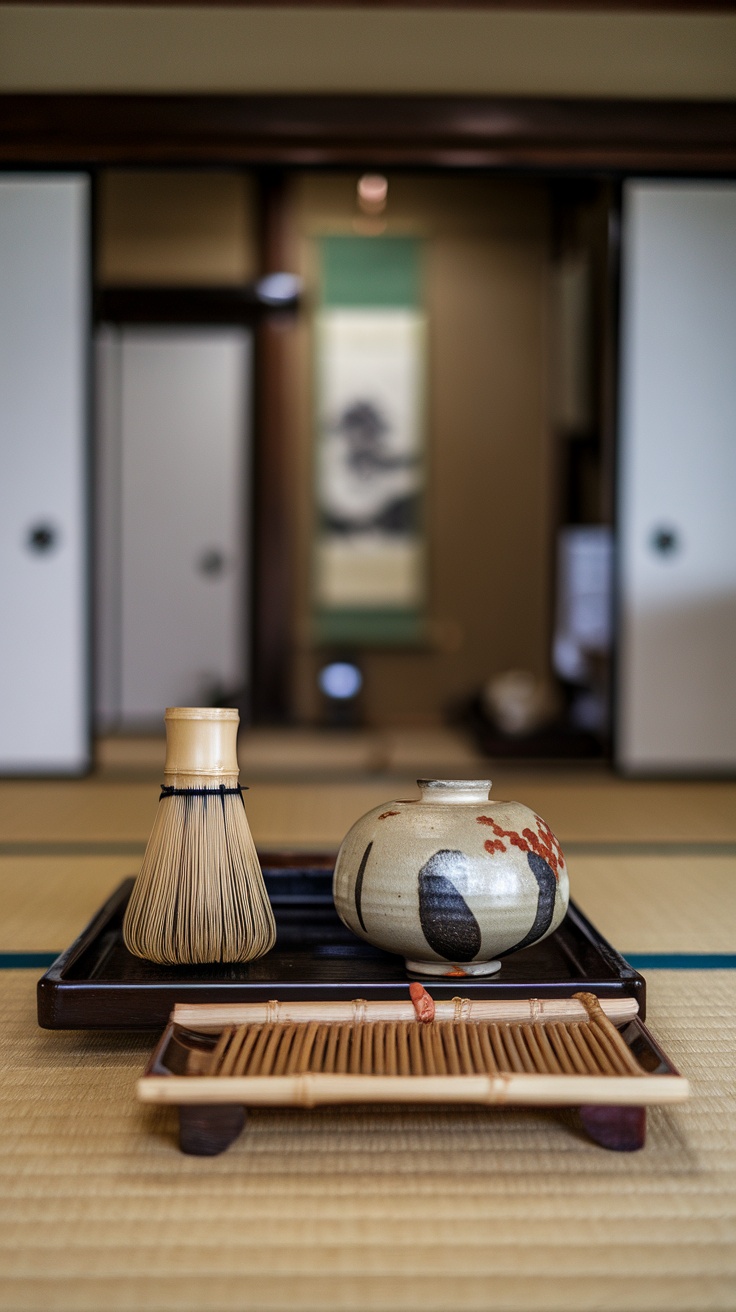
In a Japanese tea room, each utensil carries its own story. The bamboo whisk and tea bowl are not just tools; they symbolize harmony and respect. Using these items thoughtfully helps create a peaceful atmosphere that embodies the spirit of the tea ceremony.
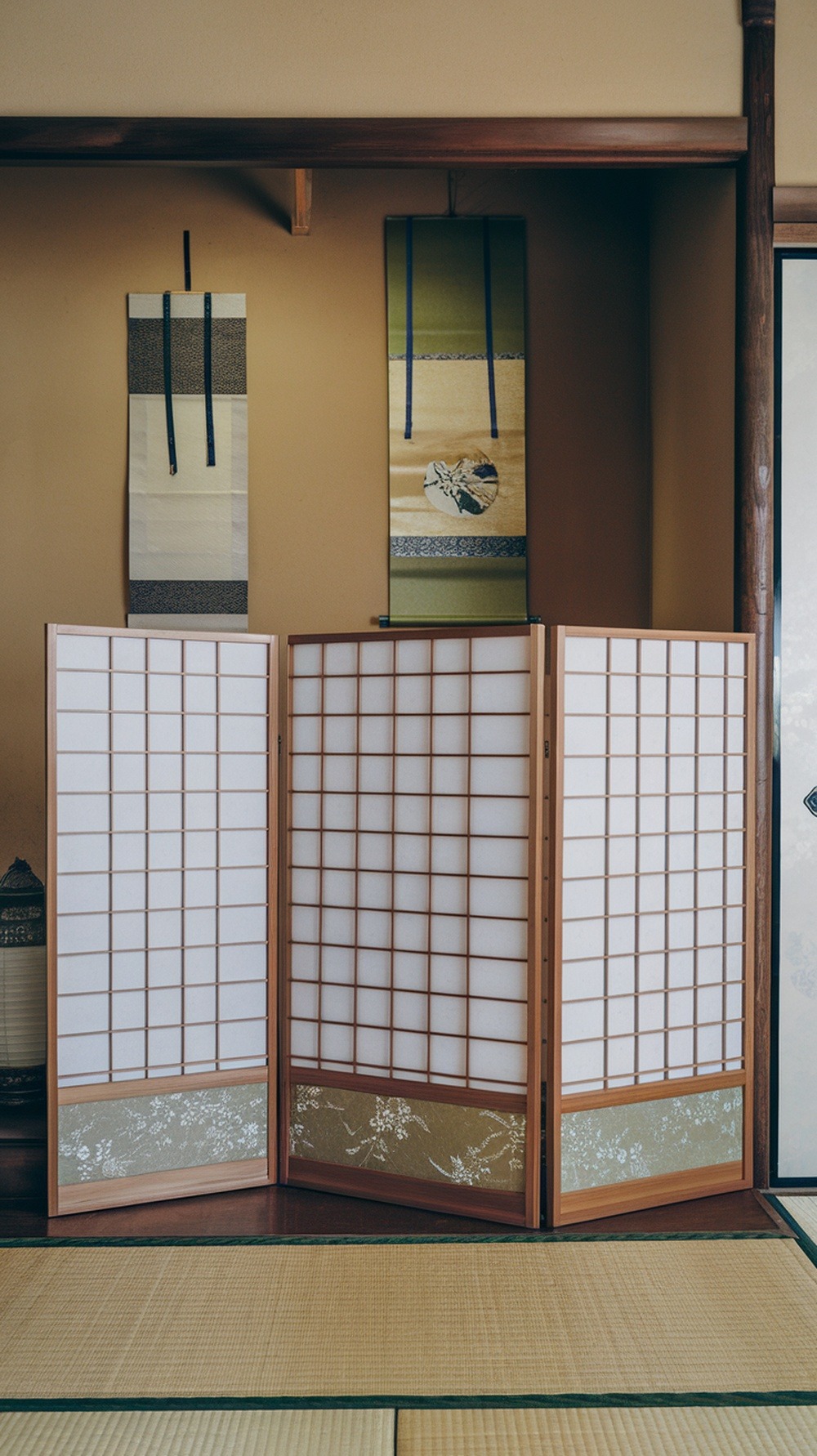
Traditional Tatami and Shoji Design
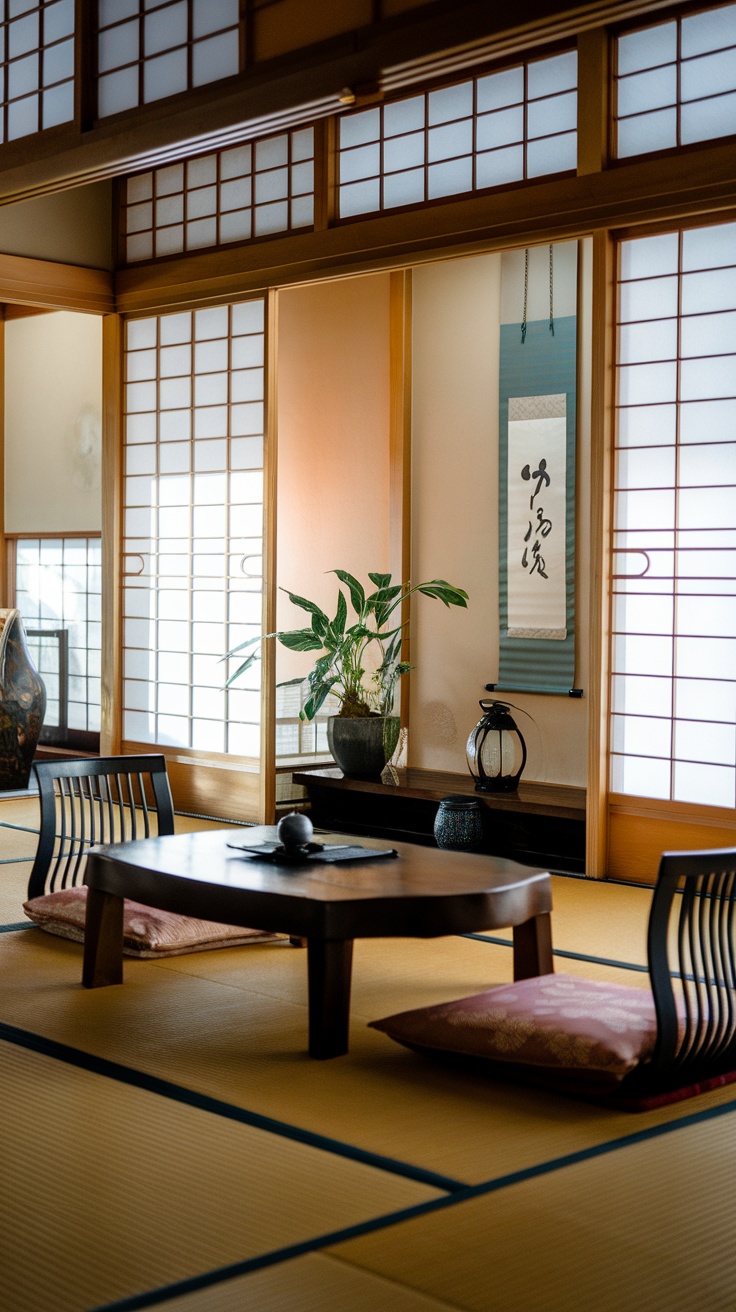
The charm of a Japanese tea room often lies in its traditional tatami and shoji design. Tatami mats create a warm and inviting atmosphere, perfect for relaxing while enjoying tea. Meanwhile, shoji screens let in soft light, adding a serene touch to the space.
Seasonal Themes in Tea Ceremonies
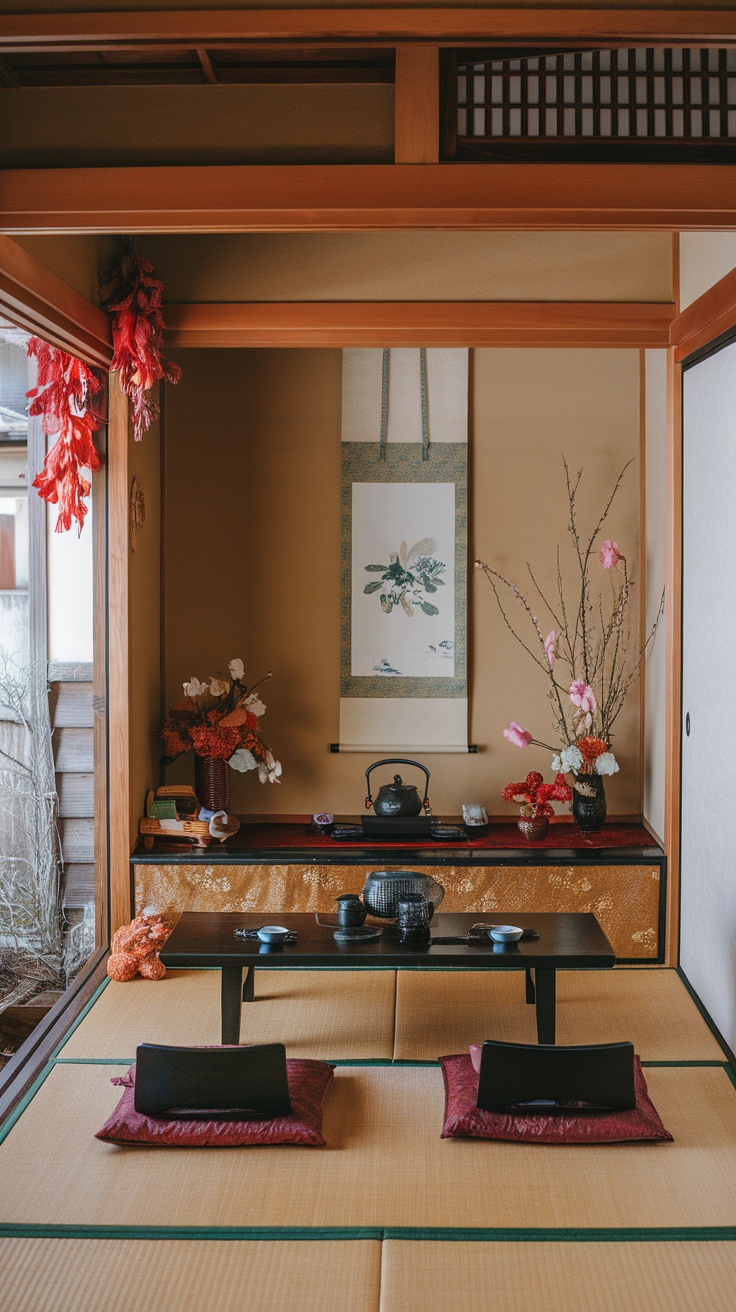
In Japanese tea ceremonies, the changing seasons play a big role in creating a special atmosphere. Each season brings unique decorations, tea selections, and even snacks that reflect nature. This connection to the seasons helps everyone appreciate the beauty around them while enjoying a warm cup of tea.
Soundscapes of Tranquility
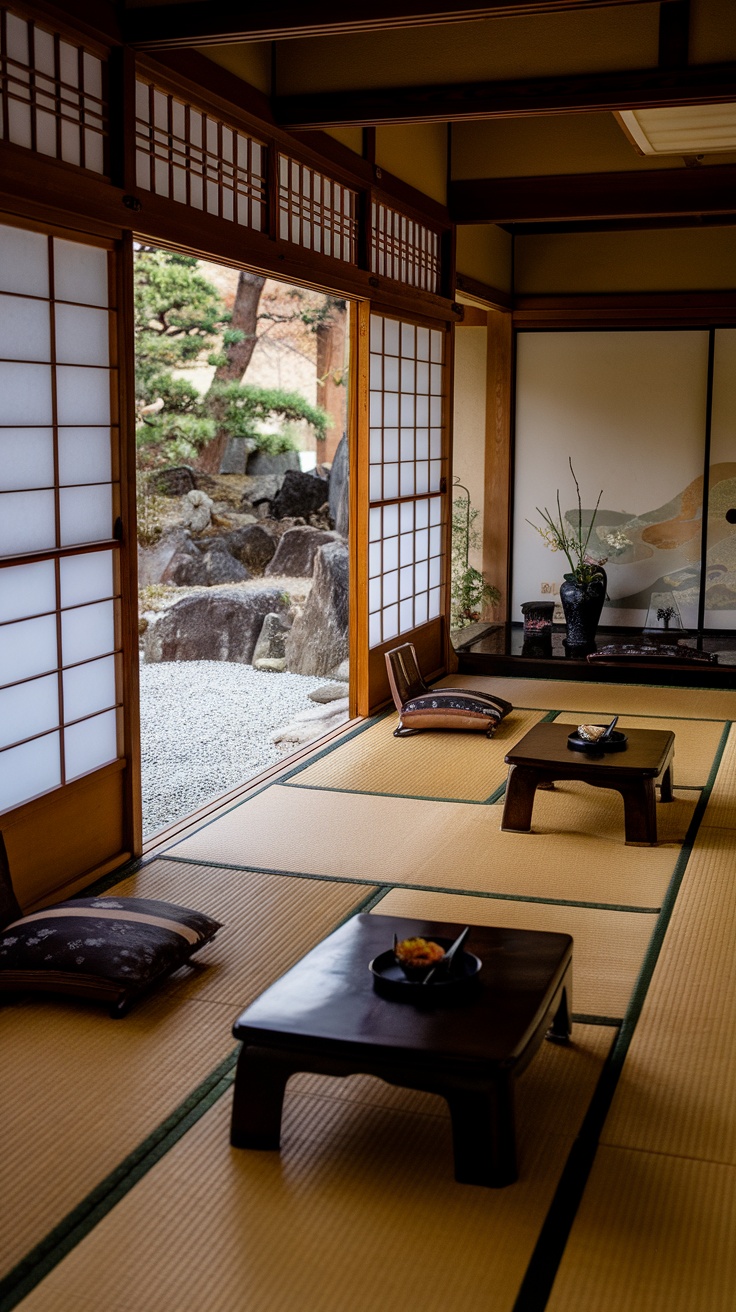
In a Japanese tea room, peace surrounds you. The gentle rustle of leaves outside mixes with the soft sound of tea being poured. This calming atmosphere invites you to sit back, relax, and enjoy the moment.