Japan is a country of quiet nuance, deep-rooted tradition, and futuristic contrast.
Whether you’re planning a trip or simply fascinated by the culture, understanding a few key elements can help you connect more deeply and respectfully.
Here are 34 beautiful, surprising, and insightful things to know about Japanese culture — from tea ceremonies to train etiquette.
Let’s explore, slowly and intentionally 🍵
🏯 1. Respect is woven into everything
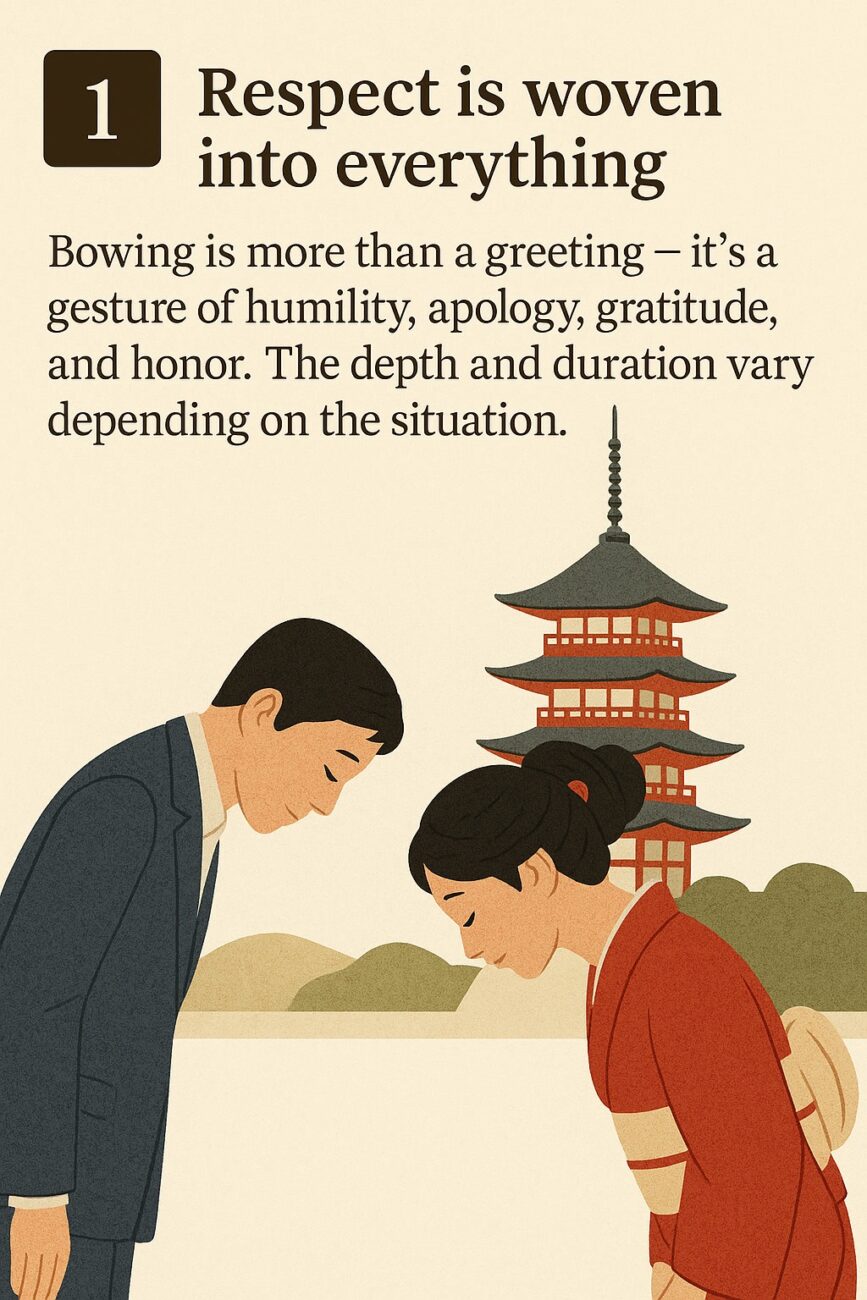
Bowing is more than a greeting — it’s a gesture of humility, apology, gratitude, and honor. The depth and duration vary depending on the situation.
🍙 2. Food is treated with reverence
Meals are an experience. Expect balance, seasonal ingredients, and careful presentation. Saying “Itadakimasu” before eating is a way to show appreciation.
🚉 3. Silence is golden on public transport
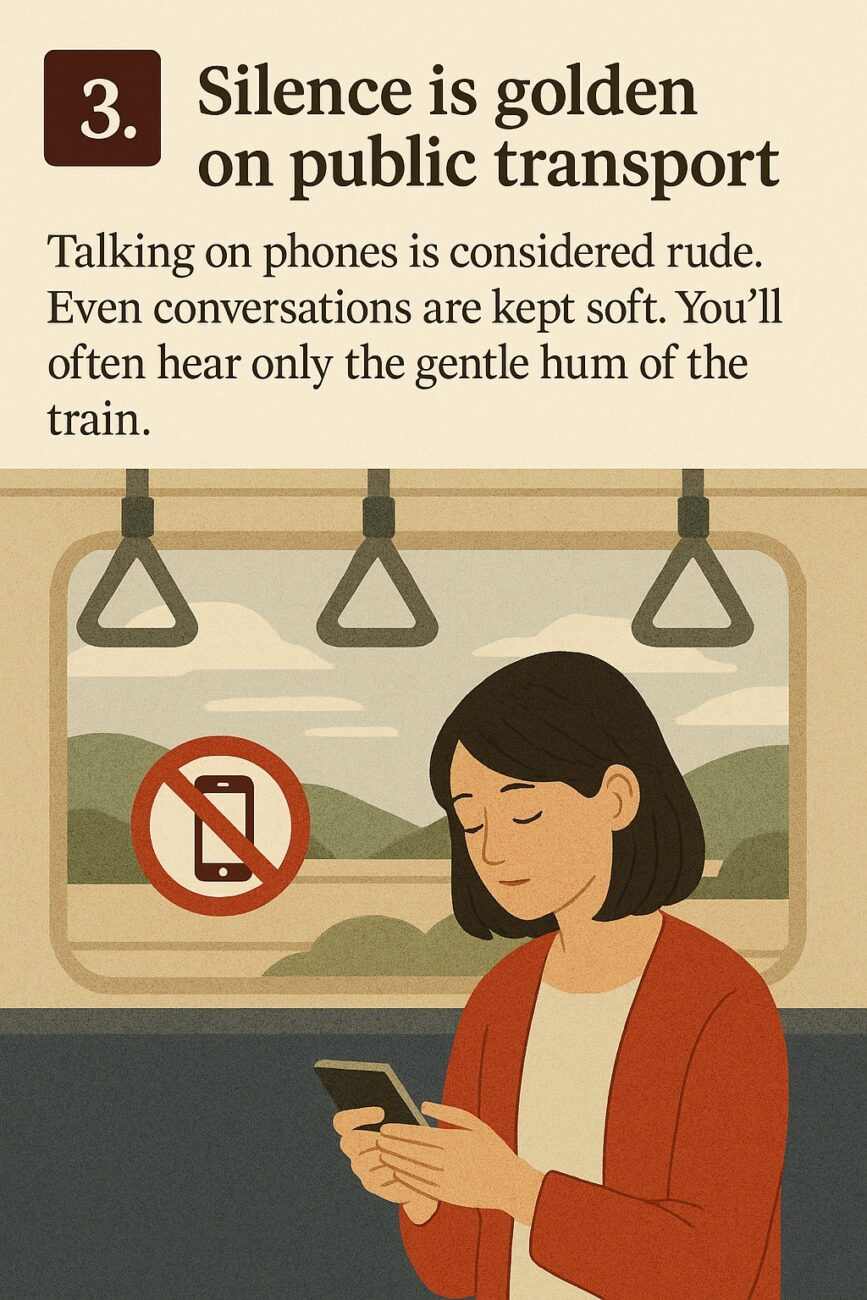
Talking on phones is considered rude. Even conversations are kept soft. You’ll often hear only the gentle hum of the train.
🧼 4. Cleanliness is a quiet priority
You’ll rarely find trash cans, yet the streets are spotless. People often take their garbage home with them.
🛏️ 5. Sleeping arrangements can be simple
Futons on tatami mats are common in traditional homes and inns (ryokan). It’s minimalist, intentional, and surprisingly cozy.
🍵 6. Tea isn’t just a drink — it’s a ritual
The Japanese tea ceremony is a meditative art of hospitality, precision, and mindfulness.
👟 7. Shoes off, slippers on

Before entering a home (or even some restaurants, temples, or schools), shoes come off. Slippers are often provided — and there are even special ones for the bathroom!
🧖 8. Bathing is sacred
Public baths (sento) and hot springs (onsen) are for deep relaxation. Washing before entering the communal bath is essential etiquette.
🕰️ 9. Punctuality is a virtue
Being even a few minutes late can be seen as disrespectful. Trains, meetings, and meals run on time — often to the second.
📦 10. Presentation matters
From bento boxes to gift wrapping, the Japanese aesthetic values harmony, symmetry, and beauty in the smallest details.
🧍 11. Standing in line is serious business
Whether at the train platform or convenience store, queues are orderly and calm. Everyone waits their turn.
📱 12. Politeness flows through language
Japanese has many levels of formality. Even everyday phrases reflect consideration and social awareness.
🎎 13. Tradition and tech coexist
In Tokyo, a centuries-old temple can sit next to a skyscraper. Old and new blend effortlessly — not in contrast, but in harmony.
🌸 14. Cherry blossoms are a fleeting treasure
Hanami (flower viewing) isn’t just about the blossoms — it’s a reminder to pause and appreciate life’s short, beautiful moments.
🎐 15. Seasons are deeply felt
Each season is celebrated with seasonal foods, festivals, and décor. Nature’s rhythm is closely followed.
🥋 16. Discipline is learned early
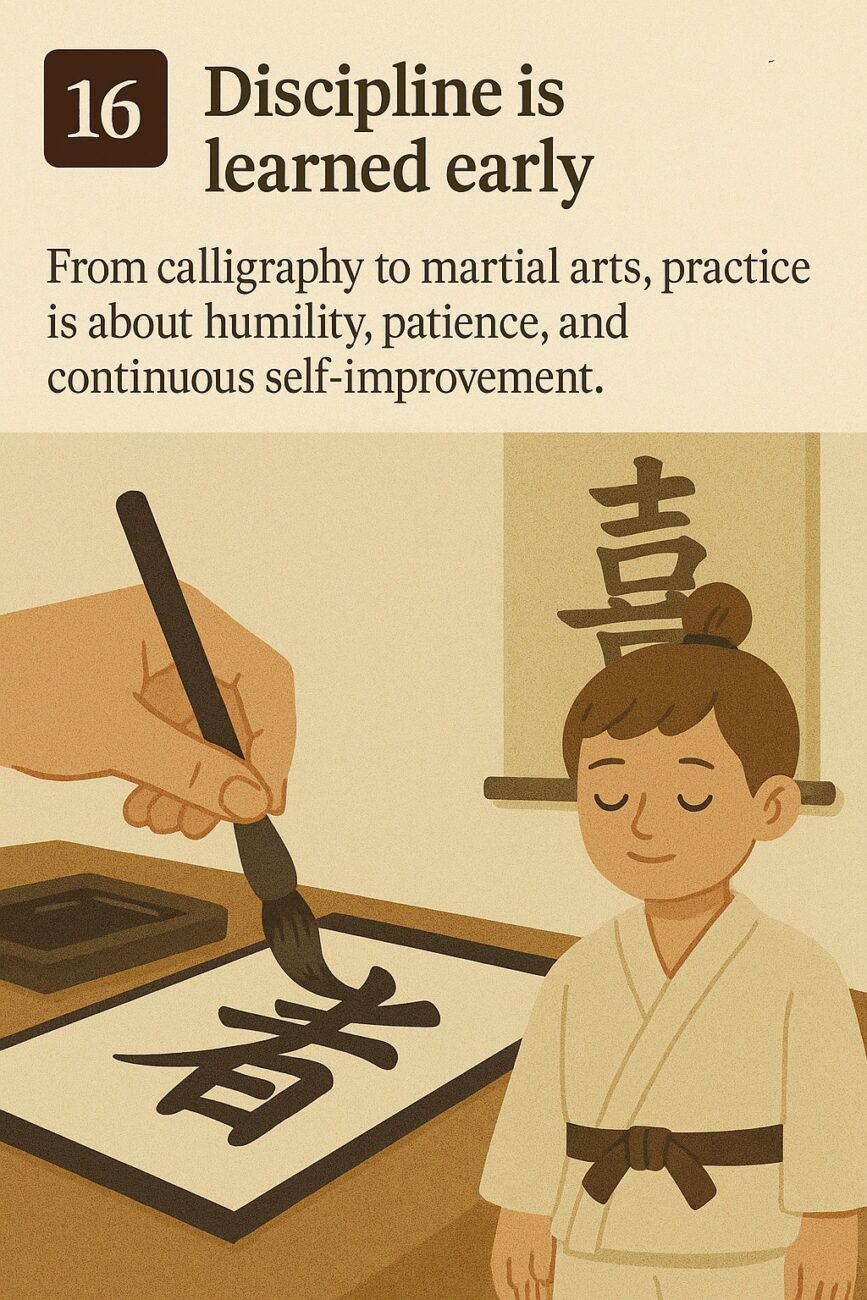
From calligraphy to martial arts, practice is about humility, patience, and continuous self-improvement.
⛩️ 17. Shinto and Buddhism often intertwine
Many people follow both. Temples and shrines are quiet, reflective places — each with its own customs.
🎏 18. Children’s Day celebrates growth
On May 5, families hang carp streamers (koinobori) to wish their children strength and success.
🎎 19. Dolls aren’t just toys
Hina dolls are displayed in March to celebrate girls and wish for their happiness and health.
💴 20. Tipping isn’t expected — or needed
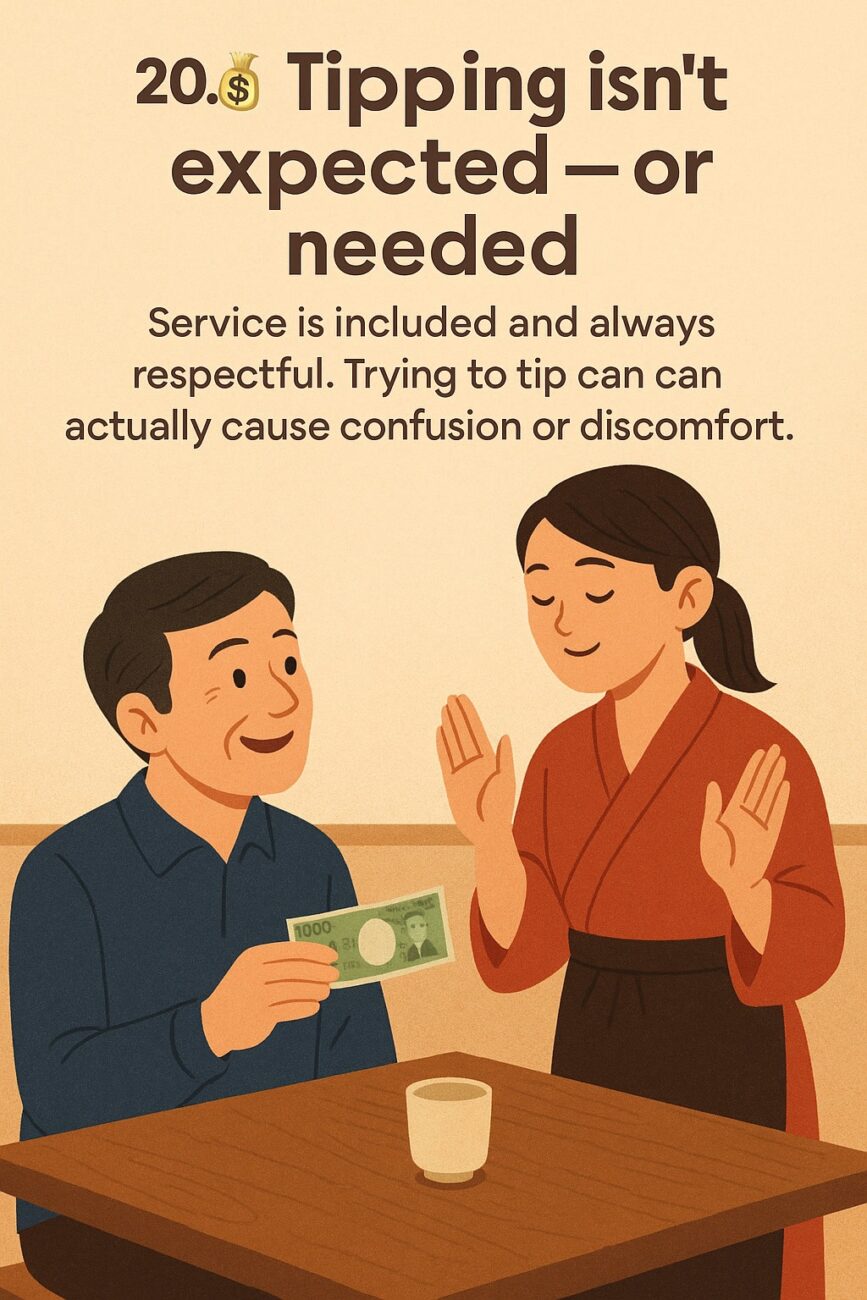
Service is included and always respectful. Trying to tip can actually cause confusion or discomfort.
🍡 21. Street food is joyful but neat
You’ll find delicious treats like takoyaki and mochi — but it’s polite to eat them where you buy them, not while walking.
👘 22. Kimono is worn for meaning
Wearing traditional clothing is often reserved for ceremonies or festivals — and each element tells a story.
🧸 23. Cuteness is everywhere
From mascots to packaging, kawaii culture is embraced — blending innocence, design, and joy.
🎤 24. Karaoke is a beloved outlet
Singing with friends in cozy rooms is less about talent, more about fun and togetherness.
🖋️ 25. Writing is an art
Calligraphy (shodo) is about more than words — it expresses feeling and form through brush and ink.
🚶 26. Don’t eat while walking
It’s considered impolite. Eating is something to focus on — even if it’s just a rice ball.
🛍️ 27. Omiyage means thoughtful souvenirs
Bringing back small, region-specific gifts for coworkers or friends is a heartfelt tradition.
🎨 28. Wabi-sabi embraces imperfection
This wabi-sabi aesthetic values the beauty of transience, asymmetry, and quiet simplicity. Think: a chipped tea bowl or a fading leaf.
🐉 29. Festivals are rich with symbolism
From fireworks to lanterns, matsuri are full of energy, color, and centuries-old rituals.
🚦 30. Rules are followed — even unwatched
People wait at red lights even if no cars are coming. Social trust is strong.
🧧 31. Money is handed with care
Cash is placed in trays at the register. Bills are crisp. It’s all done with quiet respect.
🌃 32. Cities don’t feel chaotic
Despite the density, Japanese cities are often calm, clean, and structured — like a moving meditation.
📚 33. Manga and anime are for all ages
These aren’t just entertainment — they reflect history, philosophy, humor, and heart.
🙏 34. Harmony is the highest value
So much in Japanese culture comes back to this: living in balance with others, nature, and self.
Even if you never visit Japan, letting a few of these practices inspire your own life — slowing down, observing carefully, acting with intention — can bring a quiet kind of joy.
A little respect. A little ceremony. A little more beauty in the everyday.